
All Topics
- Alchemizing Music Concepts for Students
- Artist Spotlight
- artium gift card
- Artium Maestros
- Artium News
- buying guide
- Carnatic Music
- Devotional Music
- Editorials by Ananth Vaidyanathan
- Film Music
- Guitar
- Hindustani Classical Music
- Indian Classical Music
- Indian Folk Music
- Insights
- Instruments
- Karaoke Singing
- Keyboard
- Kids Music
- maestros
- Music Education
- Music for Kids
- Music Industry
- Music Instruments
- Music Legends
- Music Theory
- Music Therapy
- Piano
- piano guide
- Success Stories
- Tamil Film Music
- Telugu Film Music
- Time Theory
- Tools
- Uncategorized
- Uncategorized
- Uncategorized
- Uncategorized
- Vocal Singing
- Vocals
- western classical music
- western music
- Western vocal music
The Importance of Regular Riyaz in Hindustani Music
The Importance of Regular Riyaz in Hindustani Music
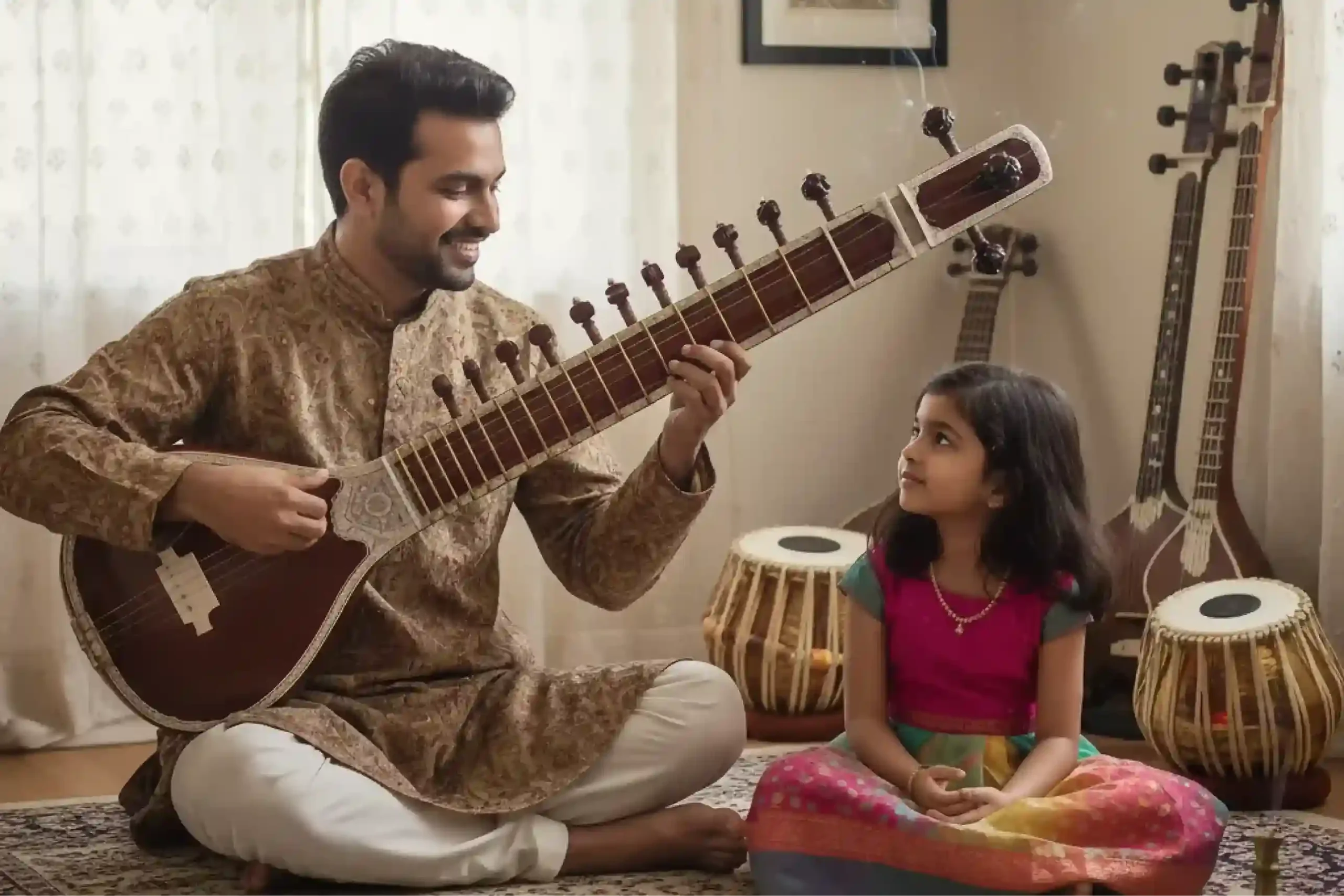
Table of Contents
In the pedagogical and andragogical framework of Hindustani classical music, Riyaz is regarded as the bridge between theory and practice. While musical texts and verbal instruction provide essential knowledge, it is through daily Riyaz that this knowledge is absorbed, refined, and expressed with authenticity.
Riyaz in Hindustani music trains the ear to recognize subtle pitch variations and conditions the voice or instrument to respond accurately. It instills an intuitive understanding of musical structure that cannot be achieved through study alone.
Moreover, Riyaz cultivates an intimate relationship between the practitioner and sound (nāda). Over time, the disciplined engagement with swaras and ragas nurtures sensitivity, confidence, and creative freedom, enabling the musician to uphold tradition while developing a personal musical voice. Thus, Riyaz stands at the heart of artistic growth in Hindustani classical music, guiding the learner from foundational practice to mature musical expression.
Great maestros of Indian classical music have unanimously emphasized that Riyaz is the true guru of a musician. Through sustained practice, abstract musical concepts such as swara purity, raga grammar, laya control, and emotional expression gradually transform into lived musical experience.
What is Riyaz in Hindustani Music?
Riyaz refers to the daily, disciplined, and structured practice of core musical elements such as swaras, alankars, ragas, and talas, which together form the foundation of Hindustani classical music. Traditionally, Riyaz is performed with deep concentration, often during the early morning hours known as brahma muhurta. This time is considered ideal because the environment is quiet, the mind is calm, and the body is most receptive to learning and internalizing sound.
Unlike casual or recreational singing, Riyaz follows well-defined principles. Maintaining correct pitch (sur shuddhi) is essential, as even minor deviations can distort the raga’s character. Proper voice placement ensures vocal health and clarity, allowing the singer to sustain long phrases without strain.
Riyaz also emphasizes gradual progression, beginning with basic exercises such as alankars and sargam before moving on to complex raga elaboration. Most importantly, it requires repetition with awareness, where each note is consciously listened to and refined, transforming mechanical practice into meaningful musical growth.
Unlike casual singing, Riyaz follows specific rules:
- Correct pitch (sur shuddhi)
- Proper voice placement
- Gradual progression from basics to complex forms
- Repetition with awareness
Historical Perspective Of Riyaz in the Guru Shishya Parampara
In the traditional guru shishya parampara, Riyaz was not treated as a separate activity but as an inseparable part of daily life. Students (shishyas) lived in close proximity to their gurus, often in the same household or gurukul, where learning occurred through observation, imitation, and constant practice. Musical training extended beyond formal lessons; every moment, listening to the guru, assisting in performances, or repeating phrases, contributed to the student’s Riyaz.
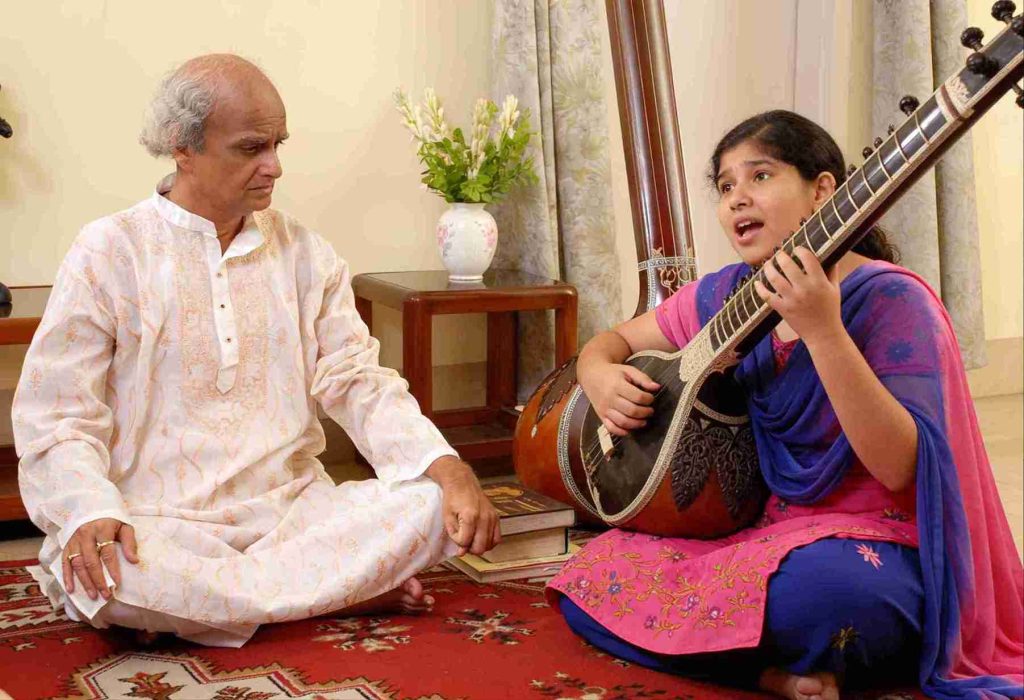
Historical accounts of Hindustani classical music frequently describe students engaging in rigorous practice for 10 to 12 hours a day under strict supervision. This prolonged and disciplined Riyaz developed technical mastery and deep respect for the art. The guru carefully monitored pitch accuracy, raga discipline, and tonal quality, ensuring that errors were corrected at the earliest stage.
Such intensive Riyaz played a crucial role in preserving raga purity, maintaining gharana-specific aesthetics, and transmitting subtle improvisational techniques like alap, taan, and bol-taan across generations.
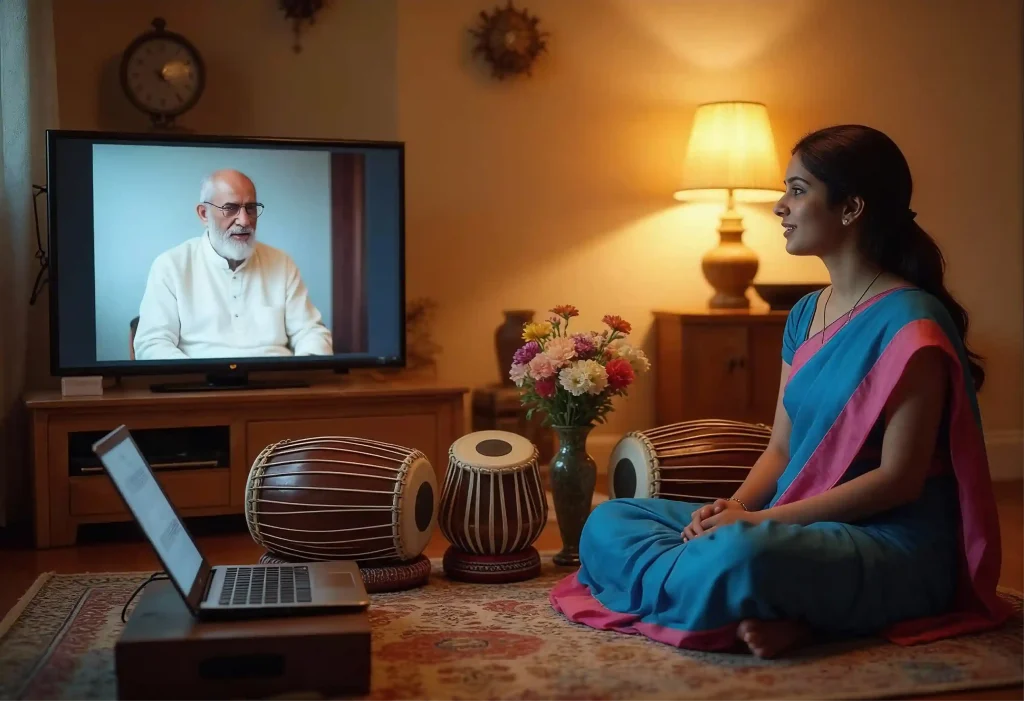
Although modern learners may now study through structured formats and even online Hindustani music classes, the foundational principle established by the guru–shishya tradition remains unchanged: consistent, sincere Riyaz is essential for true musical growth.
Role of Riyaz in Voice Culture and Swara Shuddhi
One of Riyaz’s primary objectives in singing is voice training. Regular Riyaz:
- Strengthens vocal cords
- Expands vocal range (saptak control)
- Improves breath control
- Stabilizes pitch
For example, daily practice of akar, sargam, and alankar patterns helps singers achieve swara shuddhi. Without Riyaz, even a well-trained singer may struggle with unstable notes or voice fatigue.
This is especially critical in Hindustani classical singing, where a single note may be elaborated for several minutes and any pitch instability becomes immediately noticeable. Regular Riyaz also develops vocal endurance and tonal consistency, enabling singers to sustain long alap passages without strain.
Through controlled repetition, the voice gradually adapts to precise note placement across all three saptaks, reducing unnecessary tension. Riyaz trains the ear alongside the voice, helping the musician instantly recognize and correct pitch deviations. Over time, this disciplined practice results in a balanced, resonant voice capable of maintaining swara shuddhi even during complex improvisations, which is essential for expressive and technically sound classical performance.
Riyaz and Understanding of Raga Grammar
Regular Riyaz allows a musician to absorb the subtle grammar of a raga beyond written definitions. Repeated practice of aroha–avaroha patterns reinforces permissible note movements, while focused repetition of pakad phrases helps firmly establish the raga’s melodic identity in the mind.
Over time, the singer instinctively understands where to pause (nyas swaras), which notes demand emphasis, and which transitions enhance the raga’s mood. Riyaz also sensitizes the performer to time theory, ensuring ragas are rendered according to their prescribed samay. This deep internalization enables spontaneous improvisation without violating raga discipline, a hallmark of mature Hindustani classical performance.
Ragas are not mere scales; they are governed by strict rules such as:
- Aroha–avaroha
- Vadi–samvadi
- Pakad
- Nyas swaras
- Time theory (samay)
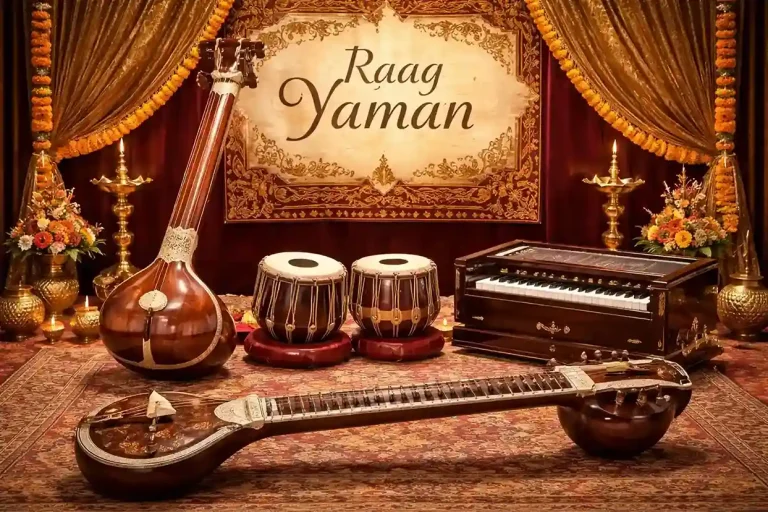
Through regular Riyaz, these theoretical concepts become instinctive. For instance, practicing Raga Yaman daily trains the mind to naturally emphasize tivra ma and avoid shuddha ma. This transformation from intellectual knowledge to intuitive expression happens only through sustained Riyaz.
Thus, Riyaz in Hindustani Music is essential for internalizing raga identity.
Riyaz for Understanding Laya and Tala Control
Another crucial aspect highlighting the Importance of Riaz in Indian Classical Music is the development of precise laya and tala control. Hindustani music requires the performer to remain firmly anchored to rhythmic cycles such as Teentaal, Ektaal, and Jhaptal while simultaneously exploring melodic improvisation.
Through consistent Riyaz, musicians develop strong layakari, heightened awareness of sam, and the ability to execute complex taans without rhythmic distortion.
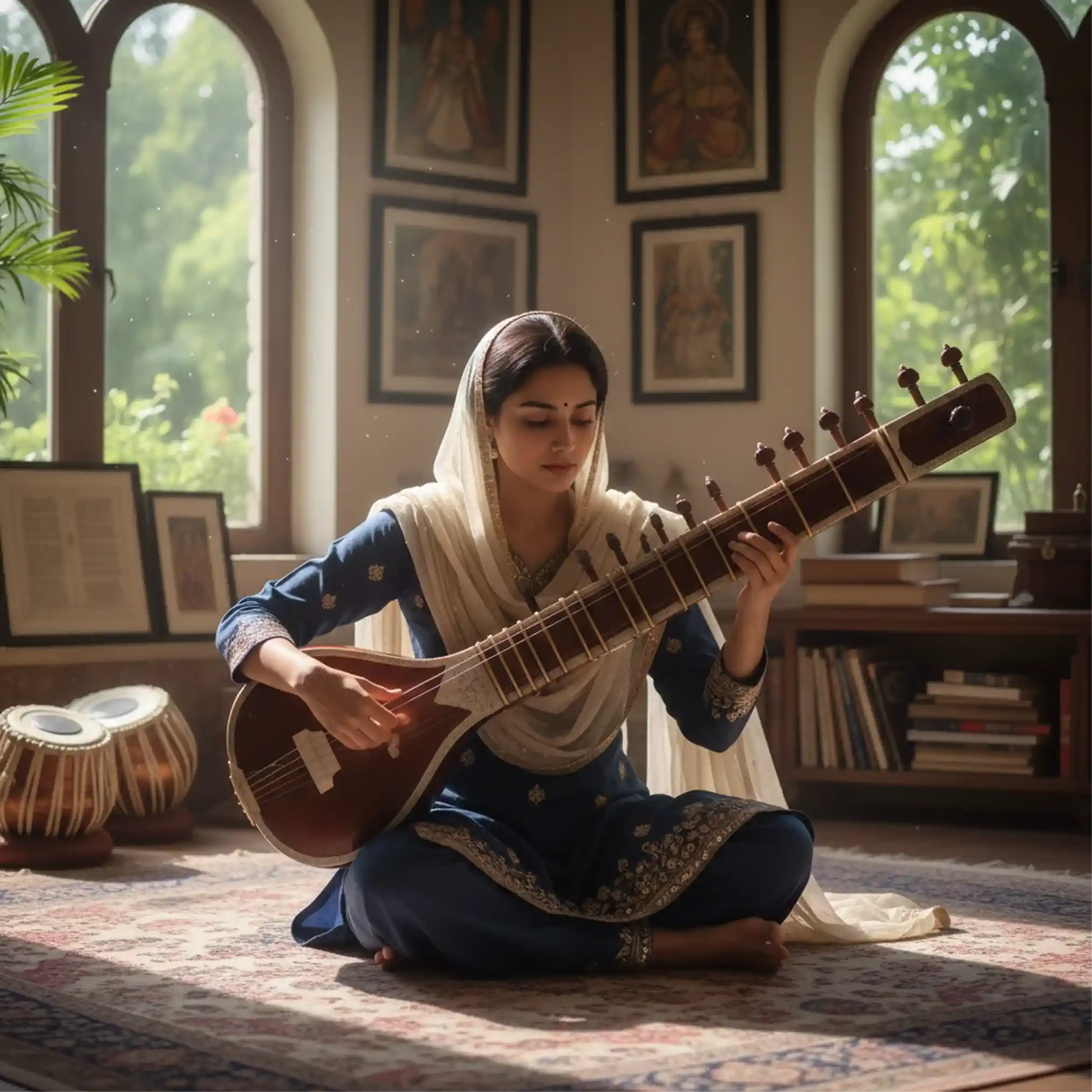
Practicing sargam, alankars, and bandishes in vilambit, madhya, and drut layas sharpens rhythmic intelligence, ensuring balance between melodic creativity and tala discipline in both vocal and instrumental performance.
Hindustani music demands precise alignment with tala cycles such as Teentaal, Ektaal, and Jhaptal.
Through Riyaz:
- Layakari improves
- Sam awareness strengthens
- Complex taans fit accurately within tala
For example, practicing sargam or bandish in different layas (vilambit, madhya, drut) develops rhythmic intelligence, which is vital for both vocalists and instrumentalists.
Riyaz is not limited to physical or technical improvement. It also nurtures:
- Mental discipline
- Patience and perseverance
- Emotional stability
- Inner focus
Many musicians describe Riyaz as a form of meditation. Repeating swaras with concentration calms the mind and deepens emotional sensitivity, which is essential for expressing rasa (mood) in ragas like Bhairav, Bageshri, or Darbari.
Riyaz for Singing from Beginners to Advanced Learners
Riyaz for singing evolves with the learner’s level:
For beginners:
- Breathing exercises
- Akar practice
- Simple alankars
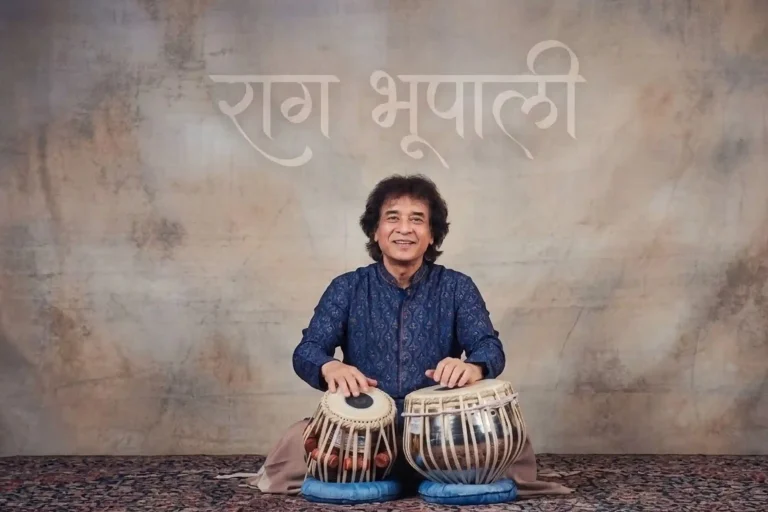
- Basic ragas like Bhoopali or Yaman
For intermediate students:
- Sargam in multiple layas
- Bandish practice
- Voice modulation
For advanced learners:
- Alap development
- Taans and bol-taans
- Improvisation within raga boundaries
At every stage, Riyaz remains the foundation of progress in Hindustani music.
Riyaz Routine for Kids
A well-planned Riyaz Routine for Kids focuses on consistency rather than long hours. Children benefit from:
- Short but daily practice (20–30 minutes)
- Fun alankar patterns
- Simple ragas
- Rhythm clapping exercises
Early exposure to disciplined Riyaz improves pitch sense, memory, and listening skills. It also instills patience and concentration, which are valuable beyond music.
With guided instruction, children today can effectively practice through structured online Hindustani music classes without compromising on quality.
While the essence of Riyaz remains unchanged, modern tools have transformed accessibility. Digital tanpuras, recorded lessons, and virtual classrooms allow students worldwide to pursue Hindustani classical music seriously.
However, technology can only support learning; it cannot replace Riyaz. Even the best platforms emphasize self-practice as the cornerstone of musical growth.
Common Mistakes in Riyaz and How to Avoid Them
Some common Riyaz mistakes include:
- Irregular practice
- Singing without tanpura
- Rushing into complex ragas
- Ignoring basics
Effective Riyaz requires patience, correct guidance, and respect for fundamentals. Slow, mindful practice always yields better results than hurried repetition.
Riyaz and Its Relevance in the Online Music Learning Space
In essence, Riyaz in Hindustani Music is the backbone of musical excellence. It refines technique, deepens raga understanding, strengthens voice culture, and nurtures emotional and spiritual growth. From children to professionals, from traditional gurukuls to modern classrooms, the importance of Riyaz remains universal and timeless. For anyone aspiring to learn Hindustani music online, disciplined Riyaz is the true bridge between knowledge and mastery.
Just as Riyaz is the lifelong companion of a musician, consistent and guided practice is the foundation of excellence in Carnatic music as well. In today’s fast-paced world, online music courses make disciplined practice more accessible and effective for learners of all ages.
At Artium Academy, music learners are guided to practice systematically with clear goals, feedback, and structure, ensuring that Riyaz is meaningful and result-oriented. Online music learning allows students to revisit lessons, practice at their own pace, and maintain regularity despite busy schedules. With expert guidance and personalized attention, Artium Academy helps learners transform daily practice into steady musical growth, making Riyaz a powerful bridge between learning and mastery in the modern age.
FAQs on Importance of Regular Riyaaz in Hindustani Music
Riyaz is important because it is the foundation of all progress in Hindustani classical music. Talent alone cannot sustain musical growth without regular practice. Riyaz strengthens the voice, sharpens pitch accuracy, improves rhythm, and deepens raga understanding. Through daily Riyaz, a musician internalizes swaras, laya, and raga grammar, allowing music to flow naturally rather than mechanically. It also builds discipline, patience, and focus, which are essential qualities for long-term musical development and expressive performance.
In music, Riyaz means disciplined, regular, and mindful practice of musical elements such as swaras, alankars, ragas, and talas. In Hindustani music, Riyaz is not casual singing but a structured process aimed at refining technique and understanding. It involves repetition with awareness, correct pitch, proper voice placement, and gradual progression. Riyaz helps transform theoretical knowledge into practical ability, enabling a musician to sing or play with clarity, confidence, and emotional depth.
The ideal duration of riyaz depends on the learner’s age, level, and vocal stamina. Beginners can start with 30–45 minutes daily, while intermediate students may practice for 1–2 hours. Advanced learners often practice for several hours a day. Consistency is more important than duration; daily practice yields better results than irregular long sessions. Even short but focused riyaz helps maintain voice quality, pitch stability, and musical continuity in Hindustani classical music.
Kharaj practice focuses on singing the lower notes (mandra saptak) and is essential for building a strong vocal base. It improves breath control, deepens voice resonance, and strengthens vocal cords. Regular kharaj Riyaz stabilizes pitch and enhances voice endurance, making it easier to handle long alap passages. It also helps in achieving fullness and richness of tone, which are crucial qualities in Hindustani classical singing, especially for slow and meditative ragas.
A structured Riyaz Routine for Kids is essential because it builds strong musical foundations at an early age. Regular Riyaz improves pitch sense, listening ability, memory, and concentration. Short, consistent practice sessions help children develop discipline without vocal strain. Early exposure to swaras, alankars, and rhythm also makes advanced learning easier later. Most importantly, a routine instills patience and confidence, helping children enjoy Hindustani classical music while learning it correctly and safely.
Kharaj strengthens the lower register and breath support, Swar-Sadhana refines pitch accuracy, and Alankars improve note transitions and agility. Together, these practices condition the voice systematically. Swar-Sadhana trains the ear to recognize micro pitch variations, while Alankars develop smooth movement across swaras. Regular practice of these elements results in better voice control, stable sur, expanded vocal range, and confidence in raga elaboration, which are essential for Hindustani classical performance.
Taal Riyaz is crucial because rhythm is the backbone of Hindustani music. Practicing with talas like Teentaal or Ektaal develops strong laya sense and awareness of sam. It helps singers and instrumentalists maintain timing while improvising. Regular taal Riyaz improves coordination between melody and rhythm, enabling accurate layakari and clean taans. Without proper rhythm practice, even melodically correct performances may sound unbalanced or incomplete in classical music.