
All Topics
- Alchemizing Music Concepts for Students
- Artist Spotlight
- artium gift card
- Artium Maestros
- Artium News
- buying guide
- Carnatic Music
- Devotional Music
- Editorials by Ananth Vaidyanathan
- Film Music
- Guitar
- Hindustani Classical Music
- Indian Classical Music
- Indian Folk Music
- Insights
- Instruments
- Karaoke Singing
- Keyboard
- Kids Music
- maestros
- Music Education
- Music for Kids
- Music Industry
- Music Instruments
- Music Legends
- Music Theory
- Music Therapy
- Piano
- piano guide
- Success Stories
- Tamil Film Music
- Telugu Film Music
- Time Theory
- Tools
- Uncategorized
- Uncategorized
- Uncategorized
- Uncategorized
- Vocal Singing
- Vocals
- western classical music
- western music
- Western vocal music
Top 10 Kishore Kumar Songs That Define Bollywood Music
Top 10 Kishore Kumar Songs That Define Bollywood Music
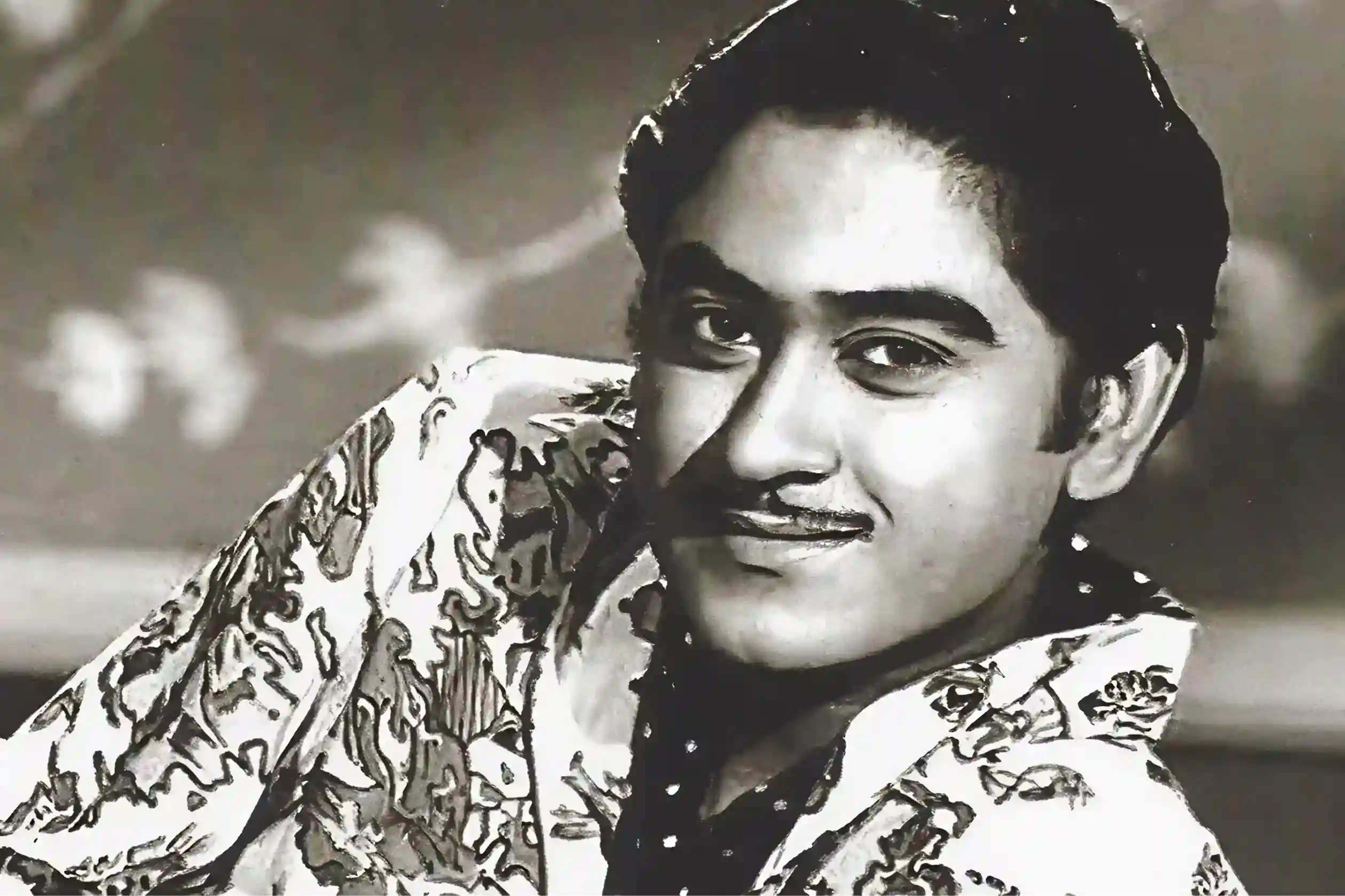
Table of Contents
Singer, actor, lyricist, composer, producer, and director, the titles associated with Abhas Kumar Ganguly, known to the world as Kishore Kumar, are as varied as his legendary vocal range. Despite having no formal training in music, he holds the record for the most Filmfare Awards for Best Male Playback Singer. He remains one of the most influential figures in the history of Indian cinema.
He was the maverick genius of Indian cinema, didn’t just sing songs; he breathed life into them. From soulful romantic ballads to energetic dance numbers, his voice remains the ultimate soundtrack for every human emotion.
Kishore Kumar, especially as a singer, lay in his untrained genius, defined by a natural ability to “act” through his music. Unlike many of his contemporaries, he lacked formal classical training, which allowed him to develop a raw, uninhibited style that resonated deeply with the masses.
He used this rapid alternation between chest and falsetto voices to give his tracks a unique identity. Kishore Kumar songs include Zindagi Ek Safar Hai Suhana, Chala Jata Hoon, and Main Hoon Jhoom Jhoom Jhumroo, among others. He was equally at home with high-energy comedy tracks, soulful romantic ballads, and deep, sorrowful melodies.
Here is an article that explores the legacy and enduring magic of the man who turned madness into art, highlighting 10 Kishore Kumar hit songs that define his legendary legacy. While many remember him as the eccentric king of upbeat yodeling and high-energy antics, his soul resided in the profound depths of his melancholic and classical masterpieces. He was a singer who never had formal training, yet he navigated the intricate bends of Ragas with the intuition of a maestro.
Kishore Kumar: The Yodeling Wizard
Born on August 4, 1929, in Khandwa, Kishore Kumar was a revolutionary force who redefined the vocal landscape of Indian cinema. Despite having no formal classical training, his natural grasp of Bhava (emotion) and Sur (pitch) made him a favorite for legendary composers like R.D. Burman.
His signature yodeling, inspired by Jimmie Rodgers, and his uncanny ability to modulate his voice allowed him to switch effortlessly from zany comedy to deep, melancholic reflections. He didn’t just sing lyrics; he performed them, proving that true artistry transcends technical boundaries and connects directly with the soul.
Filmfare Award-Winning Masterpieces
Kishore Kumar holds the record for the most Filmfare Awards for Best Male Playback Singer (8 wins).
| Year | Winning Song | Film | Music Composer(s) |
| 1970 | Roop Tera Mastana | Aradhana | S.D. Burman |
| 1976 | Khaike Pan Banaras Wala | Don | Kalyanji–Anandji |
| 1979 | O Khaike Pan Banaras Wala | Don | Kalyanji–Anandji |
| 1981 | Hamein Tumse Pyar Kitna | Kudrat | R.D. Burman |
| 1983 | Pag Ghungroo Baandh | Namak Halaal | Bappi Lahiri |
| 1984 | Agar Tum Na Hote | Agar Tum Na Hote | R.D. Burman |
| 1985 | Manzilein Apni Jagah Hain | Sharaabi | Bappi Lahiri |
| 1986 | Saagar Kinare | Saagar | R.D. Burman |
10 Popular Kishore Kumar Songs
A well-curated Kishore Kumar song list is a treasure for every music lover, showcasing his unmatched versatility across romantic, soulful, and peppy tracks. From timeless melodies to energetic hits, the hits of Kishore Kumar continue to inspire generations of singers and listeners alike.
Exploring his songs not only brings nostalgia but also helps learners understand expression, voice modulation, and musical storytelling in Hindi film music. Here is a look at the versatile, soulful side of him through these Kishore Kumar tracks:
Main Hoon Jhoom Jhoom Jhumroo
Kishore Kumar is the writer, composer, and director of this song. This song is from the 1961 film “Jhumroo.” This song was a great opportunity to showcase Kishore Kumar’s talent, and he succeeded. The film was a comedy, so this song was a challenge for him to match its theme. The song is a creative blend of Western yodeling styles.
Yodeling is a vocal technique that involves a rapid alternation between a low-pitched “chest voice” and a high-pitched “falsetto”. Kishore’s version is noted for its robust, natural feel. The specialty of Jimmie Rodgers, known as the ‘Father of Country Music’, lies in his creation of the ‘Blue Yodel’.
This style was a unique American hybridization that blended traditional Alpine yodeling with African-American blues and jazz. Kishore Kumar has implemented this style with Hindi words in a unique way. It can be said that this song started a new direction in Indian film music.
Ek Chatur Naar
This song is a famous song from the 1968 film ‘Padosan’, sung by Kishore Kumar and Manna Dey. How to make a scene in a song last forever, in a humorous way? This song is its identity. The humor comes from Kishore Kumar’s eccentric improvisations and Mehmood’s exaggerated South Indian classical teacher persona.
In this Hindi Kishore Kumar song, written by Rajendra Krishan and composed by R.D. Burman. Many phrases from Raag Bhupali, Raag Jhinjhoti, Vrindavani Sarang, and Gaud Malhar have been used to highlight the song’s mood. Much of the song’s humor comes from Kishore Kumar’s spontaneous additions.
Kishore Kumar’s specialty was his ability to use spontaneous improvisation and comic genius to transform a classical music duel into a legendary comedic masterpiece.
Kishore added famous unscripted lines during the recording, such as “O thede, seedhe ho ja re” and nonsensical rhythmic phrases like “hmm dhaam.” What are the characteristics of his songs? A hallmark of his career, he modulated his voice to perfectly match the bumbling personality of the character Bhola, played by Sunil Dutt on screen.
Aake Seedhi Lagi Dil Pe
This song remains one of the greatest songs in Indian cinematic history from the 1962 Bollywood film ‘Half Ticket’. Due to the unavailability of the proposed female playback singer, Kishore Kumar decided to sing both the male and female parts himself. The music director was Salil Chowdhury, and the lyricist was Shailendra. On-Screen Actors were Kishore Kumar, who disguised himself as a woman, and Pran.
The song was originally intended as a duet between Kishore Kumar and Lata Mangeshkar. When Lataji was unavailable, Kishore Kumar convinced the music director that he could sing both parts. He used his natural voice for the male part and a high-pitched falsetto for the female part, creating one of the most iconic comedic tracks in Indian cinema. A timeless Kishore Kumar old song brings back golden melodies filled with emotion, nostalgia, and unforgettable charm.
He toggles between his natural baritone and a flawless falsetto. It is not just a song; it is a masterclass in vocal range and comedic timing, proving he could out-sing the best of both genders. Kishore Kumar’s unique voice helped him sing this song.
Naina Sawan Bhadon
This song is from the ‘Mahbooba’ film in 1976. Based on Raga Shivaranjani, this song is a haunting melody to Kishore Kumar’s ability to handle semi-classical structures. The music director was R.D Barman, and the lyricist was Anand Bakshi. There is a famous anecdote regarding the recording of this track.
When R.D. Burman first approached Kishore Kumar to sing this song, he was reportedly hesitant because he lacked formal classical training. He requested to hear Lata Mangeshkar’s recorded version first.
After listening to her rendition repeatedly for a week to grasp the nuances, he recorded his version, which many now consider the definitive performance of the track. All Kishore Kumar songs have a deep, emotive performance that captures the yearning and pain of eternal love. Despite not being trained in classical music, Kishore Kumar has succeeded in expressing the song’s emotions while preserving the raga’s effect.
Tere Mere Milan Ki Yeh Raina
The song is an iconic composition by S.D Barman. It’s a gentle, classical-infused duet that feels like a quiet conversation between two souls. Kishore’s voice provides a grounded, masculine warmth that perfectly complements the high-register purity of the composition.
The song is set in the 7-meter rhythm, and its melody is inspired by Rabindranath Tagore’s “Jodi Tare Nai Chini Go.” Rabindra Sangeet has always sounded amazing in Kishore Kumar’s voice, so his rendition of this song makes it extraordinary. The compassion and appeal of Kishore Kumar’s words in this song have come to life, and the film’s context has been highlighted.
Koi Humdum Na Raha
Kishore Kumar sang this song in the 1961 film Jhumroo. The song is in the raga Jhinjhoti. It is technically complex yet emotionally transparent. It reveals his solitary nature. The story behind the song is that it is actually a remake of a 1936 track from the film Jeevan Naiya in Ada Chautal (14 matra) and in raga Jhinjhoti, which was sung by Kishore Kumar’s elder brother, Ashok Kumar.
Ashok Kumar said that when he sang this song, Kishore Kumar was 5 years old. Later, Kishore Kumar asked for his permission to sing it. Since Kishore Kumar had no formal classical training, Ashok Kumar expressed doubts about whether he would be able to perform this song. Kishore Kumar assured him that he would sing it very well and that the song would become history.
Woh Shaam Kuch Ajeeb Thi
This is the pinnacle of pensive, atmospheric music, a poetic or hyperbolic phrase describing the absolute highest, most intense state of deep, quiet, and often melancholy thought. This song represents a moment of profound contemplation, reflection, or wistful Remembering of Love. Gulzar’s lyrics, combined with Hemant Kumar’s composition, created a space where Kishore’s voice feels like it’s drifting through a fog of memories.
He uses a hollow vocal texture here—avoiding power to emphasize the ethereal, strange nature of that memorable evening. poetic ballad from the 1969 psychological drama Khamoshi. The song is picturised on Rajesh Khanna and Waheeda Rehman during a serene boat ride on the Hooghly River in Kolkata.
This song is a masterful application of Raag Yaman (also known as Kalyan), a foundational evening raga in Hindustani classical music. This raga is traditionally performed during the first quarter of the night (early evening).
Its use in the song perfectly mirrors the cinematic setting, a serene boat ride at sunset on the Hooghly River. Raag Yaman is known for evoking Shant Rasa (tranquility and peace) mixed with a sense of romantic longing or devotion. Although Kishore Kumar was not classically trained, he captures the “chalan” (characteristic flow) of Yaman, specifically, its graceful transitions between notes.
Zindagi Ka Safar
This song is from the film ‘Safar’ (1970). If we want to understand the philosophy of life through music, this is it. It is a heavy, stoic kind of sadness. Kishore did not just sing the words; he put pain in them. He captures the helplessness of human existence against the tide of time, making it the definitive anthem for anyone reflecting on life’s journey.
Kalyanji-Anandji directed music, and the lyricist was Indeevar. Kishore Kumar has sung the song in a beautiful rhythm that makes you feel like he is telling the truth of life. His acting skills have been repeatedly highlighted in his songs. This song is also a masterpiece, one of Kishore Kumar’s most popular creations.
Chingari Koi Bhadke
“Chingari Koi Bhadke” from the 1972 classic Amar Prem is widely considered the pinnacle of philosophical melancholy in Indian cinema. Set against the serene, nocturnal backdrop of a boat ride on the Hooghly River, the song features Rajesh Khanna’s quiet despair and Kishore Kumar’s soul-stirring vocals.
Anand Bakshi’s lyrics are a masterclass in metaphor, using elements of nature, fire, rain, and the desert to pose an existential question: if the very things meant to provide relief become the source of pain, where does one find solace?
R.D. Burman’s minimalist composition, which avoids heavy orchestration to let the lyrics breathe, highlights the ‘thehraav’ in Kishore Kumar’s voice.
Despite having no formal classical training, Kishore recorded this emotionally complex track in just one or two takes, creating an immortal anthem for the lonely and the misunderstood.
Khaike Paan Banaraswala
This is a masterpiece by Kishore Kumar and R. D. Burman from the 1978 film Don. This song is a showcasing of the singer’s incredible range, high energy, and rustic playfulness. To capture the raw, authentic grit of a street-smart character from Benaras, Kishore Kumar famously chewed real paan during the recording session, spitting into a bucket to achieve that specific clogged vocal texture.
The song’s infectious energy, driven by R.D. Burman’s folk-fusion beats and Anand Bakshi’s earthy lyrics, transformed Amitabh Bachchan into a folk hero. Interestingly, the track was originally composed for a Dev Anand film (Banarasi Babu) but was rejected, only to become one of the most iconic celebration anthems in Indian cinema history, earning Kishore Kumar a Filmfare Award.
Awards & Recognition
Kishore Kumar’s shelf was decorated with numerous prestigious awards, reflecting his dominance over the Indian music industry for decades. Most notably, he holds the record for the most Filmfare Awards for Best Male Playback Singer.
Here is a detailed breakdown of his major accolades:
Bengal Film Journalists’ Association (BFJA) Awards
He was highly celebrated in West Bengal, winning the Best Male Playback Singer award four times:
- 1971: For Aradhana
- 1972: For Andaz
- 1973: For Kora Kagaz
- 1975: For Amanush
State Government Honors
- Lata Mangeshkar Award: He was conferred with this prestigious award by the Government of Madhya Pradesh for his outstanding contribution to music.
- Kishore Kumar Award: Posthumously, the Madhya Pradesh government gave an award in his name to honor excellence in cinema and music.
National Recognition
While he surprisingly never won a National Film Award for singing (often attributed to his fallout with the government during the Emergency period), he remains one of the most culturally significant figures in Indian history. In his honor, the postal department released a commemorative postage stamp featuring his face in 2003.
Relive the Melody, Learn Kishore Kumar Hit Songs Online
The top 10 songs of Kishore Kumar are more than just classics; they’re a masterclass in expression, melody, and timeless storytelling. From soulful ballads to energetic hits, each song offers something unique for every music lover. At Artium, our Hindi Popular Film Music classes help learners of all ages explore and sing these iconic tracks with the right technique and emotion, guided by expert instructors in a structured, engaging learning environment.
Through personalized feedback, real-time practice tools, and step-by-step guidance, learners not only recreate these songs but also build strong vocal foundations. Whether you’re a beginner or an aspiring performer, Artium, an online music learning platform, helps you bring Kishore Kumar’s magic to life in your own voice.
FAQs
“Kuch To Log Kahenge” from Amar Prem in 1972 stands as a monumental achievement in Kishore Kumar’s career because it perfectly captures his ability to deliver profound life lessons with a soothing, conversational grace. While he was often celebrated for his eccentric energy, this track showcases his soulful restraint and “thehraav” (depth), as he transforms Anand Bakshi’s philosophical lyrics into a universal anthem of resilience against social judgment. Singing for Rajesh Khanna, Kishore’s voice serves as a gentle, guiding force, blending melancholy with a powerful moral backbone. It is arguably his “best” because it transcends the boundaries of film music, becoming a timeless mantra of personal freedom, proving that his greatest strength wasn’t just his range but his incredible emotional intelligence.
The debate between Mohammad Rafi and Kishore Kumar is essentially a choice between perfection and personality. Mohammad Rafi was the ultimate technical maestro, a classically trained powerhouse with a versatile range that could effortlessly transition from a thunderous Sufi qawwali to a delicate, whisper-soft romantic ballad. His specialty lay in his flawless pitch and his versatile ability to mold his voice to suit the specific mannerisms of any actor on screen. In contrast, Kishore Kumar was the unconventional genius, a self-taught singer who relied on raw emotion, a resonant baritone, and an incredible sense of rhythm and improvisation. While Rafi represented the peak of playback craftsmanship, Kishore defined the era of vocal expressionism.
While Kishore Kumar’s discography is vast, his top albums are primarily iconic film soundtracks that defined eras of Bollywood music. The Aradhana in 1969 songs is considered his most essential, as it launched the Rajesh Khanna-Kishore phenomenon with hits like Mere Sapno Ki Rani and Roop Tera Mastana. Other legendary albums include “Amar Prem” in 1972 and “Aandhi” in 1975, which showcased his ability to handle deep, semi-classical, and philosophical melodies. For fans of his higher energy and versatility, the songs for “Padosan” (Hum Kisise Kum Naheen, 1977) and “Sharaabi” (1984) are definitive. Apart from the Kishore Kumar songs, those in Bengali and Hindi are also filled with eternal fascination.
A major contender for this title is “Chingari Koi Bhadke” from Amar Prem, which leans more toward philosophical melancholy, capturing the quiet ache of a soul that has given up on the world. Whether it is the desperate romantic longing of the former or the weary resignation of the latter, Kishore’s ‘sad’ songs are best defined by their unmatched sincerity, he didn’t just sing the lyrics; he made you feel the weight of the loneliness behind them.
Although Kishore Kumar had no formal classical training, he has sung many classical-flavoured songs. His performance in “Mere Naina Sawan Bhadon” is legendary specifically because he didn’t approach it as a technical exercise in Raag Shivaranjani. Legend has it he actually asked R.D. Burman to let Lata Mangeshkar record her version first so he could listen to it and grasp the emotional “soul” of the song before attempting it himself.
By the time he got behind the mic, he wasn’t just singing notes; he was channeling that haunting, unrefined longing that made the listener feel every bit of the heartbreak. It’s that rare “Kishore-da” intuition—he didn’t just hit the notes; he inhabited them.
Kishore Kumar’s repertoire features numerous iconic songs inspired by Indian classical ragas, despite his lack of formal musical training. His innate musical instinct allowed him to navigate complex classical frameworks by focusing on their emotional essence rather than technical theory. Many of his most celebrated tracks are rooted in specific ragas:
Mere Naina Sawan Bhadon (Mehbooba) – Raga Shivranjani
Khilte Hain Gul Yahaan (Sharmilee) – Raga Bhimpalasi
Tere Mere Milan Ki Yeh Raina (Abhimaan) – Raga Khamaj
Iss Mod Se Jaate Hain (Aandhi) – Raga Yaman
Koi Humdum Na Raha (Jhumroo) – Raga Jhinjhoti
Woh Shaam Kuch Ajeeb Thi (Khamoshi) – Raga Yaman
Waqt Ki Hera Pheri Hai (Raga Malkauns)
Gaata Rahe Mera Dil (Guide) – Raga Pahadi
Aate Jaate Khoobsoorat (Anurodh) – Raga Bhairavi
Transition effortlessly between romantic, playful, and serious moods. Unlike classically trained contemporaries, Kishore Kumar’s unrefined yet brilliant approach is studied for its natural diction, which focuses on clear pronunciation and a masculine baritone that remains steady even during a sensuous whisper or anguished sob. Students learn from his signature techniques, such as his legendary yodelling and his light singing style , encouraged by S.D. Burman , which favored unconventional vocal innovations and character embodiment over rigid technical perfection.