
All Topics
- Alchemizing Music Concepts for Students
- Anuv Jain Songs
- Artist Spotlight
- artium gift card
- Artium Maestros
- Artium News
- Artium Practice Studio
- Artium Tech Blog
- Best Coke Studio Songs
- Best Female Singers
- Birthday songs
- Bollywood Love Songs
- buying guide
- Carnatic Music
- Child Singers
- Devotional Music
- Editorials by Ananth Vaidyanathan
- English Love Songs
- Festival
- Film Music
- Ghazal Music
- Guitar
- Hindustani Classical Music
- Indian Classical Music
- Indian Folk Music
- Insights
- Instagram Reels Viral Songs
- Instruments
- Karaoke
- Karaoke Singing
- Keyboard
- Kids Music
- maestros
- Music Education
- Music for Kids
- Music Games
- Music Industry
- Music Instruments
- Music Legends
- Music Press Release
- Music Technology
- Music Theory
- Music Therapy
- Music Tools
- Piano
- piano guide
- Songs
- South Devotional Music
- Success Stories
- Tamil Film Music
- Telugu Film Music
- Time Theory
- Tools
- Uncategorized
- Uncategorized
- Uncategorized
- Uncategorized
- Vocal Range
- Vocal Singing
- Vocals
- western classical music
- western music
- Western vocal music
How Ragas in Carnatic Music Reflect the Natural Rhythm of Time? Understanding Their Mood and Emotions
How Ragas in Carnatic Music Reflect the Natural Rhythm of Time? Understanding Their Mood and Emotions

Table of Contents
I have judiciously curated the Carnatic Classical Music course at Artium Academy to support learners engaged in Carnatic online music learning, as well as those enrolled in our structured Carnatic music classes, broader Indian classical singing classes, and Indian classical music classes. Raag sangeet lies at the core of Indian classical music, serving as the cardinal principle for expressing aestheticism through the weaving of melodies.
Also, by evoking images of ragas as and when presented. A raga is not only a melodic framework but also a web of intricate aesthetic schemas that govern the emotional, aesthetic, and tonal architecture of Indian classical music.
Each raga embodies a particular constellation and framework of swaras, intervals, arohanam–avarohanam, and distinct prayogams, phrases crafted to evoke the spirit, essence, and rasa-bhaav of that raga. For learners exploring this depth through online Carnatic music classes, understanding these nuances becomes the gateway to true musical expression.
Within Raga Sangeet lies a balance of freedom and discipline, granting artists boundless improvisation while honoring its inviolable rules. Each raga is perceived as a dynamic, living entity that resonates with nature and the human mind.
Understanding Carnatic Classical Music
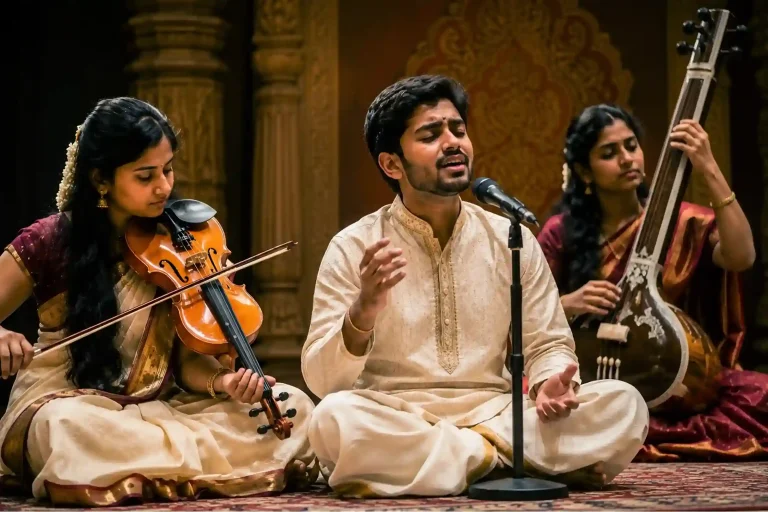
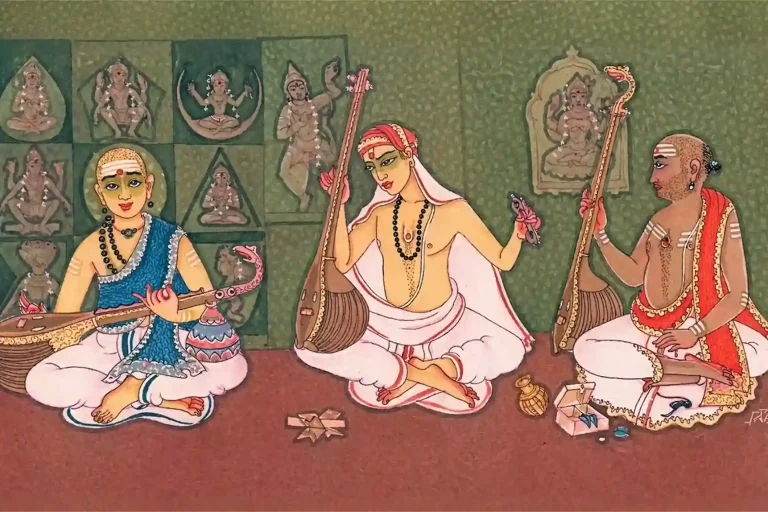
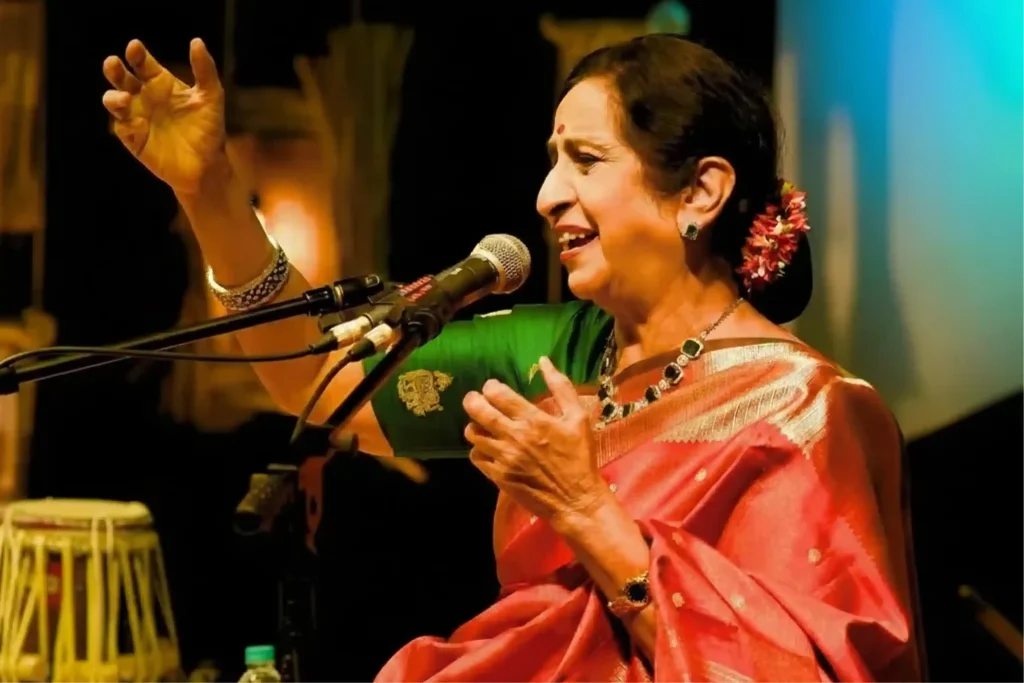
Carnatic classical music is one of the main traditions of Indian classical music, originating in South India. It is a highly sophisticated yet intricate system that involves ornate melodic patterns with rhythmic complexity, emphasizing both improvisation and composition.
Unlike Western classical music, which often focuses on harmony, Carnatic music revolves around melody (raga) and rhythm (tala), creating a deeply expressive art form that communicates emotions and spiritual themes and has a profound effect on the human mind and emotions, stimulating the brain, enhancing focus, memory, and emotional awareness.
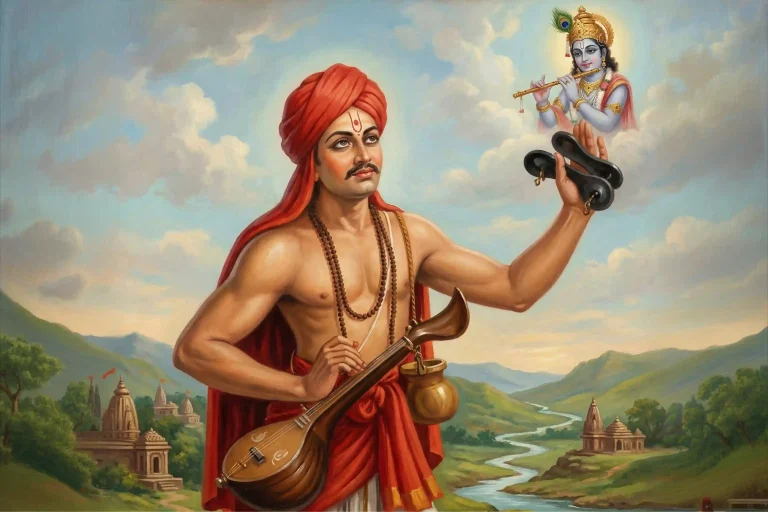
Performing or even practicing the music encourages discipline, patience, and emotional expression, and evokes spiritual and emotional depth. Many compositions are devotional, connecting the listener to themes of love, surrender, and transcendence. For example, many devotional compositions have been made by Purandara Dasa, often called the “Father of Carnatic Music.” Some of his notable compositions are Jagadoddharana, a praise of Lord Krishna, and Rama Ninna, expressing devotion and love for Lord Rama.
In contrast to Hindustani classical music, where rāgas are strictly tied to specific times of day, Carnatic music generally allows rāgas to be performed at any hour. Nonetheless, rāgas often resonate naturally with the rhythms of nature, human emotions, and socio-cultural practices. This study investigates how Carnatic rāgas mirror the natural flow of time, with particular attention to the mood (rasa) and emotional character inherent in each rāga.
It draws on historical treatises, aesthetic principles, and performance traditions to offer a comprehensive insight into the interplay of time, emotion, and musical expression within the Carnatic tradition. But over the centuries, certain rāgas have developed associations with moods or times through tradition, seasonal context, or natural resonance.
The Concept of Time in Carnatic Music
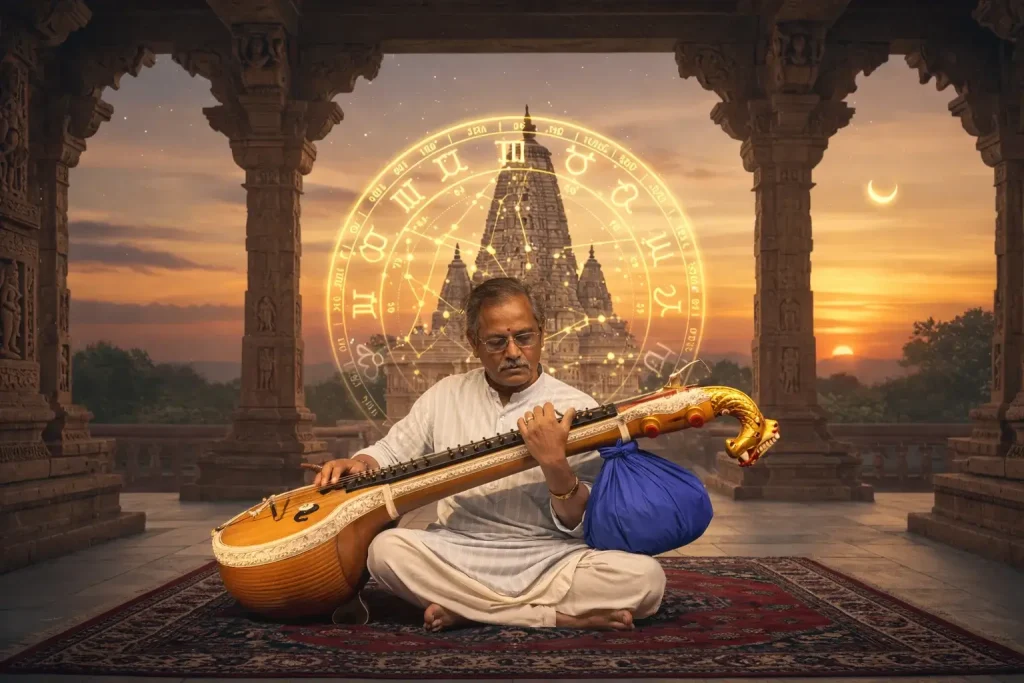
Unlike Hindustani music, which emphasizes Samay Rāga, Carnatic music does not assign rāgas to specific hours. In Carnatic concerts, the choice of rāga is primarily guided by bhava (emotion) – the emotional or devotional essence of the composition and by the structure of the performance. Historically, whether in temples, concert halls, or recording studios, rāgas have been performed at any time, with the primary practical constraint being the audience’s receptivity.
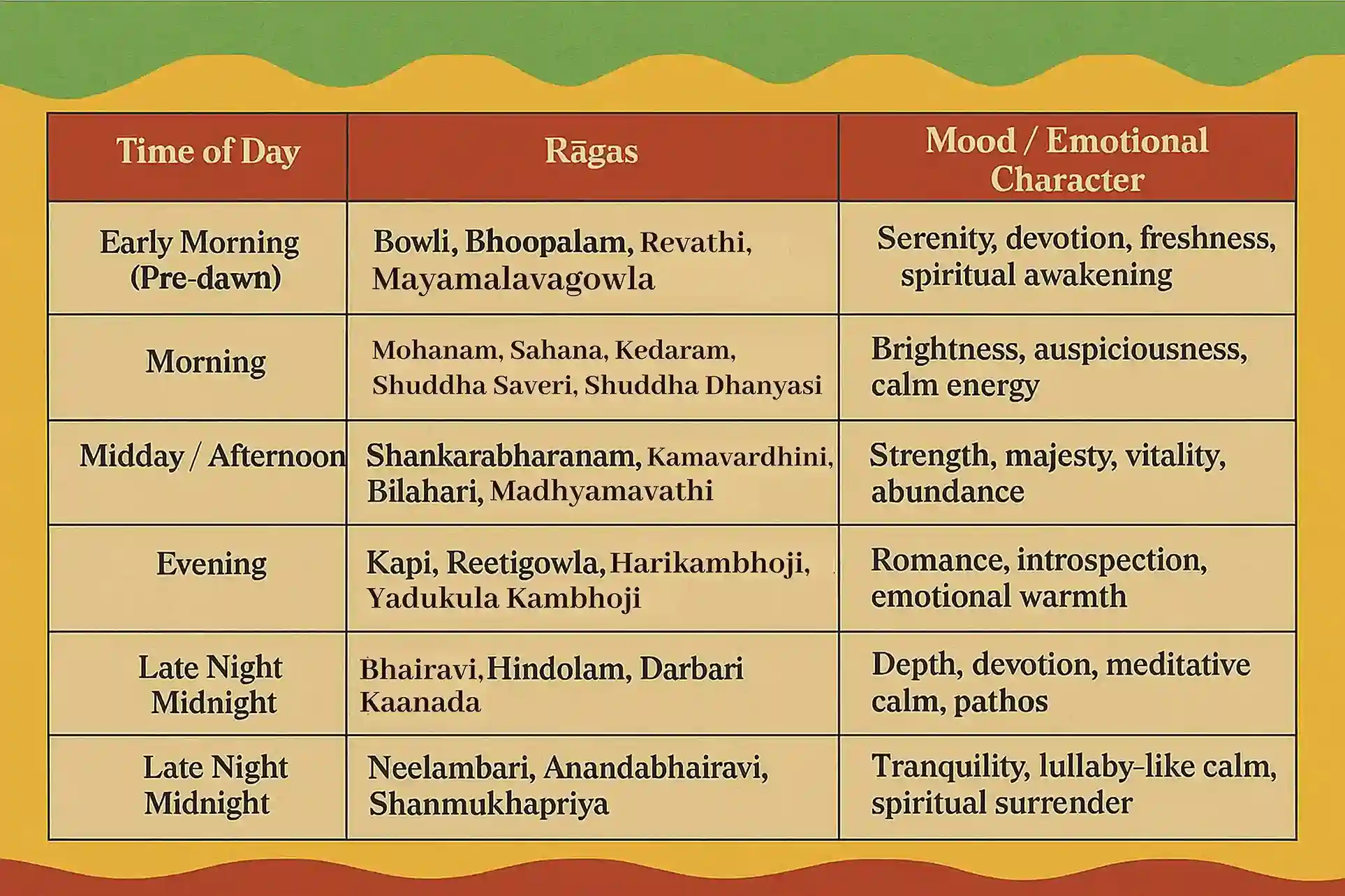
Nonetheless, time remains subtly connected to mood. Morning hours are associated with calmness and freshness; afternoons with vigor and vitality; evenings with introspection; and late nights with meditative depth.
Below is an informal list of correspondence between time and mood in Carnatic music.
Watch and understand Raag Neelambari: The BEAUTY of Raaga Neelambari in Naa Inti Mundhunna | Artium Carnatic
Morning Rāgas and Their Essence
Morning, symbolically linked to renewal and clarity, is well-suited to ragas featuring mostly pentatonic scales, simple melodic structures, and smooth gamakas. Such ragas promote mental calmness and spiritual focus.
Examples:
- Bowli – A pentatonic rāga traditionally used in morning prayers (suprabhātam), it evokes serenity and spiritual purity.
- Bhoopalam – Gentle and meditative, it reflects the first light of dawn and the quietude of nature.
- Revagupti – Its symmetric scale facilitates calm improvisation and devotional expression
- Udayaravichandrika, or Shuddha Dhanyasi – A popular audava or pentatonic raga, commonly performed in concerts, retains an auspicious, bright character suitable for the morning mood.
Various song compositions are also sung during the morning period, based on the ragas mentioned above. The emotional essence of morning rāgas aligns with shanta (tranquility) and bhakti (devotion), creating an introspective yet uplifting atmosphere.
Midday and Afternoon Rāgas and Their Essence
Afternoon ragas typically employ full seven-note scales (sampurna rāgas) and allow expansive improvisation. Their mood is majestic, energetic, and bright, reflecting the peak of natural activity.
Examples:
- Shankarabharanam – Often considered the Carnatic equivalent of the Western major scale, it conveys balance and clarity.
- Kambhoji – Its grandiose structure embodies majesty and warmth.
- Bilahari – Cheerful and energetic, this rāga mirrors midday vitality.
- Madhyamavati – Its auspicious character aligns with temple ceremonial or ritualistic practices.
Midday ragas evoke confidence, abundance, and celebratory energy, complementing both devotional and festive compositions.
Evening Rāgas And Their Essence
Evening ragas typically feature soft gamakas, flowing melodic phrases, and moderate pitch ranges. They evoke moods of romance, nostalgia, and contemplation, reflecting the transition from day to night.
Examples:
- Kapi – Expressive and tender, ideal for conveying longing or devotional love.
- Reetigowla – Romantic and graceful, its phrases mirror the gentle fading of daylight.
- Yadukula Kambhoji – Peaceful and dignified, supporting reflective or devotional compositions.
Evening ragas illustrate the day’s emotional cooling, fostering introspection and aesthetic enjoyment.
Night Ragas and Their Essence
In Carnatic music, nighttime is linked with introspection, devotion, and meditative calm. Rāgas performed at night often feature slow, elongated phrases and deeper tonal textures.
Examples:
- Bhairavi – Evokes deep pathos and devotion, ideal for evening and night performances.
- Hindolam – Pentatonic and hypnotic, fostering meditative stillness.
- Darbari Kaanada – Adopted from the Hindustani tradition, grand and contemplative.
- Neelambari – Traditionally used in lullabies, conveying surrender and tranquility.
- Natakurinji– This can be sung at any time of day due to its versatility, but is usually sung in the evening, especially from 7 pm to 10 pm.
Night ragas collectively exemplify the emotional states of karuna (compassion), shanta (tranquility), and bhakti (devotion). They mirror the human circadian rhythm, aligning with the natural progression toward reflection, emotional processing, and rest. By fostering a contemplative, serene mindset, night ragas offer both performers and audiences an immersive emotional and spiritual experience.
The careful use of slow tempo, subtle ornamentation, and deep tonal resonance underscores Carnatic music’s capacity to guide the listener through a spectrum of nuanced emotional and devotional states.
Preserving the Art & Essence of Indian Classical Music
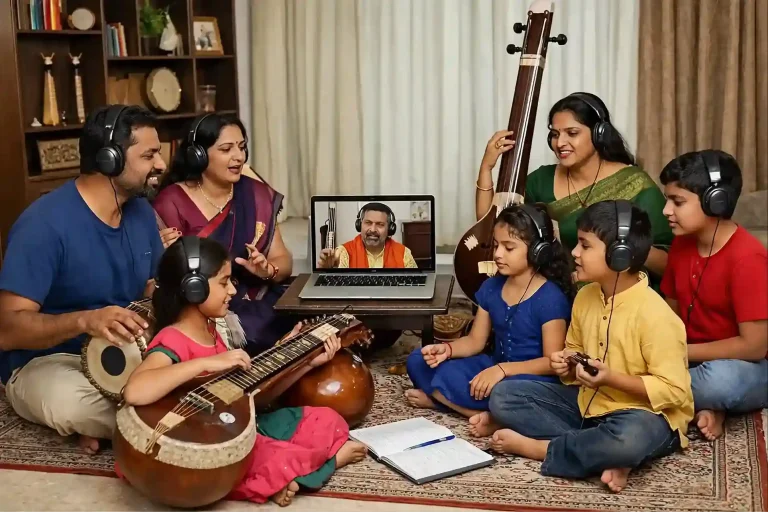
At Artium Academy, the rich philosophy and grammar of Indian classical music are taught with exceptional clarity, particularly through our dedicated Carnatic online music learning programs and comprehensive online Carnatic music classes. Our Indian classical singing classes are designed to offer students a complete, immersive learning experience that blends technical mastery with artistic expression.
Guided by a curriculum curated by the maestros like Smt. Aruna Sairam, Smt. Shubha Mudgal, Smt. K.S. Chitra, an expert instructor, especially in personalized 1:1 sessions, helps students develop a deep understanding of raga structure, voice modulation, and precise pronunciation. Just as importantly, they are introduced to the emotional depth, spiritual resonance, and expressive beauty that define the great tradition of Carnatic and Indian classical music.
This holistic approach ensures that learners not only build strong foundational skills but also cultivate a profound, lifelong connection to the art form.
Abstract Discussion: Linkage of Nature with Human Mind & Emotion
Carnatic ragas exemplify a deep interplay between musical structure and human emotion, capturing the natural rhythms of life without imposing strict temporal regulations. Morning ragas evoke purity and serenity, afternoon ragas radiate energy and vitality, evening ragas foster introspection and romance, and nighttime ragas cultivate depth, devotion, and meditative calm.
These informal associations highlight the psychological, emotional, and cultural logic underpinning Carnatic music:
- Psychological Resonance: The human mind intuitively responds to melodic patterns and tonal textures that align with the rhythms of the day, enhancing receptivity and emotional impact.
- Emotional Continuity: Ragas enable performers to sustain coherent emotional narratives across a concert, creating a journey that engages the listener’s mind and heart.
- Cultural Practice: Over centuries, communities have intuitively linked specific ragas with moods, ceremonies, or daily cycles, shaping the aesthetic perception of time without formal codification.
In a nutshell, while Carnatic music offers greater flexibility than the strict temporal prescriptions of Hindustani rāgas, it achieves comparable expressive outcomes. Through careful control of melodic contour, ornamentation (gamakas), and mood (rasa), performers can evoke appropriate emotions and atmospheres at any time, reflecting a sophisticated understanding of human psychology, cultural practice, and the natural flow of time.