
All Topics
- Alchemizing Music Concepts for Students
- Anuv Jain Songs
- Artist Spotlight
- artium gift card
- Artium Maestros
- Artium News
- Artium Practice Studio
- Artium Tech Blog
- Best Coke Studio Songs
- Best Female Singers
- Birthday songs
- Bollywood Love Songs
- buying guide
- Carnatic Music
- Child Singers
- Devotional Music
- Editorials by Ananth Vaidyanathan
- English Love Songs
- Festival
- Film Music
- Ghazal Music
- Guitar
- Hindustani Classical Music
- Indian Classical Music
- Indian Folk Music
- Insights
- Instagram Reels Viral Songs
- Instruments
- Karaoke
- Karaoke Singing
- Keyboard
- Kids Music
- maestros
- Music Education
- Music for Kids
- Music Games
- Music Industry
- Music Instruments
- Music Legends
- Music Press Release
- Music Technology
- Music Theory
- Music Therapy
- Music Tools
- Piano
- piano guide
- Songs
- South Devotional Music
- Success Stories
- Tamil Film Music
- Telugu Film Music
- Time Theory
- Tools
- Uncategorized
- Uncategorized
- Uncategorized
- Uncategorized
- Vocal Range
- Vocal Singing
- Vocals
- western classical music
- western music
- Western vocal music
8 Free Online Music Tools You Can Use Right Now
8 Free Online Music Tools You Can Use Right Now

Table of Contents
Quick Summary
| Artium Academy offers eight music tools, virtual piano, harmonium, metronome, guitar tuner, tabla, tanpura, swar meter and tala tool. Built for beginners and pros, these browser-based resources let you learn, practice and create music anywhere. No downloads, installations or fees required. Just open your browser. Start playing. Perfect for music learners seeking accessible high-quality practice tools. |
Introduction
Whether you’re a complete beginner picking up your first instrument or an experienced musician looking to refine your skills, having the right music tools at your fingertips can transform your practice routine. The good news? You no longer need expensive hardware or complicated software to access professional-quality music resources. Today’s browser-based music tools online are powerful, intuitive and completely free.
At Artium Academy we understand that consistent practice is the foundation of mastery. That’s why we have developed a suite of eight music tools designed to support learners across genres from piano and guitar to Indian classical instruments like tabla, harmonium and tanpura.
In this guide we will walk you through each of the eight free music tools on Artium Academy, explain why online music tools matter and help you choose the ones for your goals.
Why Use Online Music Tools?
Online music tools have revolutionized how musicians learn, practice and create. Unlike methods that require instruments, dedicated hardware or expensive software installations, browser-based music tools online offer instant access from any device with an internet connection. Here’s why they’re becoming the go-to choice for students, teachers and professionals.
1. Accessibility and Convenience: Practice anytime, anywhere, no heavy instruments or setups. Just open your browser and play, perfect for students without physical instruments.
2. Cost-Effective Learning: Artium Academy’s suite is completely free, removing financial barriers. Try virtual instruments before buying physical ones.
3. Real-Time Feedback and Precision: Guitar tuner, swar meter, and metronome provide instant feedback, helping you correct pitch and timing errors immediately for better technique.
4. Support for Multiple Traditions: From piano scales to Carnatic talams to Bollywood guitar, Artium serves both Western and Indian classical music without adapting foreign tools.
5. No Downloads or Technical Hassles: Browser-based tools work instantly on desktop and mobile, no installations, app stores, or compatibility issues.
6. Integration with Structured Learning: Combine free tools with Artium’s live classes and personalized feedback for faster progress than self-directed practice alone.
Best Free Music Making Programs
Artium Academy’s eight free music tools target specific skills, tuning, rhythm, pitch accuracy, and instrument familiarity. Rather than overwhelming you with endless features, each tool serves a clear purpose in your musical development. From guitar tuning to Carnatic talams, these essential building blocks make practice more effective. Let’s explore them one by one.
1. Online Guitar Tuner
Keeping your guitar in tune is the first step toward sounding professional and the Online Guitar Tuner from Artium Academy makes it effortless. This free browser-based tool uses your device’s microphone to detect pitch in time showing you whether each string is sharp, flat or perfectly in tune.
How It Works: Simply allow microphone access, pluck a string, and watch the tuner display guide you. The tool supports standard tuning (E-A-D-G-B-E) as well as popular alternate tunings used across different styles from open G for blues to drop D for rock. No manual adjustments or guesswork needed.
Why It’s Better Than Physical Tuners: Unlike clip-on tuners or pedal tuners, this online guitar tuner requires no extra hardware. It works on desktop and mobile, making it perfect for quick tuning checks before practice, lessons, or performances. Students especially benefit from consistent tuning, as it reinforces correct listening skills and makes chords and scales sound clean.
Who Should Use It: This tool is ideal for beginners learning their chords, players experimenting with alternate tunings and advanced musicians who need a reliable reference during live gigs. Music teachers can also recommend it to students for at-home practice between sessions.
Pro Tip: Tune your guitar every time before you play. Strings naturally shift out of tune due to temperature, humidity and playing. Using a guitar tuner online each session helps maintain sound and better playing technique.
2. Online Piano
Dreaming of playing piano but don’t own one? Artium Academy’s Online Piano brings a keyboard to your browser complete with interactive features that guide your learning. This isn’t a sound generator; it’s a teaching tool designed to help you understand notes, chords and musical structure.
Key Features:
- Visual Keyboard Display: See notes highlighted as you play, helping you connect theory with practice.
- Chord Guidance: Select a chord, and the screen shows exactly which keys to press, perfect for learning harmonic structures.
- MIDI Support: Connect a physical MIDI keyboard for a more authentic playing experience.
- Computer Keyboard Mapping: Play using your laptop keyboard (A to K covers one octave) if you don’t have a MIDI controller.
Learning Benefits: The Online Piano is especially powerful for students without access to an instrument. It allows you to practice scales, experiment with chord progressions and develop finger independence from your browser. The dual real-time visualization feature even supports lessons letting teachers see your presses and provide instant feedback on timing and accuracy.
Who It’s For: Beginners exploring their melodies, vocalists learning piano accompaniment and composers sketching ideas will all find value here. Artiums structured Online Piano Courses take this further pairing the tool with expert instructors who guide you from beginner to levels through feedback.
Pro Tip: Start with scales and familiar songs to build confidence. Use the chord display feature to understand how harmonies are constructed this knowledge transfers to any instrument you play.
3. Online Metronome
What Is a Metronome?
A metronome is a tool that produces beats at a set tempo helping musicians maintain consistent timing and rhythm. At Artium Academy our free Online Metronome goes beyond functionality offering customizable time signatures BPM (beats per minute) and interactive controls that make practice more effective.
Why It’s Better Than Google’s Metronome
While Google’s basic metronome only allows tempo adjustments, Artium’s Online Metronome offers more flexibility for serious practice. You get access to multiple time signatures including 3/4, 4/4, 6/8, 5/4 and beyond plus precise tempo control ranging from 35 BPM to over 220 BPM. The interactive dashboard keeps your practice sessions focused while visual and auditory cues work together to reinforce rhythm and help you internalize timing
Start by setting your desired tempo in BPM beginners should begin around 60 BPM. Gradually increase speed as they build confidence. Next choose the correct time signature for your piece, such as 4/4 for pop songs or 3/4 for waltzes. Once everything is set press “Start”. Synchronize your playing with each tick focusing on locking your notes to the beat for consistent timing.
Benefits of Regular Use
- Builds consistent timing across fast and slow passages
- Trains your ear and body to internalize pulse
- Helps you tackle complex time signatures and syncopations
- Enables gradual tempo increases without sacrificing accuracy
- Elevates overall musicianship and performance precision
Who Should Use It
Every musician, pianist, guitarists, drummers, vocalists and even dancers benefits from metronome practice. It’s especially critical for students preparing for exams or performances where timing consistency is non-negotiable.
Pro Tip: Practice passages at 50% of target tempo with the metronome then incrementally increase speed only when you can play flawlessly. This builds muscle memory without reinforcing mistakes.
4. Online Harmonium
The harmonium is a cornerstone of devotional music providing rich drone accompaniment for vocals and instrumental practice. Artium Academy’s Online Harmonium replicates harmonium tones directly in your browser, no physical instrument below practice or tuning required.
How It Works
Click. Tap keys to trigger harmonium note samples. You can also play using your computer keyboard (A to K covers the octave). Each key produces quality letting you practice raags, bhajans and scales with accurate pitch reference.
Why Use a Virtual Harmonium
- Always in Tune: Unlike physical harmoniums that require regular maintenance, the online version is perpetually accurate.
- Portable Practice: Carry it anywhere on your phone or laptop, ideal for travelers or students without space for a physical instrument.
- Instant Access: No setup, no warm-up. Open the page and start playing immediately.
- Beginner-Friendly: Learn key layouts and note positions before investing in a physical harmonium.
Who It’s For
From beginners exploring classical music to trained vocalists needing quick accompaniment this tool serves all levels. It’s especially valuable for singers who want to check pitch before a session or practice raags without a harmonium
Pro Tip: Use the harmonium to verify your pitch while singing scales. Play a note, sing it then compare this build intonation over time.
5. Online Tabla
The tabla is the heartbeat of classical music providing intricate accompaniment for vocals, instruments and dance. Artium Academy’s Online Tabla brings this percussion instrument to your browser letting you practice rhythm cycles (talas) anywhere.
Key Features
- Multiple Taal Options: Practice popular talas like Teentaal (16 beats), Dadra (6 beats), Keherwa (8 beats), Jhaptaal (10 beats), Rupak, Ektaal, and Bhajani.
- Adjustable Tempo: Start slow to master stroke coordination, then gradually increase speed as you build confidence.
- Note Selection: Choose your preferred pitch (C, D, E, etc.) to match your vocal or instrumental range.
- Volume Control: Balance the tabla sound with your practice without overpowering your voice or instrument.
How to Use It for Practice
- Pick a tala based on your practice goals (e.g., Teentaal for foundational rhythm, Dadra for lighter compositions).
- Set a comfortable tempo, beginners should start around 60-70 BPM.
- Coordinate your clapping, vocals, or instrument with the tabla beats, focusing on landing precisely on each matra (beat).
- Experiment with different talas to build rhythmic versatility.
Pro Tip: Don’t rely solely on the online tabla, pair it with lessons from an Artium Academy instructor to develop proper technique, stroke clarity, and advanced rhythmic concepts.
6. Tanpura / Shruti Box
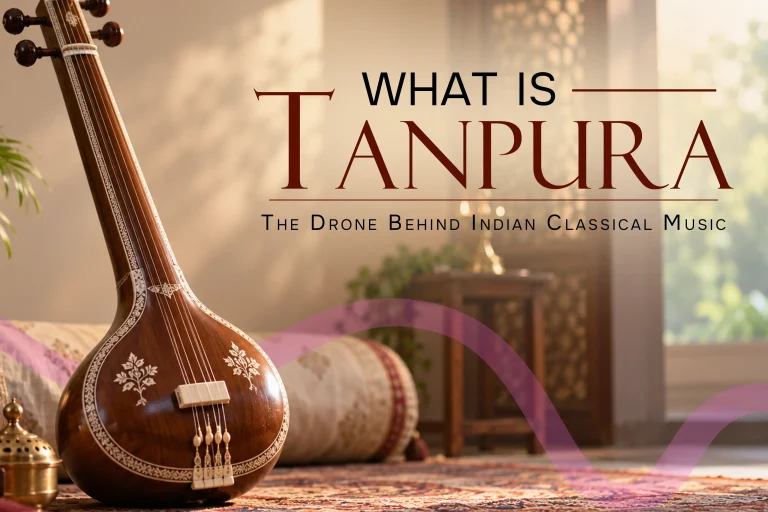
In music the tanpura (or shruti box) creates the essential drone that keeps the pitch steady and forms the base of a raga. Artium Academy’s Online Tanpura/Shruti Box gives you the sound of this tool without needing a physical instrument.
What It Does
The tanpura makes a sound based on the pitch you choose (like C, D, E) and the scale (Sa, Pa, Ma and so on). This sound helps you keep your pitch correct while you practice scales, ragas or music.
How to Use It
- Select a pitch that matches your vocal or instrumental range (common choices: C, D, E, F#).
- Adjust the volume so the drone supports without overpowering your practice.
- Begin singing or playing, using the tanpura’s sound as a stable reference to check your pitch continuously.
- For raga practice, tune the tanpura to the raga’s tonic and use it to internalize the scale’s mood and structure.
Benefits for Different Traditions
- Carnatic Music: Tune to your shruti and practice core ragas like Mayamalavagowla or Shankarabharanam, refining pitch accuracy.
- Hindustani Music: Establish the scale and mood for ragas like Yaman or Bhairav, using the drone to maintain tonal center.
- Meditation and Relaxation: The tanpura’s soothing resonance is also used for mindfulness practices and ambient soundscapes.
Pro Tip: Use the tanpura in every practice session. Over time you’ll get better at hearing changes in pitch. Feel more connected to the ragas emotions.
7. Swar Meter
Pitch accuracy is the part of Indian classical music, where even small changes can change the sound of a raga. Artium Academy’s Free Online Swar Meter listens to your voice or instrument in time. Shows the exact note you are singing or playing Sa, Re, Ga, Ma, Pa, Dha or Ni along with visual feedback on whether you are on the right note too high or too low.
How It Works
Allow the microphone to work then sing or play a note. The swar meter quickly finds your pitch and shows:
- The corresponding swar (e.g., “Ga” or “Dha”)
- Whether you’re accurate, sharp, or flat
- Real-time updates as you move between notes
Why Musicians Use It
- Ear Training: Regular use sharpens your ability to recognize and reproduce precise pitches.
- Self-Correction: Identify and fix pitch drift during solo practice, without needing a teacher present.
- Exam/Performance Prep: Verify your swar accuracy before lessons or concerts.
- Beginner Foundation: Helps new students understand the notes and build the ability to hear them from the start.
Applications Across Instruments: While made for singers the swar meter also works for harmonium, sitar, violin and any instrument that plays notes. It’s especially useful for students learning music, where exact pitch matters a lot.
Pro Tip: Use the swar meter during scale practice. Sing each note slowly and check the meter. Adjust until you are always in the center of each note. This helps your ear get better. Your note recognition improves.
8. Tala / Talam Tool
For students of Carnatic music, understanding and internalizing talam (rhythmic cycles) is as critical as mastering swaras. Artium Academy’s Tala/Talam Tool plays accurate Carnatic rhythmic cycles in real time, helping vocalists, instrumentalists, and dancers practice timing without needing a live mridangam or percussion accompanist.
What Is Taal in Music?
Taal (or tala/talam) is the structure that organizes a piece into fixed beat patterns. It controls timing, how the music is shaped and where the emphasis is. It is the base for both Hindustani and Carnatic traditions. In music the talams are more complicated with patterns like Adi Talam (8 beats) , Rupaka Talam, Triputa, Ata and Eka Talam.
How the Tool Works
- Select a talam from the dropdown (e.g., Adi Talam, Rupaka, Khanda Chapu, Misra Chapu).
- Choose the jathi (rhythmic subdivision: Tisra, Chatusra, Khanda, Misra, Sankeerna).
- Adjust tempo (BPM) to match your practice speed.
- Press “Play” and synchronize your singing, playing, or dance movements with the cycle.
Why Musicians Use It
- Solo Practice: Build confidence with complex talams before performing with live accompanists.
- Riyaaz/Abhyasam: Maintain timing during daily scale and composition practice.
- Dance Alignment: Keep choreography synchronized with rhythmic cycles.
- Rhythmic Accuracy: Internalize the structure of each talam through repeated listening and clapping.
Pro Tip: Start with talas like Adi Talam move to more complex ones like Ata or Sankeerna Jathi. Clap along with the tool to feel the rhythm and help your memory. This works better than listening.
Other Useful Musical Instrument Tools Online
Beyond Artium Academy’s tools there are several free online tools that can help with your practice. For recording and making music try DAWs like BandLab, Soundtrap or Soundation which let you record, add instruments and use effects without needing to download anything. Special tools include tone generators for ear training Hookpad for chord ideas and Noteflight for writing music. Rhythm-focused people can use drum machines like SoundTools.io or time-stretch players for slowing down parts. Even sites like The Online Metronome and LKForge offer options for metronomes and tuners but Artium Academy’s eight tools are the choice, especially for Indian musicians thanks to their cultural focus, structured learning and free access.
How to Choose the Right Music Tool for Your Needs
Pick tools that match your goals, the instrument you play and your skill level. Focus on tuning tools like Guitar Tuner and Swar Meter for notes or Metronome and Tabla for rhythm. Make sure the tools fit your tradition Indian classical singers need Tanpura and Harmonium while guitarists focus on tuner and metronome. Start simple if you’re new and as you get better use tools. Use Artium Academy’s learning plan to improve faster and don’t get many tools to master the eight ones first.
Final Thoughts
Music is a journey that never ends. The right tools can make the path easier fun and more effective. The eight free music tools from Artium Academy, Guitar Tuner, Online Piano, Metronome, Harmonium, Tabla, Tanpura, Swar Meter, and Tala/Talam Tool cover the essential bases for musicians across traditions. Whether you are tuning your guitar, practicing rhythms or improving your pitch with the swar meter, these online tools make it easy to get better without any cost.
FAQs
Great music making programs include BandLab, Soundtrap and Soundation. These browser-based DAWs offer recording, MIDI, loops and more. For practice Artium’s tools like piano, harmonium, metronome and others are perfect for learning.
Yes. You can record vocals, program drums, add instruments, mix and export songs using BandLab and Soundtrap. For learning, pair these with Artium’s tools for practice.
Start with Online Guitar Tuner, Metronome and Online Piano or Harmonium. These help with pitch, timing and notes. As you grow add the Swar Meter, Tanpura and Tabla.
For learning, free tools like Artiums are often better because they are focused, easy and part of a learning plan. For making music free DAWs like BandLab are just as good as some paid ones. It’s about matching the tool to your goal, not just assuming paid’s better.
BandLab, Soundtrap and Soundation let you record vocals with effects like reverb and auto-tune. For pitch help use Artiums Tanpura or Harmonium to stay on tune.
Yes. All eight Artium tools work on phones. DAWs like BandLab also have apps for iOS and Android. This makes it easy to practice anywhere.
BandLab and Soundtrap have editing features like trimming and EQ. For use Audacity. For slowing down parts use time-stretch players.
Yes, that’s their advantage. All Artium Academy tools work entirely in your browser. External DAWs like BandLab and Soundtrap also work browser-based though some have desktop or mobile apps for features.
Artium Academy’s suite includes the Online Piano, Harmonium, Tabla, Tanpura, Guitar Tuner, Metronome, Swar Meter and Tala Tool all created for instrument- practice. Other options include drum pads, chord finders and notation software like Noteflight.
For creation BandLabs pattern sequencer and Soundtraps beat maker are choices. For drum patterns try SoundTools.ios free drum pad. To practice rhythm within those beats use Atrium’s Metronome or Tabla tool for timing accuracy.