

All Topics
- Alchemizing Music Concepts for Students
- Anuv Jain Songs
- Artist Spotlight
- artium gift card
- Artium Maestros
- Artium News
- Artium Tech Blog
- Best Coke Studio Songs
- Best Female Singers
- Birthday songs
- Bollywood Love Songs
- buying guide
- Carnatic Music
- Child Singers
- Devotional Music
- Editorials by Ananth Vaidyanathan
- English Love Songs
- Festival
- Film Music
- Ghazal Music
- Guitar
- Hindustani Classical Music
- Indian Classical Music
- Indian Folk Music
- Insights
- Instagram Reels Viral Songs
- Instruments
- Karaoke
- Karaoke Singing
- Keyboard
- Kids Music
- maestros
- Music Education
- Music for Kids
- Music Games
- Music Industry
- Music Instruments
- Music Legends
- Music Press Release
- Music Technology
- Music Theory
- Music Therapy
- Music Tools
- Piano
- piano guide
- Songs
- South Devotional Music
- Success Stories
- Tamil Film Music
- Telugu Film Music
- Time Theory
- Tools
- Uncategorized
- Uncategorized
- Uncategorized
- Uncategorized
- Vocal Range
- Vocal Singing
- Vocals
- western classical music
- western music
- Western vocal music
How to Sing: The 7 Fundamentals of Singing You Should Know
How to Sing: The 7 Fundamentals of Singing You Should Know
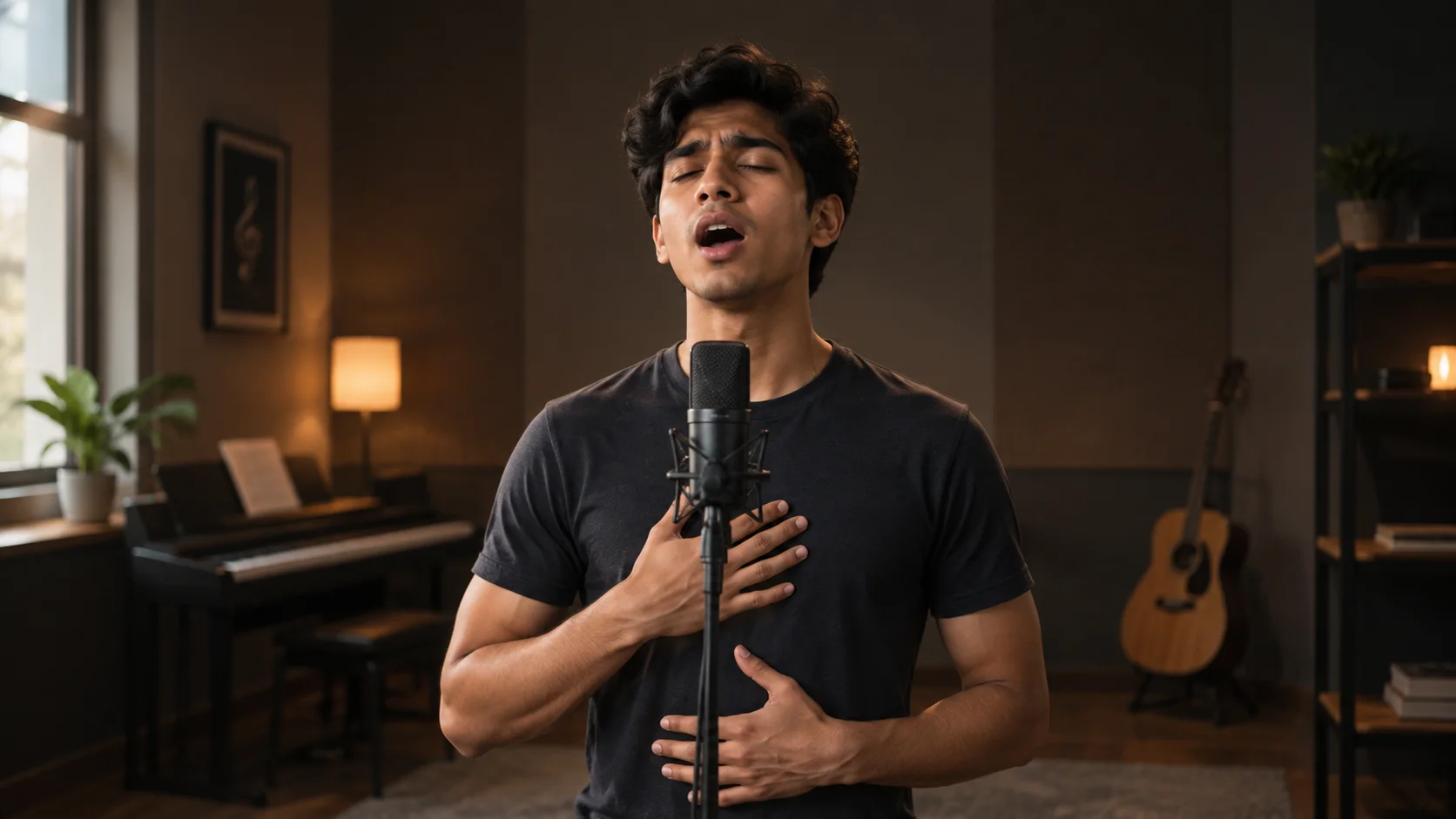
Table of Contents
The human race is a singing race. If you can talk, you can sing with proper guidance. That being said, ever caught yourself singing along to a song and wondering why it sounds better in your head than it does out loud?
Well, then don’t worry; you are not alone. Almost every singer, even your favorite singers who make it look easy on stage, started out right where you’re: a little curious, a little unsure and wondering how to sing without straining or sounding flat. The best part about singing is that it’s not some rare, magical gift people are born with. You can build this skill with a few core fundamentals, the right guidance and consistent practice. In this blog, we will break down those fundamentals in an easy, no-jargon way. So, whether you are a beginner or someone looking to sharpen your skills, you will walk away with a clear roadmap for how to sing better.
What does it really mean to sing well?
Before we jump into the main topic of the fundamentals of singing, let’s clear some misconceptions around it. When it comes to singing well, it isn’t always about being able to hit the “right” note; many technically accurate singers still sound flat and lifeless. Real singing is the right blend of technique and feelings. Think of it as an emotional connection of your breath, posture and ear to the lyrics, all working together at once. It is more like cooking; you can follow a recipe perfectly and still end up with a bland dish if you don’t understand how the ingredients work together. Once you understand how each fundamental supports the others, everything starts to fall into place.
Fundamental 1: Posture
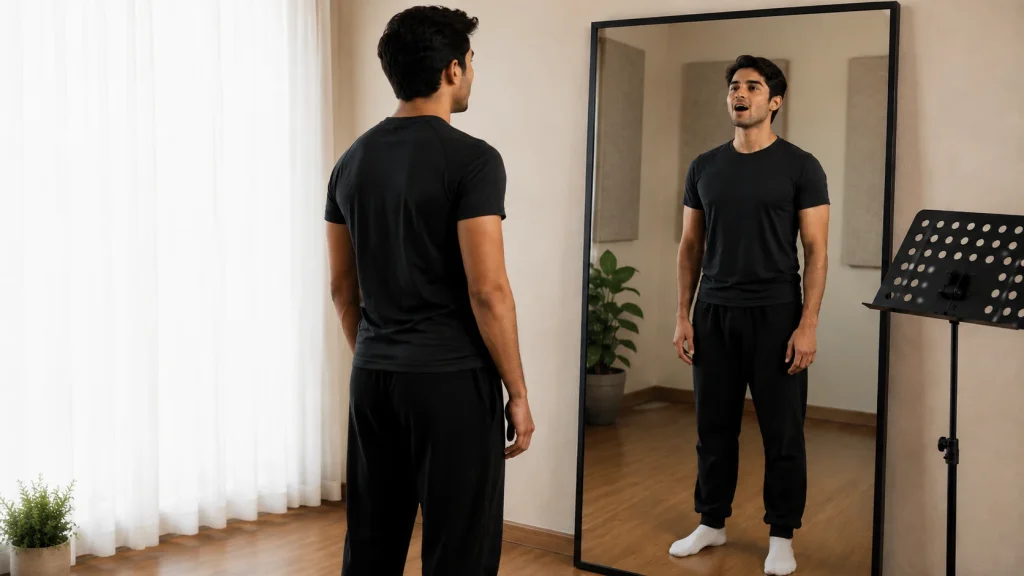
Now, although you may think Posture sounds very simple, it is where every good singing habit begins. Slouching restricts your lungs and tightens your throat, making it harder to breathe deeply or hit higher notes properly. By contrast, standing or sitting tall, with relaxed shoulders and an lifted chest, gives your diaphragm the room it needs to do its job properly. So, the next time you practice, do this instead: stand with your feet shoulder-width apart, relax your jaw and imagine a string gently pulling the top of your head upward. You will immediately notice your breath flowing more freely.
Fundamental 2: Breath Control

Breath control is the engine if posture is the foundation of your voice. Every sustained note, every powerful belt and every soft, delicate phrase depends on how well you manage your air. The common mistake you’ll see most beginners make is that they breathe through their chest, leading to shaky, shallow notes. Trained singers, on the other hand, breathe from the diaphragm; that’s the muscle just below your ribcage.
The easiest way to check is to place a hand on your stomach and take a deep breath. If your hand rises rather than your shoulder, you are breathing correctly. Diaphragmatic breathing gives you more control, more power and far less strain on your vocal cords.
Fundamental 3: Pitch Accuracy

One of the first things people relate to singing well is singing in tune. That’s a skill built through consistent ear training. You can develop pitch accuracy by training your ear to identify notes and your voice to match them precisely; the two go hand in hand. Here are a few tips that will help you:
- Practice with a piano or keyboard app to see whether you are hitting the right note.
- Record yourself regularly and listen back critically.
- Start with easy, familiar melodies before attempting complex runs.
Fundamental 4: Vocal Tone and Resonance
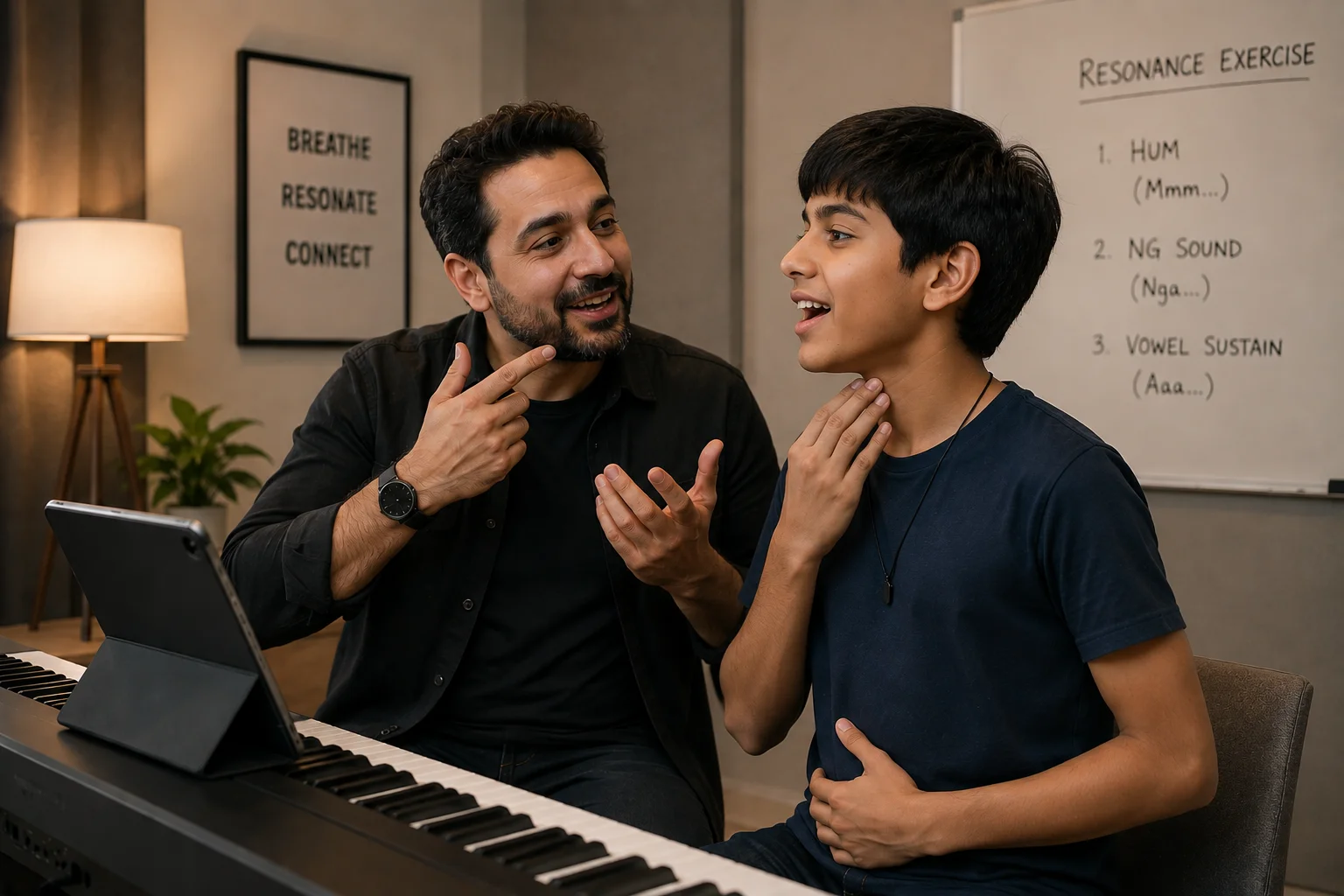
What makes your voice unique is the tone: warm, bright, husky or smooth. Resonance refers to where the sound vibrates in your body, whether that’s your chest, your throat or the space behind your nose and mouth. Learning to shift resonance intentionally helps you shape a fuller, richer sound instead of a thin, strained one. One of the best exercises is to hum gently and feel where the vibration sits. With proper practice, you can learn to “place” your voice for different effects, be it going from a soft ballad tone or a powerful belt.
Fundamental 5: Diction and Articulation

Clear diction ensures your audience actually understands the story you are telling through the song. Mumbled lyrics, no matter how beautifully sung, lose their emotional impact. Articulation exercises like tongue twisters or exaggerated vowel practice help loosen your jaw and lips, making your words crisper without sounding forced.
This fundamental matters just as much in fast, rhythmic songs as it does in slow ballads, since rushed lyrics are one of the quickest ways to lose an audience’s attention.
Fundamental 6: Vocal Range and Register Control
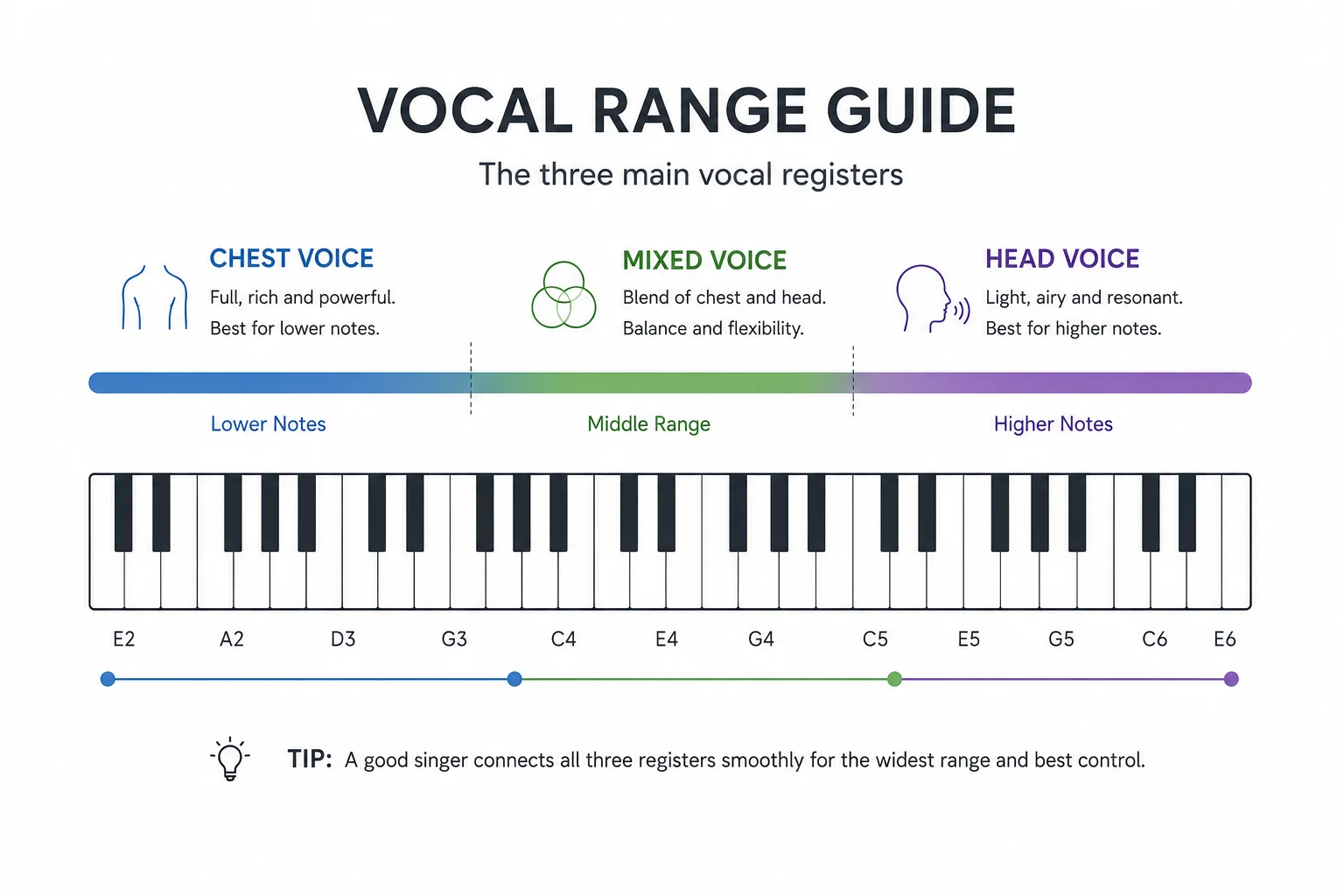
Every voice naturally settles into a range, the lowest to the highest note you can sing comfortably. This is the range where singers move between registers, commonly known as chest voice, head voice and the in-between zone, often called the “break” or “passaggio”. Struggling around that break is totally normal in the early stages.
That is why it’s important for singers to understand their range first, then expand it over time. Forcing high notes early on can add strain and long-term vocal damage. Guided exercises make a huge difference here, since a trained ear can spot habits you might not notice yourself.
Fundamental 7: Expression and Emotion

Technique is an important part of singing, but expression is what makes people feel something. Think of it as singing the same song: one with genuine emotion versus the other with mechanical precision. You’ll be singing the song in both scenarios, but it definitely creates a different experience for the listener. This fundamental is about connecting with the lyrics, understanding the story you’re telling and letting that show in your dynamics, facial expression and phrasing. Mechanical precision aside, some of the best or most memorable talents aren’t necessarily the most technically perfect ones. They are the ones where a singer clearly meant every word he/she sang.
Singing A Song: Step-by-Step
Now that you have understood the fundamentals, here’s an easy way to sing a song from scratch:
- Listen to the original track a few times to absorb the melody and phrasing
- Don’t try learning all at once; break the song into bite-sized portions
- Practice each section slowly, checking pitch accuracy before adding speed
- Add breath marks in your lyric sheet so you know exactly where to breathe
- Record yourself while singing the song and compare it against the original
- Focus on emotional delivery only once the technical parts feel comfortable
With this step-by-step approach, you won’t feel overwhelmed, especially with longer or more complex songs.
Simple Exercises to Improve Singing
Here are some quick daily exercises to improve your singing without hours of formal practice:
- Warm up your breath support without straining the voice using lip trills
- Sirens, gliding smoothly from your lowest note to your highest, to ease register transitions
- Humming scales to build resonance and pitch control together
- Tongue twister at a slow pace to sharpen diction
- 5 minutes of diaphragmatic breathing before every practice session
Understand that even 5-10 minutes of these daily can lead to noticeable improvement within a few weeks.
How to Sing Better: Common Mistakes to Avoid
Here are a few avoidable mistakes that every learner makes. Watch out for these:
- Skipping warm-ups and diving right into difficult songs
- Forcing high notes instead of building up to them gradually
- Ignoring posture while sitting or standing during practice
- Practising parts of the song you already sing well
- Comparing your progress to trained professionals instead of your own past self
By avoiding these mistakes, you can accelerate your progress significantly, often faster than adding more practice hours.
Start Singing with Expert Guidance
Learning these seven singing fundamentals gives you a strong foundation. Along with that, tailored, expert feedback can help you accelerate your progress. That’s exactly what we at Artium Academy offer. As one of the world’s leading online music learning platforms, we help thousands of students learn vocals and instruments through tailored, 1:1 live classes designed around their pace and goals.
What sets Artium Academy apart is our incredible faculty. Our online singing courses are curated by legendary musicians including Sonu Nigam, KS Chithra, Aruna Sairam, Shubha Mudgal and voice science expert Ananth Vaidyanathan. This gives our students access to techniques and insights refined over decades of professional experience. Whether you are a complete beginner or refining an already developed voice, our structured curriculum is designed to help you grow with confidence.
So, if you are serious about learning how to sing the right way, there’s no better time to start than now. Book a free trial class with Artium Academy today and take the first real step toward becoming the singer you have always wanted to be.
FAQ
- How can I learn how to sing if I’m a complete beginner?
Begin with the basics: posture and breath control, before moving on to pitch and tone. Structured, guided lessons help beginners build good habits from day one instead of picking up mistakes to unlearn later. - What is the fastest way to sing better?
The fastest way to get better at singing is consistent, daily practice combined with real-time expert feedback. Recording yourself and comparing your sound over a few weeks also reveals progress you might not notice day to day. - How do I know my correct vocal range?
A vocal coach can test your range accurately using a keyboard, moving from your lowest comfortable note to your highest. Online range-finder tools can also give you a rough starting estimate. - Can anyone learn to sing or is it a natural talent?
Almost anyone can learn to sing with the right training. While some people start with a natural edge, technique, ear training and practice matter far more in the long run. - How much should I practice singing every day?
15-30 minutes of focused daily practice is usually more effective than occasional long sessions, since consistency builds muscle memory faster than intensity alone. - What are simple exercises to improve singing at home?
Lip trills, humming scales, sirens and slow tongue twisters are the best low-effort exercises you can do daily without any special equipment. - How do I sing a song without going off-key?
Practice with a reference pitch, like a piano or an app and slow the song down initially. Singing slower makes it much easier to catch and correct pitch errors early. - Why does my voice crack when I sing higher notes?
Cracking usually happens around the register break between chest and head voice. With guided practice, singers learn to blend these registers smoothly instead of forcing through them. - Does breathing technique really affect singing quality?
Yes, significantly. Proper diaphragmatic breathing supports pitch stability, vocal power and endurance, making it one of the most important fundamentals.