
All Topics
- Alchemizing Music Concepts for Students
- Anuv Jain Songs
- Artist Spotlight
- artium gift card
- Artium Maestros
- Artium News
- Artium Tech Blog
- Best Coke Studio Songs
- Best Female Singers
- Bollywood Love Songs
- buying guide
- Carnatic Music
- Devotional Music
- Editorials by Ananth Vaidyanathan
- English Love Songs
- Festival
- Film Music
- Ghazal Music
- Guitar
- Hindustani Classical Music
- Indian Classical Music
- Indian Folk Music
- Insights
- Instagram Reels Viral Songs
- Instruments
- Karaoke
- Karaoke Singing
- Keyboard
- Kids Music
- maestros
- Music Education
- Music for Kids
- Music Industry
- Music Instruments
- Music Legends
- Music Press Release
- Music Technology
- Music Theory
- Music Therapy
- Piano
- piano guide
- Songs
- South Devotional Music
- Success Stories
- Tamil Film Music
- Telugu Film Music
- Time Theory
- Tools
- Uncategorized
- Uncategorized
- Uncategorized
- Uncategorized
- Vocal Singing
- Vocals
- western classical music
- western music
- Western vocal music
What Is a Music Press Release? A Beginner’s Guide for Artists
What Is a Music Press Release? A Beginner’s Guide for Artists
Table of Contents
Quick Summary
A music press release is an announcement that gives journalists and media outlets all the information they need to cover a single, tour, award or collaboration. Know everything about music press releases: the whys, the whens, formats, common mistakes to avoid and where to send yours once it’s written.
What Is a Music Press Release? A Beginner’s Guide for Artists
As exciting and amazing as it looks from the outside, being an artist really takes immense effort. You may have finished a song you’re proud of or maybe finalised your first tour; these developments are major milestones in your career. With one important step, these can turn into success and help you reach a larger audience than before. That is, reaching the right people. This is where a music press release comes in. Don’t be intimidated by these overtly sounding words, because it is simpler than it sounds.
To make it easier for you, in this guide, we will walk you through what a press release for music is, why it matters even in today’s streaming era, when you should send one and the right way to structure it, so that the journalists take you seriously. By the end of this blog, you will understand what a music press release is and have the confidence to write one yourself. You can also find a usable template, a worked example and a few mistakes to stay away from. Whether you are an independent artist doing you own PR or a student just starting to learn the business side of music, this one’s for you.

What is a Music Press Release?
In simple terms, a music press release is a short, factual document written to be given to journalists, bloggers and media outlets the information they need to cover your music.
Just think of it like a compact news brief, made to be scanned by someone (journalists or media outlets) to decide whether your story fits their beat. Music press releases are different from social media posts; they’re written for someone who’s never heard your music before and needs the full picture fast. It gives them quick answers to the who, what, when, where and why in the first few lines, then backs that up with context, a quote and links to your music.
Most guides agree that music press releases work best as a single page, typically ranging between 300-500 words. Keeping it tight is important. Editors get dozens of pitches a day and a release that respects their time is far more likely to get read all the way through.

Why Music Press Releases Matter for Artists
Now, you may ask, in the age of social media, where you can post directly to millions of followers, why bother doing something this formal?
The simple answer is: music press releases can do the job that social media simply cannot. Music press releases are intended for those who don’t know you or your music. The journalists, playlist curators, bloggers and radio programmers who only work with verified, well-organised facts. They’ll only feature your music if you treat it like a professional release and not just another upload.
Here’s what a well-written music press release can realistically help with:
- Getting featured on blogs & playlists you don’t have a personal connection with
- Giving journalists a ready-made, accurate source instead of forcing them to piece together your story themselves
- Building a searchable, dated record or your career milestones, which helps with authenticity down the road
- Making follow-up outreach far easier, since you are not starting from scratch with every new contract.
If you are an independent artist, a press release evens out the playing field. Artists signed by labels have publicists doing their work for them. Independent artists have to DIY, which makes music press releases even more valuable.
When Should You Send a Music Press Release?
Now that we know the importance of a press release, it is equally important to know when to send it. Not every minor detail needs to be released; in fact, doing that will work against you. Due to the sheer volume of press releases, journalists may just tune out your emails. You should be doing press releases for –
- New Single or Album Releases
This is the most common trigger. When you release any new music, a press release gives journalists the information on the release date, streaming links and the story behind the project in one clean document. This is valid whether it is your first single or your third album.
- Upcoming Tour or Concert
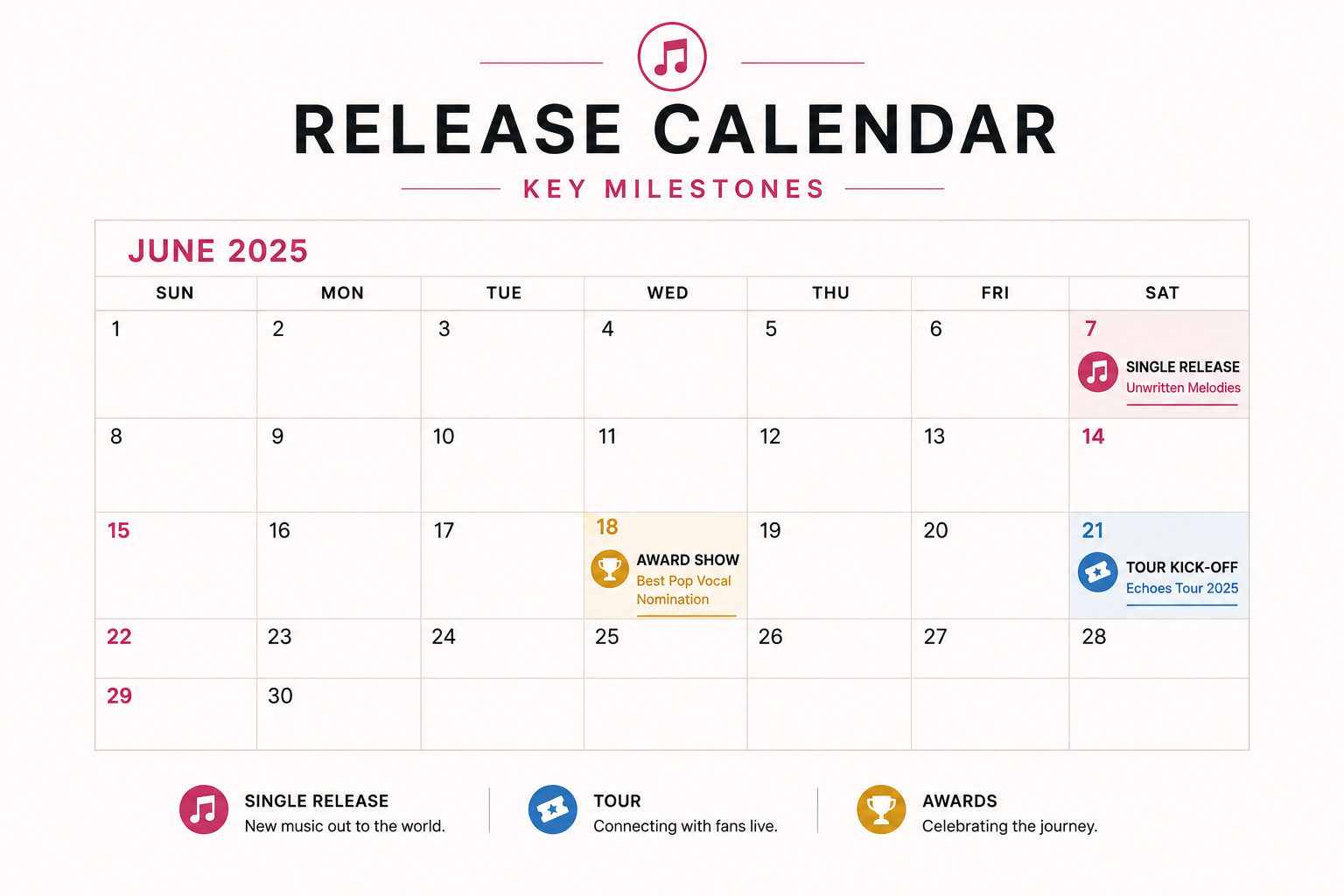
Tour & concert updates work well as press releases because local media in particular are often looking for exactly this kind of information: dates, venues, ticket links and a reason their readers should care.
- Awards or Milestones
From winning awards, hitting streaming milestones to celebrating anniversaries of major releases, these moments are newsworthy. It gives you a real reason to connect with media contacts you may not have reached out to in a while.
- Collaborations or Announcements
A surprising collaboration, a new single, or an important project announcement all give journalists an interesting angle. The more unexpected or notable the pairing, the more naturally the story writes itself.
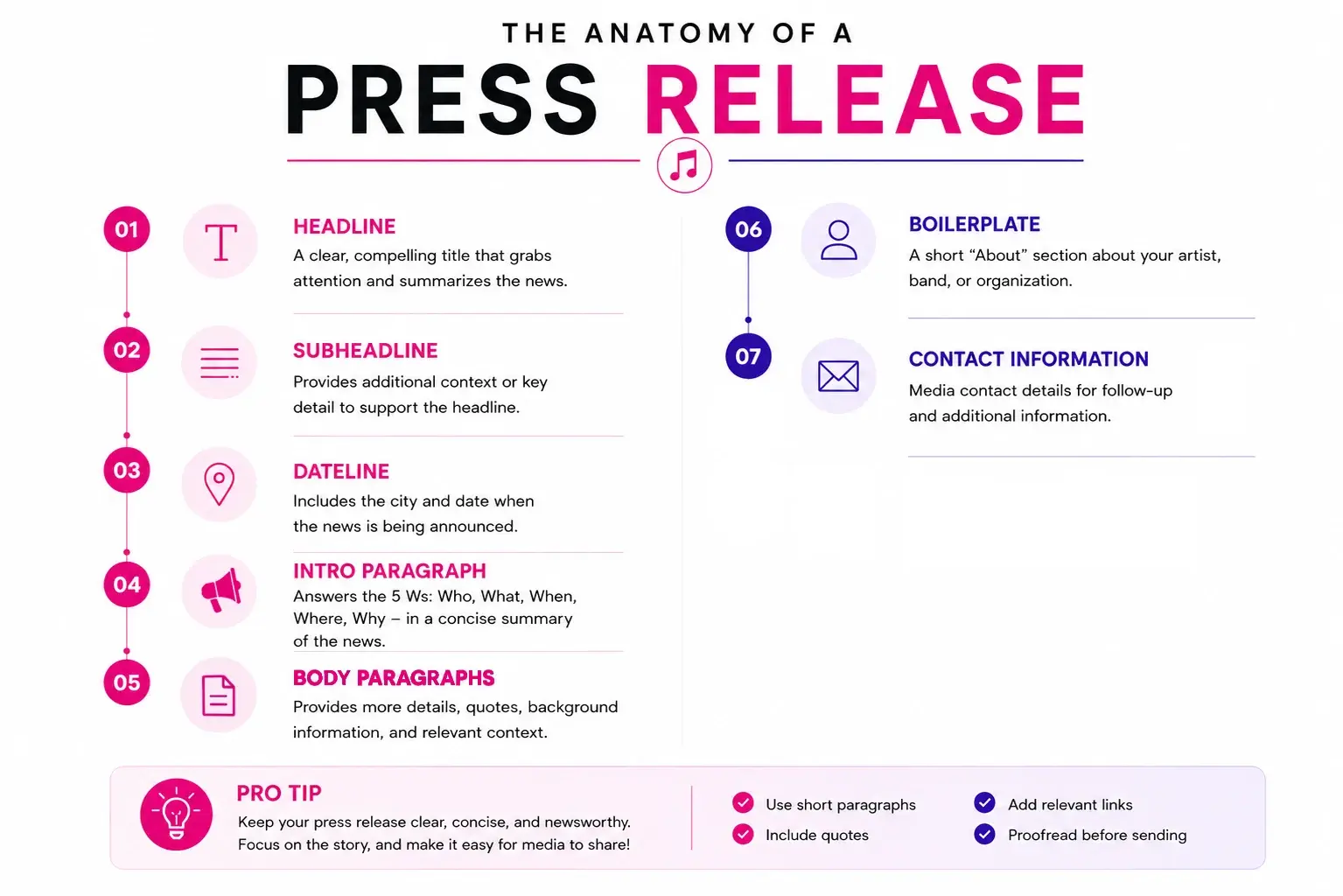
Music Press Release Format
Now that we have addressed the importance of a music press release, let’s take a look at its format. The template is standardised, and consistency is exactly what makes it easy for reporters to glance through it quickly. Let’s look at the format below:
Headline
In the headline, clarity is of the utmost importance. It should include the name of the artists and clearly state the news in a single line.
Dateline
This falls right under the headline and includes the city and date. This represents that the release is tied to a real, current announcement rather than a vague promotional note.
Introduction/Lead
First impression is important, and that opening paragraph carries the most weight. In a couple of sentences, cover who, what, when, where and why. If a reporter only reads this paragraph, they should still walk away understanding the full story.
Body Copy
You add context here: the inspiration behind the release, the story of how the tour came together or what makes collaboration meaningful. Keep it factual, easy to skim and short.
Quotes
Include quotes, either yours or a collaborator’s. It adds human voice to the release. The quote should be from the heart, inspiring and something a journalist could not have written themselves.
Boilerplate/About Section
This short paragraph largely stays the same across releases. It is your quick, third-person bio: who you are, what you do and where people can learn more. Having this ready means one less thing to write each time.
Contact Information
Last but definitely not least, the contact. Add a way to reach you or your team. Add links to your streaming platforms, artwork and your press kit. Make it easier for journalists to find what they need and increase your odds of coverage.
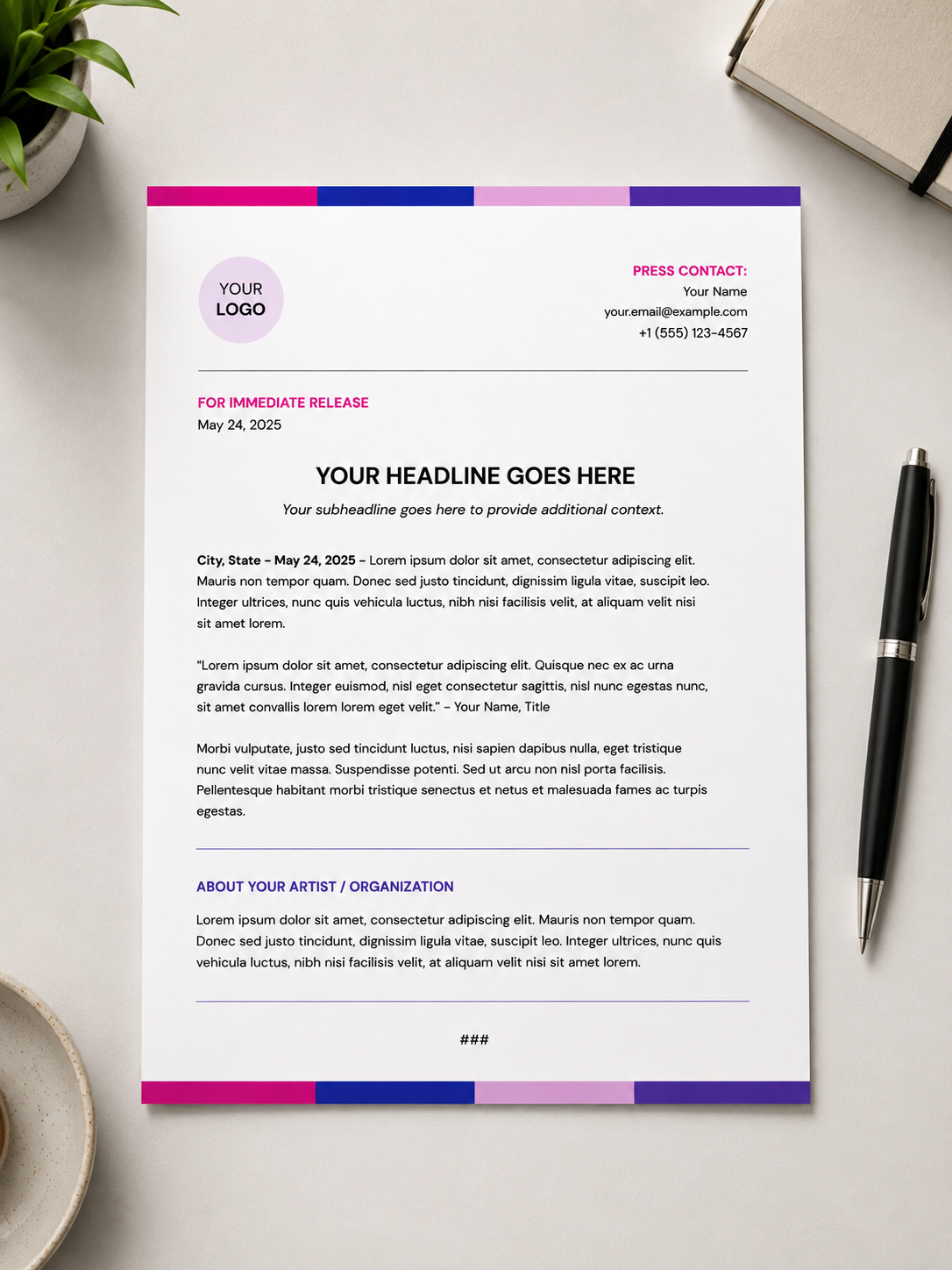
Music Press Release Template
Here’s a clear, fill-in-the-blank music press release template you can adapt for a single, EP, album or tour:
FOR IMMEDIATE RELEASE
[Artist Name] Announces New [Single/EP/Album/Tour] “[Title]”
[City, Date] – [Artist Name] today announced [release type], titled “[Title],” [set for release/beginning] on [date].
[One added sentence covering the core details.]
[Body paragraph covering the story, inspiration or context behind the release.]
“[A short, genuine quote from the artist that adds something new], “said [Artist Name]
[Additional details: streaming links, tour dates or collaborators credits, if relevant]
About [ Artist Name] [Two-three sentences of third-person bio covering your background, style and any notable achievements.]
Press Contact [Name] [Email] [Phone, if applicable] [Website/streaming links/EPK link]
This standard format works regardless of solo artist is doing their first release or a band is announcing a full tour. Just adjust the lead paragraph and details to match what’s actually newsworthy about your announcement.
Music Press Release Example
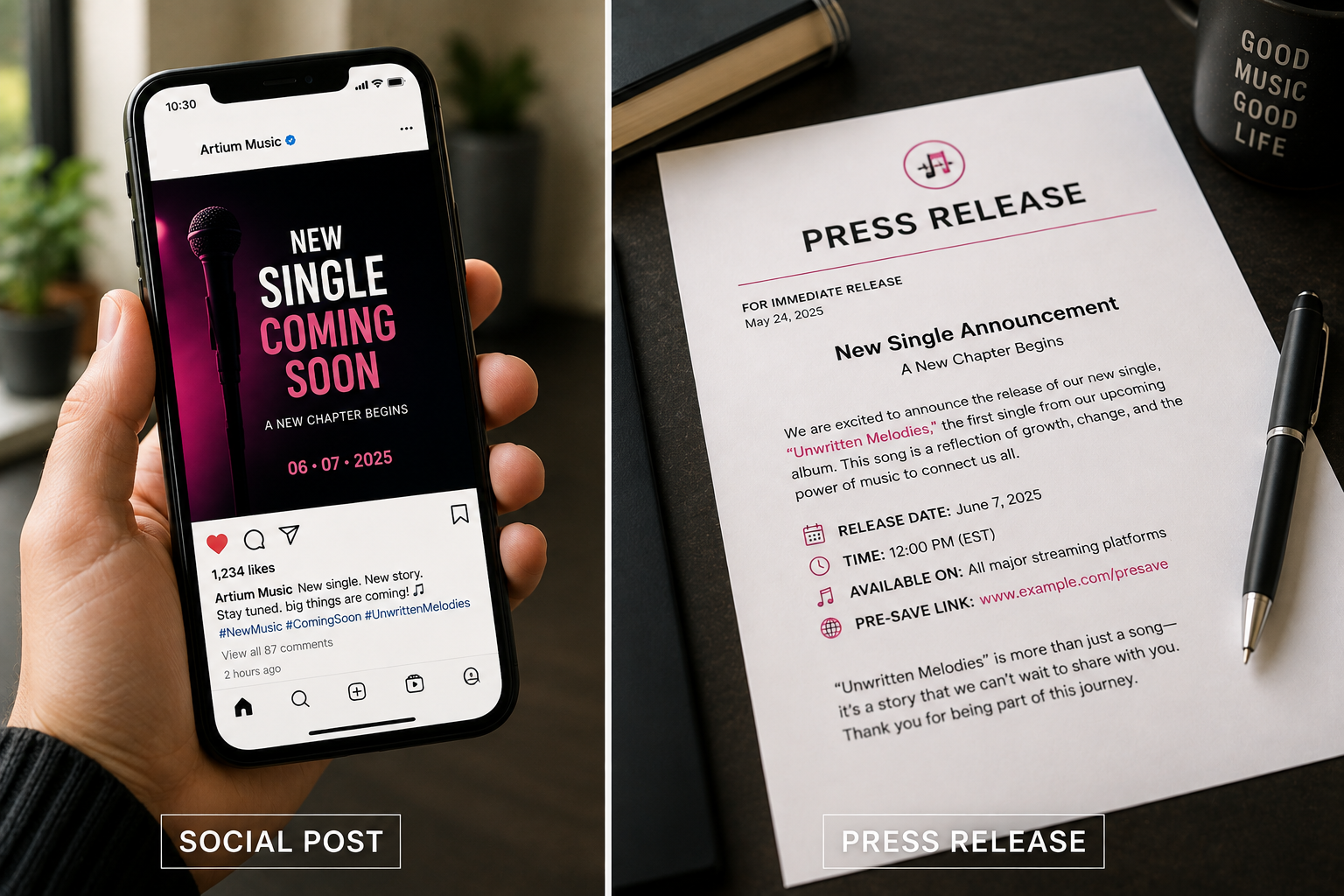
For those of you who want to see a real template, here’s a short, realistic sample for an independent single release.
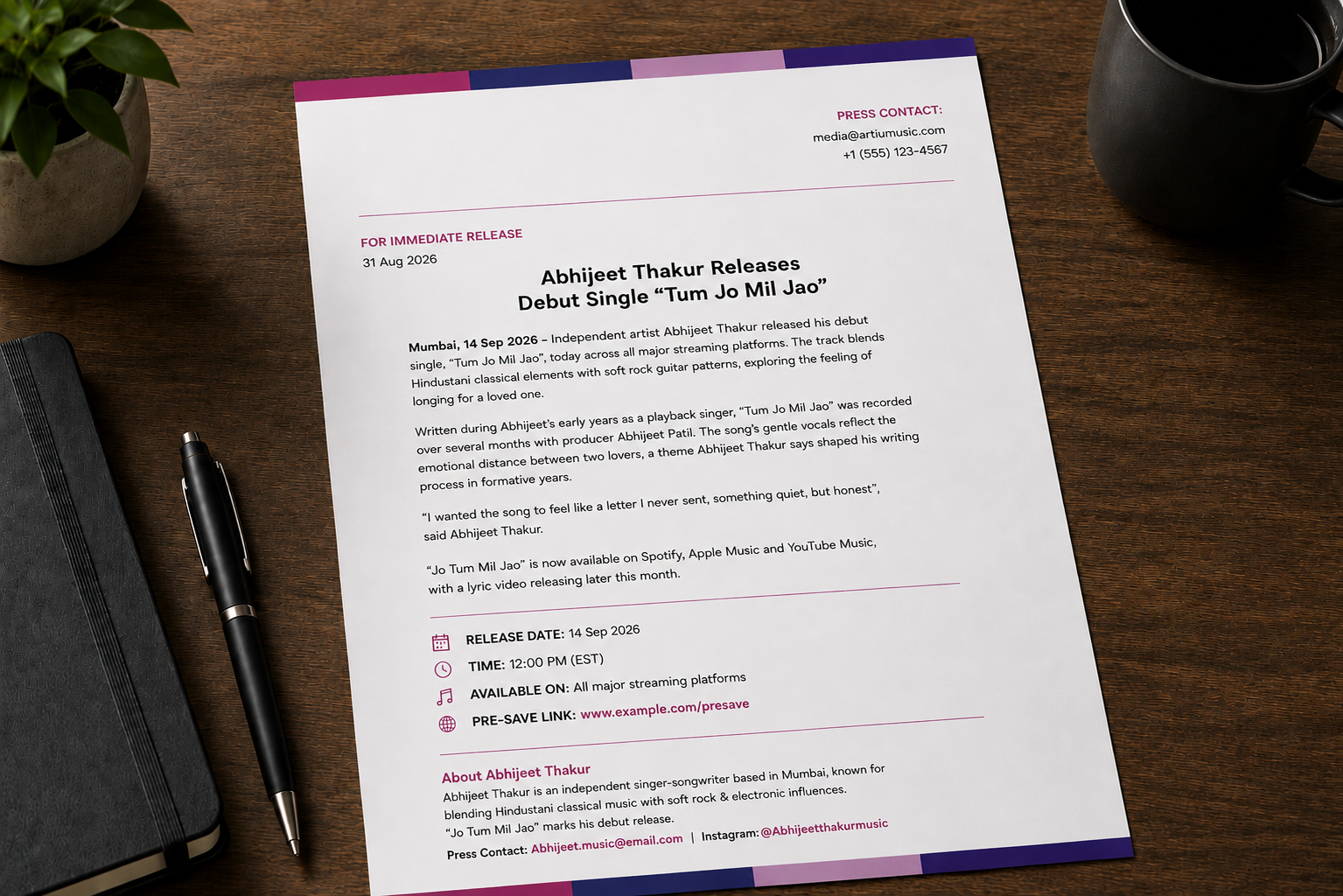
You see how short and specific this is? No filter, no vague excitement, just facts, one clear quote and a way to listen. This is exactly the kind of music press release example journalists respond to.
Common Mistakes to Avoid When Writing a Music Press Release
Here are a few mistakes to avoid. Watch out for these:
- Including key details halfway down the release instead of in the first paragraph.
- Writing in first person, which reads more like a fan caption than a news item.
- Skipping the boilerplate, leaving journalists without a quick, usable bio.
- Attaching MP3 files instead of linking to streaming platforms, which creates unnecessary friction.
- Padding the release with vague enthusiasm instead of specific, usable facts.
Instead of sounding impressive and pompous, avoiding these issues alone can improve how your release is received.
Where to Send Your Music Press Release
Along with writing a proper music press release, it also matters where you send it. A few realistic options:
- Directly reaching out to journalists and bloggers who cover artists like yourself. This tends to perform best as it is targeted rather than broad.
- Sending it out to music-specific blogs & playlist curators. They are often more accessible to independent artists than major national outlets.
- Local press, especially for tour announcements, since regional outlets often care about the hometown or venue angle.
- Wire distribution services, which offer broader reach but tend to work better as a supplement to direct outreach rather than a replacement for it.
Note: Regardless of whatever route you choose, ensure you’re sending the music press release with enough lead time. A couple of weeks before your single and several weeks before a bigger release or tour. This gives the editors room to actually plan coverage instead of scrambling last minute.
Learning the Business of Music, Not Just the Craft
The thing about music press releases and music in general is that nobody really teaches it alongside actual music-making. So many artists spend years perfecting the fundamentals of singing or learning to read music sheets properly. Still, the promotional side often gets left as an afterthought, figured out through trial and error after a release is already out.
This is where learning music through a structured platform genuinely helps. At Artium Academy, our online music courses, curated by legendary musicians, go beyond just vocals or instruments. It covers practical, real-world side of building a music career including how artists think about promotion and press.
At Artium Academy, we offer something most learning platforms don’t: Artium Originals, our in-house music label, where students can get real support releasing their own music, formalities, promotion and all. Learning a song to perform it is one thing; understanding how it gets heard once it’s out is another.
Strong technique and smart promotion are important to build genuine, sustained buzz around releases. The same discipline that goes into reading sheet music properly or mastering fundamentals of vocal techniques applies here too; learning the craft and understanding the business side are not separate tracks; they work best together.
Book a free trial class with Artium Academy and start building your sound and the skills to make sure people actually hear it.
FAQ
Answer: A music press release is a short, structured announcement written to give journalists, bloggers and media outlets the information they need to cover a new single, album, tour or other newsworthy music update.
Answer: It is primarily used to generate media coverage, blog features and playlist placements by giving journalists a clear, factual summary of your news instead of asking them to piece the story together themselves.
Answer: A complete music press release format includes a headline, dateline, lead paragraph, body copy, a quote, a boilerplate or “about” section and contact information, in that order.
Answer: The template in this guide covers all the essential sections and can be adapted for a single, EP, album or tour by adjusting the lead paragraph and specific details.
Answer: Most guides recommend keeping it to a single page, generally between 300-500 words. Journalists prefer concise releases they can scan rather than lengthy ones.
Answer: Send it to journalists, bloggers and playlist curators who already cover artists similar to you. Targeted outreach almost always outperforms broad, unfocused sends.
Answer: Yes, arguably more than signed artists, since independent musicians don’t have a publicist handling this work behind the scenes. A well-written release helps establish credibility and opens doors to coverage.
Answer: The core structure is the same, but a music press release typically includes music-specific details like streaming links, genre, collaborators, and release dates, elements a general business release wouldn’t need.
Answer: As a general guideline, sending it two to three weeks before a single release and around four to six weeks before a tour or album gives journalists enough lead time to plan proper coverage.