
All Topics
- Alchemizing Music Concepts for Students
- Anuv Jain Songs
- Artist Spotlight
- artium gift card
- Artium Maestros
- Artium News
- Artium Practice Studio
- Artium Tech Blog
- Best Coke Studio Songs
- Best Female Singers
- Birthday songs
- Bollywood Love Songs
- buying guide
- Carnatic Music
- Child Singers
- Devotional Music
- Editorials by Ananth Vaidyanathan
- English Love Songs
- Festival
- Film Music
- Ghazal Music
- Guitar
- Hindustani Classical Music
- Indian Classical Music
- Indian Folk Music
- Insights
- Instagram Reels Viral Songs
- Instruments
- Karaoke
- Karaoke Singing
- Keyboard
- Kids Music
- maestros
- Music Education
- Music for Kids
- Music Games
- Music Industry
- Music Instruments
- Music Legends
- Music Press Release
- Music Technology
- Music Theory
- Music Therapy
- Music Tools
- Piano
- piano guide
- Songs
- South Devotional Music
- Success Stories
- Tamil Film Music
- Telugu Film Music
- Time Theory
- Tools
- Uncategorized
- Uncategorized
- Uncategorized
- Uncategorized
- Vocal Range
- Vocal Singing
- Vocals
- western classical music
- western music
- Western vocal music
What Is Music Therapy? Benefits and How It Works
What Is Music Therapy? Benefits and How It Works
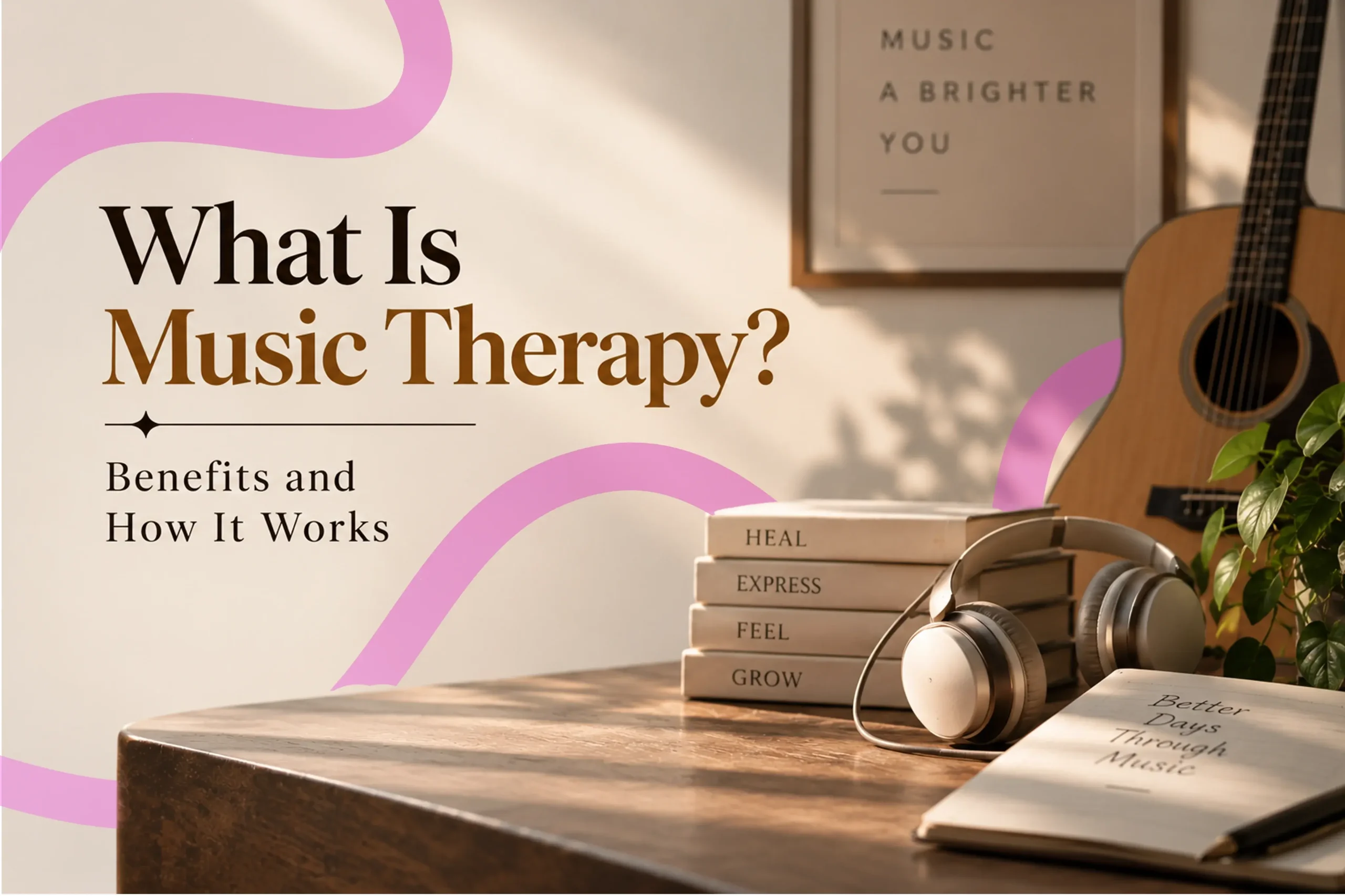
Table of Contents
Quick Summary:
| Music therapy uses music to support emotional, physical and mental wellbeing. It means listening, singing, playing or creating it. This guide covers what music therapy is and how it works. Learn its research-backed benefits, who it can help and getting started with it. |
Ever noticed how the right song can completely change your mood in under three minutes?
This is a result of a well-established healthcare field. Music has been used intentionally to support healing and well-being for decades now. Today, there’s a substantial body of research to back this.
So, what is music therapy? How is it different from just putting on your favourite playlist when you are having a bad day? That is exactly what we’ll unpack in this guide. We’ll cover the definition, how sessions work, the difference between active and receptive approaches. We’ll also see what the research says about its benefits for mental health, physical recovery and everyday wellbeing.
So, whether you are a curious music aspirant, a parent exploring options for your child or just someone looking to understand the science behind why music makes you feel the way it does, this one’s for you.

Music Therapy – Definition
Music therapy is the clinical, evidence-based use of music interventions to achieve individualised goals within a therapeutic relationship. It’s delivered by an expert professional who has completed an approved music therapy training program.
That last part matters a lot. This isn’t just “using music to feel better”; it is a structured healthcare profession, similar in scope to occupational or physical therapy. Practitioners typically hold a board certification after completing a specialised degree and supervised clinical internship. Importantly, you do not need any musical training or talent to benefit from it. Music therapists work with people across every age group and ability level. They tailor sessions to each individual’s specific goals rather than their musical skill.

How Does Music Therapy Work?
In simple terms, music therapy works by using musical elements like rhythm, melody, harmony and lyrics. It support goals that often have nothing to do with music itself. A session might focus on improving communication, reducing anxiety, aiding physical rehabilitation or processing difficult emotions.
A certified therapist begins by assessing a client’s needs, then designs interventions around specific, measurable goals. Sessions can include singing, playing instruments, songwriting, movement to music, or simply listening, depending entirely on individual interests.
What makes this effective is not magic; it is neuroscience. Music engages multiple areas of the brain simultaneously. It includes regions tied to emotion, memory and movement. This is why it can reach people with speech or memory impairments, in ways that talk-based approaches sometimes cannot.
Types of Music Therapy (Active Vs Receptive)
This approach generally falls into two broad categories and most sessions draw on a mix of both.
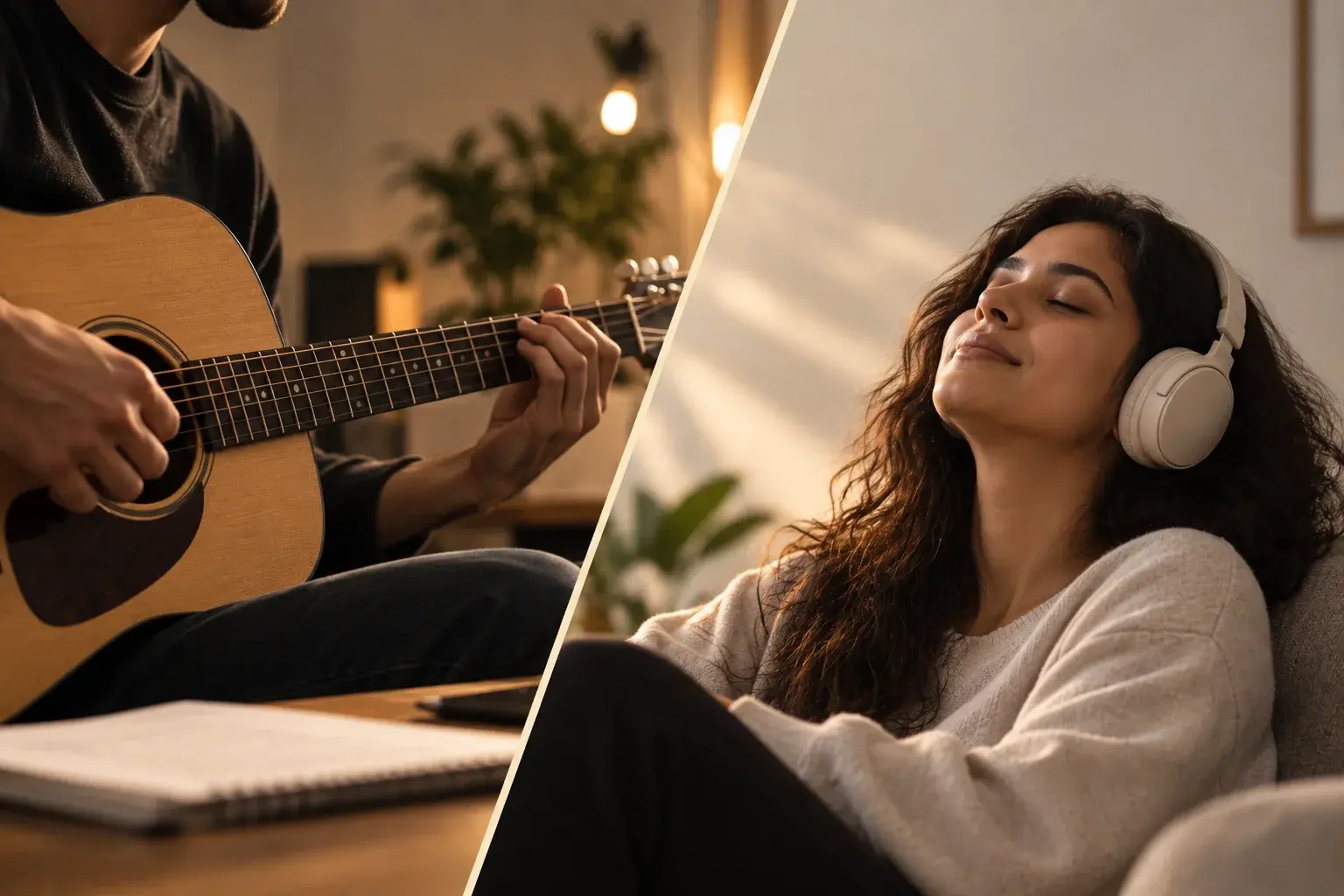
- Active music therapy involves the client directly participating, singing, playing an instrument or composing, under a therapist’s guidance. This engages multiple senses at once and is often used to support motor skills and social engagement.
- Receptive music therapy involves listening to music, live or recorded, chosen and guided by the therapist. This approach is generally used to encourage relaxation, reflection or emotional processing without requiring active musical participation.
Both these approaches have real value. What works best depends on the individual and their specific goals. Some studies on Parkinson’s disease found receptive listening particularly helpful for gait-related symptoms. While active group participation showed stronger benefits for mood and social connection.
What Is Singing Therapy? A Closer Look
Singing therapy is one of the more fascinating, specific applications within this broader field. It uses structured vocal exercises and singing, sometimes alongside melodic speech techniques, to support communication, breathing and emotional expression.
This is not about learning to sing “correctly.” Singing therapy has been studied specifically for conditions like Parkinson’s disease. It has shown to improve voice volume and reduce the monotone speech patterns the condition often causes. It is also used in stroke recovery through an approach called Melodic Intonation Therapy. It helps some patients with speech difficulties access language through melody, even when spoken words feel out of reach. The bigger picture is genuinely worth it. Singing and speaking are processed somewhat differently by the brain. This means singing can sometimes offer an alternate route back to communication when regular speech pathways are disrupted.

Benefits of Music Therapy for Mental Health
Mental health is one of the most well-studied areas in this field and the research here is genuinely encouraging.
- Studies on conditions like depression, anxiety and schizophrenia have found that the majority of music-based interventions produced positive results.
- Group sessions have shown to support emotional regulation and reduce feelings of isolation, particularly in clinical and hospital settings.
- This approach is used alongside conventional treatment for trauma and PTSD, offering a non-verbal outlet for processing difficult experiences.
It is worth being clear here: this is generally used as a complement to, not a replacement for, other mental health treatment. For those dealing with a diagnosed condition, working with a licensed practitioner alongside your existing team tends to produce the best outcomes.

Benefits of Music for Physical and Emotional Wellbeing
Beyond mental health specifically, this field has a growing evidence base in physical recovery and rehabilitation too.
- Singing-based interventions have shown measurable improvements in breathing and swallowing function for people with Parkinson’s disease.
- Neurologic techniques are used to support speech recovery after stroke, sometimes outperforming conventional speech therapy alone for certain patients.
- Daily sessions with hospitalised patients have shown lower levels of anxiety and stress levels during treatment.
On the emotional side, this practice also provides something harder to quantify but equally important: a genuine outlet for expression, especially valuable for people who find it difficult to put complex feelings into words.

Advantages Of Listening To Music Daily
You do not need a clinical setting to experience some benefits of music. Simply building a daily listening habit has measurable advantages.
- Listening to calming, favourite music has been linked to reduced cortisol, the body’s primary stress hormone.
- Music listening is associated with modest reductions in heart rate and blood pressure, particularly where the music is slow-tempo and self-selected.
- Regular listening sessions, even in short 20-30 minute windows, have been associated with improved mood and reduced day-to-day anxiety symptoms.
Worth noting: The research in this specific area is still developing and effects tend to be modest rather than dramatic. Still, the benefits of listening to music daily are consistent enough that it is a genuinely low-effort, evidence-supported habit worth building into your routine.

Who Can Benefit From Music Therapy?
This approach is used across virtually every age group, though the goals shift quite a bit depending on who’s involved.
- Kids, including children with autism spectrum disorder or developmental disabilities, often benefit from its ability to support communication and social interaction in a low-pressure format.
- Adults frequently use it for stress management, trauma processing and support alongside mental health treatment.
- Seniors, particularly those living with dementia or recovering from stroke, often show meaningful improvements in mood, memory recall and communication through structured music-based sessions.
Across all these groups, one thing stays consistent: sessions are built around the individual’s specific needs, not a one-size-fits-all approach.

Getting Started With Music Therapy
Here’s a simple starting point if you are curious to try it yourself or for a loved one:
- Look for a broadly certified music therapist.
- Ask your therapists about their experience with your specific goal, whether that’s anxiety, speech recovery or paediatric development.
- Check if your insurance or local healthcare system offers coverage, as availability varies significantly by region.
- Start with a consultation to discuss goals before committing to a full course of sessions.
This kind of clinical support should always be delivered by a trained, credentialed professional. It is worth being cautious of anything marketed as “music therapy” without that credential behind it.
Discovering The Joy Of Making Music
While clinical music therapy is a specialised profession, there’s something genuinely powerful about simply learning to make music yourself, even outside a therapeutic setting. Many people who pick up an instrument or start singing lessons report real improvements in mood, focus and everyday stress levels, alongside the sheer joy of building a new skill.
That’s exactly the space Artium Academy exists in. As one of the world’s leading online music learning platforms, we offer structured, free 1:1 Trial Class in vocals and instruments for learners of every age and level. Our online music courses are curated by legendary musicians like Sonu Nigam, KS Chithra and more. This gives students access to genuine expert guidance from home.
Whether you are drawn to music for the sheer joy of it or you are curious about its well-being benefits, there’s rarely been a better time to actually start learning. Book a free trial class with Artium Academy today and discover what making music can do for you.
FAQs
Music therapy is a clinical, evidence-based healthcare profession that uses music interventions, delivered by a credentialed therapist, to help individuals reach specific emotional, physical or cognitive goals within a therapeutic relationship.
Benefits span mental health support, reduced anxiety and stress, improved communication for people with speech difficulties, physical rehabilitation support and general emotional well-being.
Singing therapy is a specific application within the broader field of music therapy, focused on using vocal and melodic techniques to support breathing, speech and emotional expression.
Yes, the research has consistently linked both music therapy and general music listening to reduced anxiety symptoms and lower physiological stress markers like cortisol and heart rate.
This approach is used to support people with conditions like Parkinson’s disease, stroke recovery, autism spectrum disorder, dementia, depression, anxiety and PTSD, typically alongside other treatment.
No. It is designed to be accessible regardless of musical background or skill, since the goals are therapeutic rather than musical.
Daily listening has been associated with reduced stress hormones, modestly lower heart rate and blood pressure and improved mood, particularly with music you personally enjoy.
Yes, it is widely used to support communication, social interaction and developmental goals in children with autism spectrum disorder and other special needs.
General habits like daily listening or singing for enjoyment can support wellbeing, but clinical treatment for specific conditions should be guided by a certified therapist rather than self-directed.
Most countries with an established music therapy profession have a national association with a searchable directory of certified practitioners.