
All Topics
- Alchemizing Music Concepts for Students
- Anuv Jain Songs
- Artist Spotlight
- artium gift card
- Artium Maestros
- Artium News
- Artium Tech Blog
- Best Coke Studio Songs
- Best Female Singers
- Birthday songs
- Bollywood Love Songs
- buying guide
- Carnatic Music
- Child Singers
- Devotional Music
- Editorials by Ananth Vaidyanathan
- English Love Songs
- Festival
- Film Music
- Ghazal Music
- Guitar
- Hindustani Classical Music
- Indian Classical Music
- Indian Folk Music
- Insights
- Instagram Reels Viral Songs
- Instruments
- Karaoke
- Karaoke Singing
- Keyboard
- Kids Music
- maestros
- Music Education
- Music for Kids
- Music Games
- Music Industry
- Music Instruments
- Music Legends
- Music Press Release
- Music Technology
- Music Theory
- Music Therapy
- Music Tools
- Piano
- piano guide
- Songs
- South Devotional Music
- Success Stories
- Tamil Film Music
- Telugu Film Music
- Time Theory
- Tools
- Uncategorized
- Uncategorized
- Uncategorized
- Uncategorized
- Vocal Range
- Vocal Singing
- Vocals
- western classical music
- western music
- Western vocal music
Which Country Has The Best Music In The World
Which Country Has The Best Music In The World
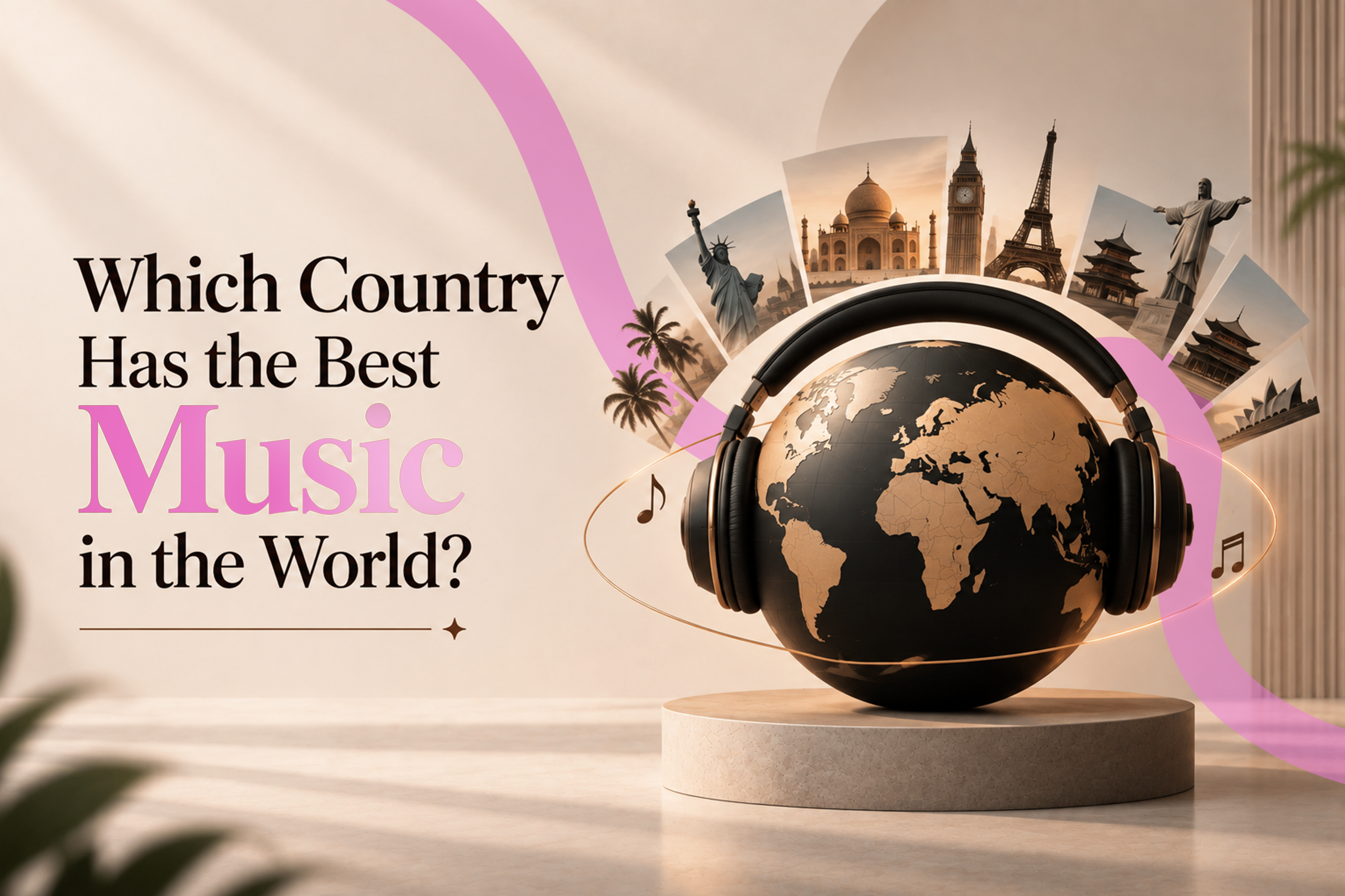
Table of Contents
Quick Summary
The answer to “Which country has the best music in the world” is subjective. It depends on how you define “best”. Here, we’ll break down different lenses people use to judge musical greatness. We’ll profile a few countries and take a closer look at India’s unique musical identity. From Indian classical music to Bollywood’s global reach.
“Which country has the best music in the world”?, ask this question to ten people, and you’ll get ten different answers. Someone will bring up the Beatles; another one will bring up Afrobeats. K-pop fans will pull the streaming numbers to prove their point. Someone is quietly convinced that Hindustani classical music is the thing. And that is the story you’ll get everywhere you go, because there’s no definitive answer.
The answer to that question is shaped by culture, history, personal taste and honestly, what you grew up listening to. In this blog, we are not here to crown a winner. Instead, we are going to explore how you’d even define “best” in the first place. We’ll take a tour through some of the countries most mentioned in this conversation. We’ll also explore India’s fascinating, often underappreciated place in the global music story.
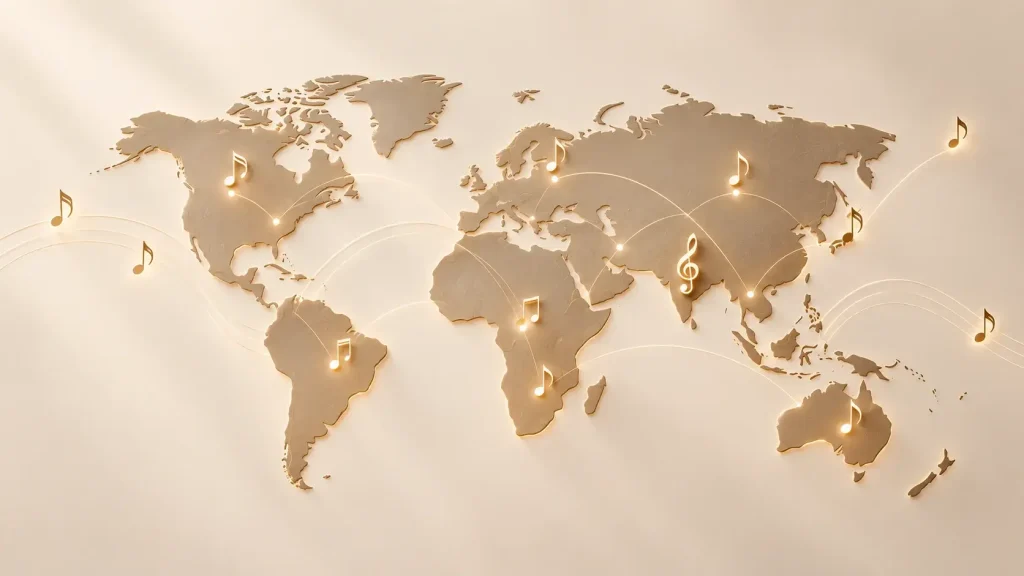
How Do You Even Define the “Best Music?
Before getting started, it is important to understand that “Best” means different things to different people.
Cultural Richness and History
For some, best music in the world means depth and heritage, genres with centuries of tradition behind them, passed down through generations rather than manufactured for a chart. Think of Indian classical ragas, Italian opera or West African drumming traditions that predate recorded music entirely.
Global Influence and Exports
This is another aspect people judge the “best” with. It is how far a country’s music has travelled. It’s how many other genres, artists and cultures it has visibly shaped. With this context, countries whose sounds show up, are sampled, covered or referenced in different countries tend to rank highly.
Innovative and Genre-Blending
For some, originality is that benchmark. The countries that keep bringing new sounds rather than repeating old ones. Genre-blending nations tend to shine by taking existing traditions and fusing them into something new and genuine.
Number of Grammy/Global Award Wins
This is a slightly more measurable angle: awards, chart dominance and industry recognition. It’s also an imperfect measure, since many of these award bodies have their own biases. But it does offer one concrete way to compare countries’ global standing.
While these are benchmarks for a few, they are not “correct” on their own. Most genuinely music-obsessed countries score well across several of them. That is exactly why this question resists a tidy answer.

Countries Often Called Home to the Best Music in the World
Here’s a list of countries worthy of being in this discussion, each for their genuine & different reasons.
United States of America
USA has been at the centre of global pop culture for decades. It gave the world jazz, blues, metal, hip-hop, rock & roll and modern pop. These genres reshaped music worldwide. The genre diversity within this country is remarkable. That’s why American artists dominate global charts and streaming numbers most years.
India
India’s musical identity is enormous and only a few countries come even close. It has centuries-old classical traditions, regional folk music of each state and film industries producing new songs annually. We’ll deep dive into this section ahead.
Jamaica
With a population of under three million people, Jamaica’s musical reach is staggering. Reggae was born in the late 1960s in Jamaica. It got recognised by UNESCO as part of humanity’s intangible cultural heritage, a rarity for a modern musical genre. Bob Marley is one of the most famous musicians to come out of Jamaica. Reggae’s DNA runs through everything from hip-hop to dub to reggaeton.
Brazil
Brazilian music is a masterclass in blending traditions into something new. Samba, born in the early 20th century, gave rise to bossa nova in the late 1950s. The genre became so influential that “The Girl from Ipanema” turned into one of the most recorded songs in history. It also won a Grammy for Record of the Year. Brazil’s ongoing habit of absorbing outside influences like jazz, funk, electronica, metal and turning them into something primarily Brazilian keeps its music scene endlessly evolving.
United Kingdom
You can overstate the musical legacy of the United Kingdom. The Beatles remain among the best-selling acts of all time. British artists from the Rolling Stones to Adele to Ed Sheeran have consistently been global chart toppers. Very few countries of this size have produced such globally known artists. That’s why, “the UK hands down” is the most common response to this question.
Nigeria
One of the exciting music stories of the last decade is Nigeria’s Afrobeats explosion. The global stream of Afrobeats grew by more than 550% between 2017 and the 2020s. The genre’s influence was recognised when Grammy’s dedicated Best African Music Performance Category in 2024. Artists like Burna Boy and Wizkid have gone from regional stars to genuine global headliners in just a few short years.
South Korea
Everyone of us has heard about K-pop. Its rise is remarkable. This genre now generates billions of dollars in economic impact annually. Artists like BTS and BLACKPINK sell stadiums worldwide and drive what’s now widely called the “Korean Wave”. Their structured, highly produced approach to music has created a new global entertainment category from scratch.
What Makes a Country’s Music Stand Out Globally
Here are some common threads that start to emerge after looking at these countries –
Streaming Numbers & Chart Presence
We live in the streaming era. Today, raw numbers matter more than ever. Countries with artists consistently landing on the charts dominate the talks of “what country has the best music in the world”. That’s because more people are actually hearing their music.
Cultural Export
Music travels along with food, fashion, film and language. That’s why countries with strong cultural exports see their music spread faster. This includes South Korea’s “Hallyu” wave or Nigeria’s entertainment industry.
Diversity of Genres Within One Country
Countries with multiple genres of music tend to have a real impact. The US spans blues to hip-hop to country and more. The UK spans punk to Britpop to grime to metal and more. This internal diversity gives these countries the power to top the list, since they don’t depend on a single sound.
India’s Unique Place in the World of Music
India is a vast country and it covers a lot of ground when it comes to music. It requires its own place, especially when in discussion with these countries.
Classical Traditions (Hindustani/Carnatic)
India is a land of rich musical heritage. The two classical traditions, Hindustani (North) and Carnatic (South), each come with centuries of theory, technique and oral lineage behind them. These are not static museum pieces either; ragas continue to influence musicians well outside India. Biggest names, John Coltrane and George Harrison, cite Indian classical music as having a major influence on their work.
Bollywood’s Global Reach
Most of India’s music consumption comes from Bollywood. Film tracks are 80% of what gets streamed domestically and thousands of new songs are released every year. This exposure is seen beyond Indian borders too. “Jai Ho” from Slumdog Millionaire actually won an Oscar, a rare moment for Indian music to get global recognition.
Rising Interest in Learning Indian Instruments and Ragas
The global interest in Indian music is steadily growing over the years. Spotify has seen considerable growth in global consumption of music from India in recent years. Platforms have started building dedicated programming just to introduce global listeners to instruments like the sitar, tabla and bansuri. India also posted over a trillion on-demand streams in a single recent year, just behind the United States. This signifies a genuine, fast-growing global appetite.
So Which Country Really Has The Best Music?
After all this discussion, the honest answer to this question is: there isn’t one. Which country has the best music in the world depends on factors like cultural depth, global reach, innovation or measurable awards. Even then, different people have different picks.
What’s clear is, good music does not happen by accident. It happens because people spend years, sometimes a lifetime, learning techniques, understanding tradition and figuring out how to say something new. This is true whether you are talking about a Hindustani classical music vocalist training for decades before their first public appearance or a K-pop trainee spending years in preparation for debut.
If reading any of this makes you curious about learning music, be it film music, Western singing or instruments, that same craft and discipline is exactly what Artium Academy is built around. Our online music courses are curated by legendary musicians, giving students real, structured guidance. Wherever you land on this debate, one thing’s certain: there’s never been a better time to actually learn the music you love, rather than just listen to it.
FAQs
There is no single agreed-upon answer; it depends on your criteria. The US, UK, India, Jamaica, Brazil, Nigeria and South Korea are among the countries most frequently named, each for different reasons.
The USA is often considered the most influential, given its role in shaping genres like jazz, rock, hip-hop, pop and metal that have gone on to influence music worldwide.
India is a strong contender here, spanning classical, folk, film, pop and regional styles that vary significantly from state to state, alongside countries like the US and UK.
The USA leads global streaming numbers overall, though India recorded over a trillion on-demand streams in a recent year, placing it second globally.
Many musicians and scholars consider it among the most sophisticated musical traditions in existence, with a documented influence on Western artists like John Coltrane and George Harrison.
All three matter, but they measure different things. Awards reflect industry recognition, streams reflect current popularity, and cultural depth reflects long-term influence and tradition.
The United States has produced the largest number of Grammy-winning artists by a wide margin, given the size and global reach of its music industry.
The US and UK are usually cited first here, though South Korea’s K-pop wave and Nigeria’s Afrobeats movement have had an outsized, rapidly growing cultural influence in recent years.
Afrobeats’ infectious rhythms, growing streaming numbers, and increasing collaborations with global pop artists have driven its rise, cemented further by the Grammys’ dedicated African music category introduced in 2024.
It’s largely subjective. While metrics like streaming numbers and awards offer some objective data points, personal taste, cultural background, and emotional connection ultimately shape what any individual considers “the best.”