
All Topics
- Alchemizing Music Concepts for Students
- Anuv Jain Songs
- Artist Spotlight
- artium gift card
- Artium Maestros
- Artium News
- Artium Practice Studio
- Artium Tech Blog
- Best Coke Studio Songs
- Best Female Singers
- Birthday songs
- Bollywood Love Songs
- buying guide
- Carnatic Music
- Child Singers
- Devotional Music
- Editorials by Ananth Vaidyanathan
- English Love Songs
- Festival
- Film Music
- Ghazal Music
- Guitar
- Hindustani Classical Music
- Indian Classical Music
- Indian Folk Music
- Insights
- Instagram Reels Viral Songs
- Instruments
- Karaoke
- Karaoke Singing
- Keyboard
- Kids Music
- maestros
- Music Education
- Music for Kids
- Music Games
- Music Industry
- Music Instruments
- Music Legends
- Music Press Release
- Music Technology
- Music Theory
- Music Therapy
- Music Tools
- Piano
- piano guide
- Songs
- South Devotional Music
- Success Stories
- Tamil Film Music
- Telugu Film Music
- Time Theory
- Tools
- Uncategorized
- Uncategorized
- Uncategorized
- Uncategorized
- Vocal Range
- Vocal Singing
- Vocals
- western classical music
- western music
- Western vocal music
Types of Guitars Explained: Which One Should You Learn?
Types of Guitars Explained: Which One Should You Learn?
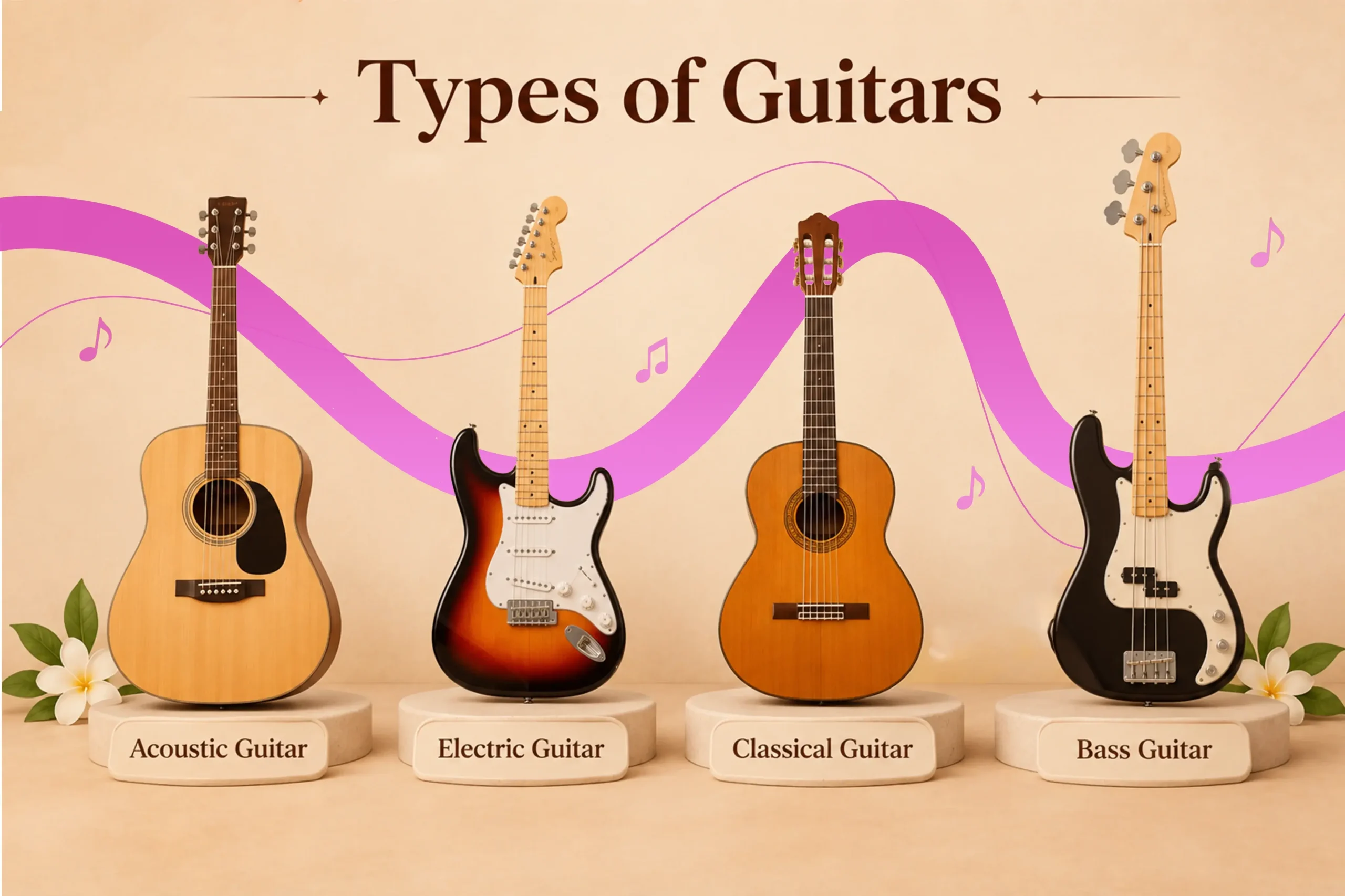
Table of Contents
Quick Summary
This guide explains the types of guitars, classical and bass, along with body shapes and styles suited to different music genres. Whether you are just starting out or exploring sounds you’ll find guidance on picking the guitar for your goals, budget and music taste. Tips come from Artium Academy.
Understanding the Different Types of Guitars
Guitars come in shapes, sounds and styles. From steel-string acoustics to nylon-string classics and sleek electrics each type meets needs. If you’re not sure which one to learn, understanding the types of guitar is the step toward making a choice.
You might wonder what is an acoustic guitar? It’s a hollow-bodied instrument that produces sound naturally through string vibration, no amplifier needed. And if you’ve ever wondered when was the guitar invented, historical evidence points to early stringed instruments in ancient Mesopotamia, with the modern guitar evolving in 18th-century Spain.
We believe the right guitar can change your learning journey. Whether you want to strum Bollywood hits play ragas or rock out with riffs, this guide will help you explore the types of guitars and find your perfect match.
1. Acoustic Guitars
Acoustic guitars are the known types of guitar across the world. They make sound using a body that vibrates when you pluck or strum the strings. No amplifier is needed.
Key Features
- Steel strings for bright, punchy tone
- Hollow body for natural projection
- Ideal for folk, pop, singer-songwriter, and Bollywood music
- Great for beginners who want portability and simplicity
Why Choose Acoustic?
If you like the sound of campfire singalongs or want to play trending Instagram reels with covers this is your choice. Acoustics are also ideal if you want to learn guitar online.
At Artium our acoustic guitar courses focus on chord transitions, strumming patterns and song-based learning to keep you motivated from day one.

2. Electric Guitars
Electric guitars need pickups and an amplifier to make sound. They form the backbone of rock, blues, jazz and modern fusion music.
Key Features
- Solid, semi-hollow, or hollow body designs
- Steel strings with lower action (easier on fingers)
- Requires an amp and cable
- Endless tone-shaping options via effects and pedals
Why Choose Electric?
Electric guitars offer flexibility and comfort. Their thinner necks and lighter strings make them easier to play for people with hands. You can practice quietly with headphones, an advantage for city dwellers in Mumbai.

3. Classical Guitars
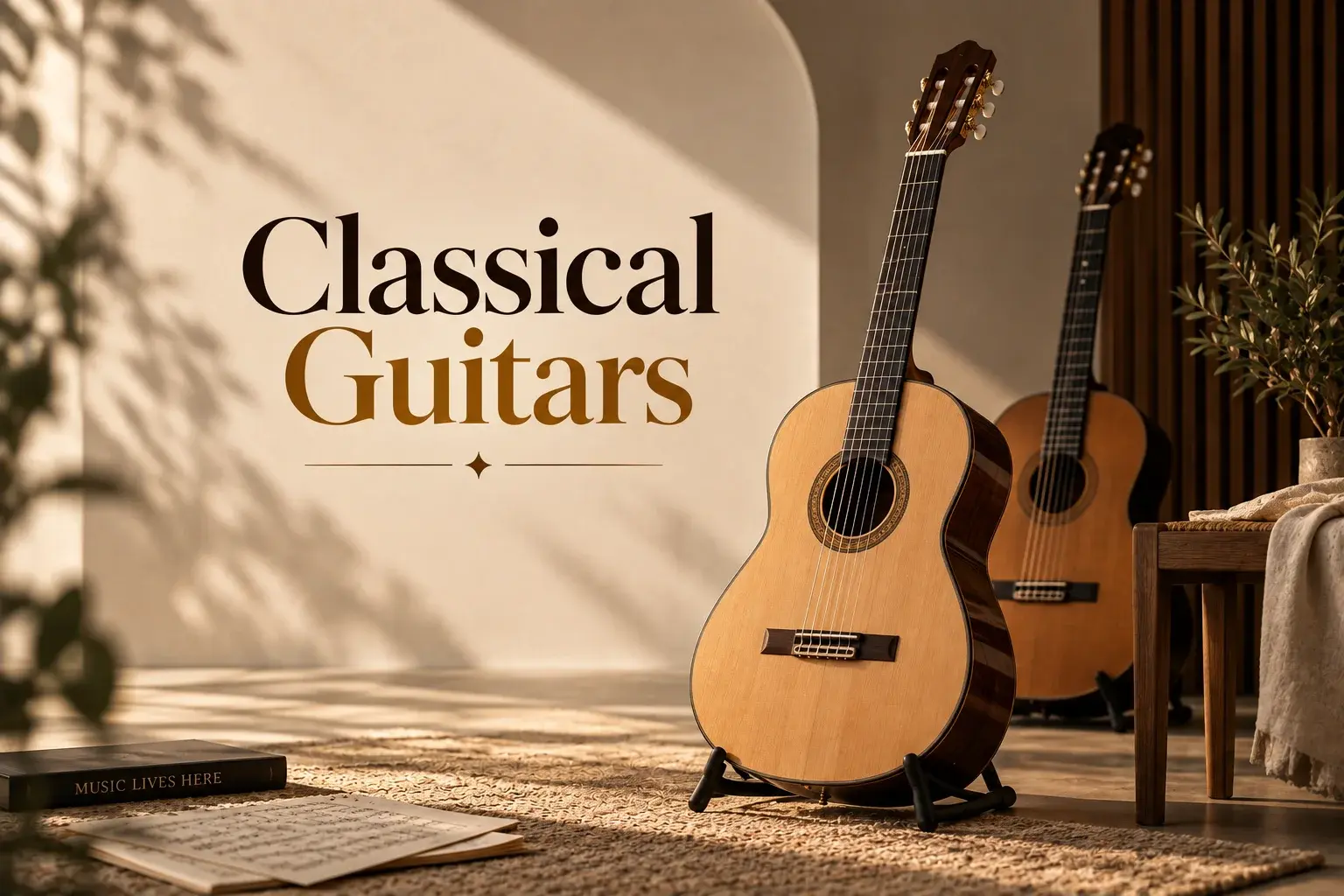
Classical guitars are a type of guitar that uses nylon strings of steel. They have a tone. Are important for classical, flamenco and Indian raga-style playing.
Key Features
- Nylon strings (gentler on fingertips)
- Wider neck for fingerstyle precision
- Slotted headstock and tie-bridge design
- Best for fingerpicking and formal training
Why Choose Classical?
If you love fingerstyle pieces, guitar or want a touch while learning classical guitars are the way to go. They’re also great for learners or those with fingers.
4. Bass Guitars
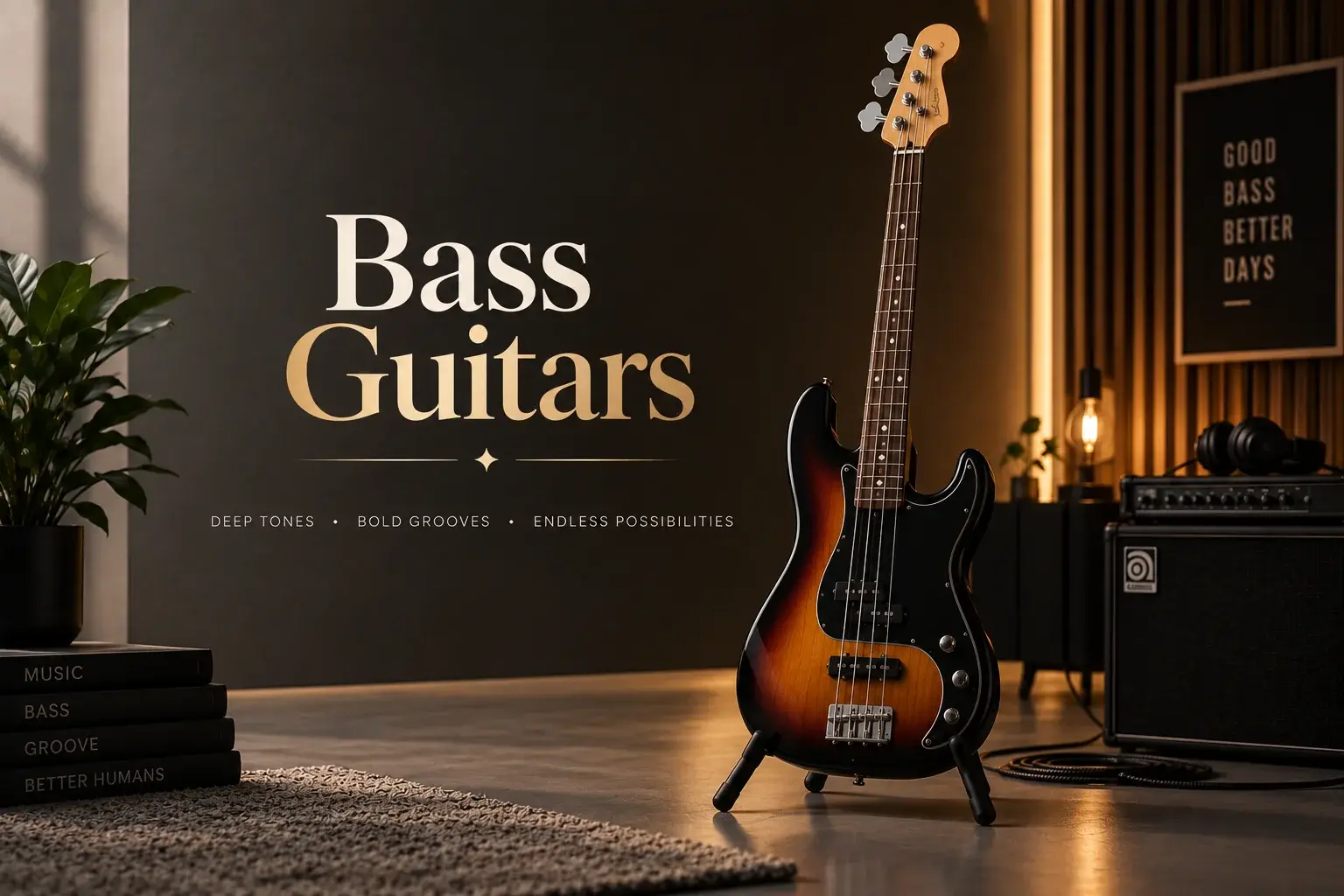
Bass guitars give the low-end foundation in bands and recordings. Though they are technically an instrument they are often grouped under guitar types because of their shape and playing style.
Key Features
- Typically 4 strings (E-A-D-G tuning)
- Longer scale length and thicker strings
- Electric or acoustic variants available
- Essential for rhythm sections in all genres
Why Choose Bass?
If you enjoy groove, rhythm and being the heart of a band then bass is your instrument. It’s also a move if you want to join a band because bassists are always in demand.
Different Kinds of Guitars by Body Shape
Beyond string type and electronics kinds of guitars vary by body shape. This affects tone, comfort and how loud the sound projects.
(A) Acoustic Body Shapes
- Dreadnought: Large, bold sound; great for strumming and flatpicking.
- Parlor: Compact, intimate tone; ideal for fingerstyle and travel
- Jumbo: Massive volume and bass; perfect for stage performance
- Auditorium: Balanced tone; comfortable for seated playing
(B) Electric Body Shapes
- Stratocaster: Double-cutaway, contoured body; versatile tone
- Telecaster: Slab body, bright twang; country and rock staple
- Les Paul: Single-cutaway, thick sustain; rock and blues favorite
- SG: Thin, lightweight; aggressive rock tone
Choosing the right body shape depends on your playing style, physical comfort and tonal preferences. At Artium Academy we help students test shapes to find what feels and sounds best for them.
Different Guitar Types by Skill Level and Genre
Not all guitar types suit every skill level or genre. Matching your instrument to your goals speeds up progress. Keeps you inspired.
(A) For Beginners
➤ Acoustic (steel-string): Best for Bollywood, pop, and folk
➤ Classical (nylon): Ideal for formal training and fingerstyle
➤ Electric: Great for rock, blues, and quiet practice with headphones
(B) By Genre
➤ Bollywood/Pop: Steel-string acoustic or electro-acoustic
➤ Classical/Flamenco: Nylon-string classical guitar
➤ Rock/Metal: Solid-body electric (Strat, Les Paul, SG)
➤ Jazz/Fusion: Semi-hollow or hollow-body electric
➤ Folk/Indie: Dreadnought or parlor acoustic
Understanding guitar types by genre helps you avoid buying the instrument. At Artium we match instrument choice with your goals to ensure a fulfilling learning journey.
How to Choose the Right Guitar Type for You
With types of guitars available picking the right one can feel overwhelming. Here’s a simple framework to help you decide.
1. Define Your Musical Goals
Ask yourself: What songs do I want to play? If it’s Bollywood hits or Instagram trends, go acoustic. For rock solos, choose electric. For classical training, pick nylon-string.
2. Consider Your Budget
Acoustics are generally more affordable since they don’t require amps. Electrics need additional gear but offer more tonal flexibility. Classical guitars are mid-range and durable.
3. Think About Portability
If you travel often or have limited space, a parlor acoustic or compact electric works best. Dreadnoughts and jumbos are bulkier but louder.
4. Test Comfort and Playability
Visit a store or try instruments at Artium Academy. Neck width, string action, and body contour affect comfort, especially for beginners.
5. Plan for Growth
Start with an instrument that grows with you. A steel-string acoustic with a cutaway or a Strat-style electric can handle genres as you improve.
By reviewing these points you’ll narrow down the types of guitars that fit your lifestyle and dreams.
Final Thoughts
Choosing the right guitar is about matching your instrument with your dreams. Whether you love the warmth of a guitar, the punch of an acoustic or the versatility of an electric there’s a type of guitar waiting for you. At Artium Academy we’ve guided hundreds of students through this decision. Our personalized approach ensures you start with the gear, the technique and the right mindset. Remember, the best guitar is the one you’ll pick up every day.
Ready to begin your journey? Book Your Free 1:1 Trial Class at Artium and take the first step toward mastering your favorite songs.
FAQs
The four main types of guitar are acoustic (steel-string) classical (nylon-string) electric and bass. Each has construction and sound characteristics.
For beginners a steel-string acoustic is ideal. It’s portable, affordable and fits genres like Bollywood and pop. Classical guitars are excellent for training.
Acoustic guitars use steel strings. Have necks. Classical guitars use nylon strings. Have necks for fingerstyle precision.
Not necessarily. Electric guitars have action and lighter strings making them easier on fingers.. They require an more gear.
Steel-string guitars are best for Bollywood and folk music due to their projecting tone that matches melodies.
Try sitting with the guitar. Your fretting hand should reach the frets comfortably. The body shouldn’t feel too bulky. Smaller players may prefer parlor or 3/4-size models.
Acoustic and classical guitars are generally more affordable. Electric guitars cost due to pickups and hardware, You’ll need an amp. Bass guitars vary widely by brand and features.
Yes. The tuning and basic chords are the same. You’ll adjust to string type. Picking style but the transition is smooth with practice.
Nylon-string classical guitars are essential for music because of their tone and wide neck for complex fingerings.
A solid-body electric guitar, like a Stratocaster or an electro-acoustic guitar offers the versatility across rock, pop, jazz and folk.