
All Topics
- Alchemizing Music Concepts for Students
- Anuv Jain Songs
- Artist Spotlight
- artium gift card
- Artium Maestros
- Artium News
- Artium Practice Studio
- Artium Tech Blog
- Best Coke Studio Songs
- Best Female Singers
- Birthday songs
- Bollywood Love Songs
- buying guide
- Carnatic Music
- Child Singers
- Devotional Music
- Editorials by Ananth Vaidyanathan
- English Love Songs
- Festival
- Film Music
- Ghazal Music
- Guitar
- Hindustani Classical Music
- Indian Classical Music
- Indian Folk Music
- Insights
- Instagram Reels Viral Songs
- Instruments
- Karaoke
- Karaoke Singing
- Keyboard
- Kids Music
- maestros
- Music Education
- Music for Kids
- Music Games
- Music Industry
- Music Instruments
- Music Legends
- Music Press Release
- Music Technology
- Music Theory
- Music Therapy
- Music Tools
- Piano
- piano guide
- Songs
- South Devotional Music
- Success Stories
- Tamil Film Music
- Telugu Film Music
- Time Theory
- Tools
- Uncategorized
- Uncategorized
- Uncategorized
- Uncategorized
- Vocal Range
- Vocal Singing
- Vocals
- western classical music
- western music
- Western vocal music
Voice Modulation: What It Is and How to Improve It?
Voice Modulation: What It Is and How to Improve It?
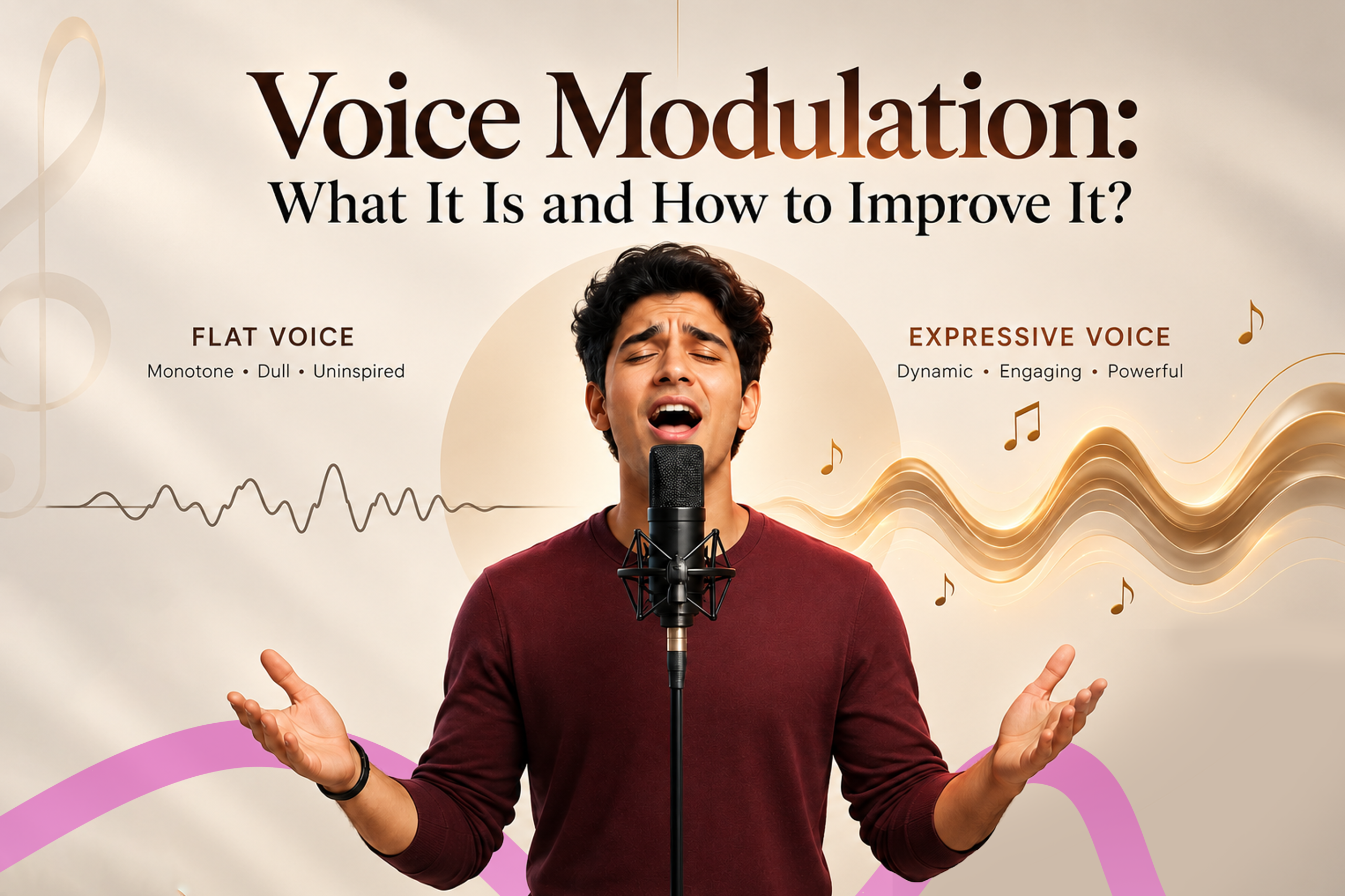
Table of Contents
Quick Summary
Voice modulation is the control of pitch, tone, pace and volume to express emotion in singing and speaking. With practice and the right exercises anyone can learn to modulate voice modulation.
Introduction
Have you ever listened to a singer or speaker. Felt completely captivated, not by what they said or sang but by how they delivered it? That magnetic quality often comes down to one skill: voice modulation. Whether voice modulation is used on stage in a meeting or in a recording session mastering voice modulation can transform a delivery into an experience. At Artium Academy we believe voice modulation is a skill for every vocalist and communicator. In this guide you will learn what voice modulation means why voice modulation matters and how to improve voice modulation with exercises and expert tips.
What Is Voice Modulation? (Meaning)
Voice modulation refers to the control of your elements to shape how a listener feels your singing or speaking. By changing the key or hitting the notes voice modulation adjusts qualities of sound like pitch, tone, pace and volume to match the emotional intent of the message. To define voice modulation simply: it is the shaping of voice modulation from moment to moment so that every phrase carries meaning, not melody. Think of it this way: two singers can perform the song with pitch. Only the one who uses voice modulation will make you feel something. That is because voice modulation turns accuracy into connection. And when guided by Music Theory, it becomes a precise tool for storytelling through sound.
Why Voice Modulation Matters in Singing and Speaking
Voice modulation is not a “to-have” skill; it is essential for anyone who wants to communicate whether through song or speech.
In Singing
- Emotional Expression: Voice modulation allows singers to convey joy, sorrow, tension or relief through shifts.
- Audience Engagement: A modulated performance keeps listeners hooked preventing monotony.
- Professional Edge: in genres like pop, folk, jazz, Carnatic or Hindustani voice modulation distinguishes singers from those who do not use it.
In Speaking
- Clarity and Impact: Voice modulation helps emphasize points and maintain audience attention.
- Confidence and Authority: tone and pace project confidence and make message more persuasive.
- Versatility: From public speaking to voiceovers voice modulation enhances range.
At Artium we integrate voice modulation training into every curriculum because voice modulation is the bridge between technique and artistry.
Key Elements of Voice Modulation (Pitch, Tone, Pace, Volume)
Understanding the building blocks of voice modulation helps voice modulation practice with intention. Here are the four core elements:
1. Pitch
Pitch refers to how high or low voice modulation sounds. Shifting pitch intentionally can express excitement or seriousness.
Tip: Practice singing or speaking a sentence at different pitch levels to explore your range.
2. Tone (Timbre)
Tone or timbre is the “color” of voice modulation shaped by resonance, breath and articulation. You can move from a whispery tone to a belt.
Tip: Experiment with different tonal qualities on the same phrase to feel the emotional shift.
3. Pace
Pace is how quickly or slowly voice modulation moves through words or notes. Slowing down adds weight; speeding up builds energy.
Tip: Insert pauses before important words to create dramatic effect.
4. Volume
Volume is how loud or soft voice modulation speaks or sings. Dynamic contrasts, moving between soft and loud add depth.
Tip: Try swelling on certain notes or balancing loud and soft volumes within a phrase.
Mastering these four levers gives voice modulation control over meaning in practice.
Voice Modulation Exercises to Practice
Ready to put theory into action? Here are some effective voice modulation exercises you can start today:
1. Pitch Sirens
Glide from your note to your highest on an “oh” sound, then back down. This builds flexibility and control.
2. Volume Swells
Speak a phrase starting softly grow in the middle and fade out at the end. Repeat with intentions.
3. Tone Color Shifts
Pick a line from a song. Sing it breathy, once bright and once with a tone. Notice how each version feels different.
4. Pace and Pause Drills
Read a paragraph aloud. Slow down on sentences. Insert pauses for emphasis. Record yourself to hear the impact.
5. Diaphragmatic Breathing
Place one hand on your abdomen. Inhale so your belly expands, then exhale on an “s” sound. This supports airflow for voice modulation.
6. Humming and Lip Trills
Hum up and down your range. Make a lip trill (raspberry sound). These warm up your folds. Improve resonance.
7. Inflection Drills
Say a sentence like “I love music” in five ways: happy, sad, excited, angry and calm. This trains expression through voice modulation.
At Artium Academy students practice these voice modulation exercises to build consistency and confidence.
Common Mistakes That Affect Voice Modulation
With intentions certain habits can undermine voice modulation progress. Avoid these pitfalls:
- Monotone Delivery: Speaking or singing at one pitch and volume makes your message forgettable.
- Rushing Through Phrases: Fast pace without pauses reduces clarity and emotional impact.
- Ignoring Breath Support: Poor breathing leads to weak volume control and vocal strain.
- Over-Modulating: Excessive changes in pitch or volume can sound unnatural or forced.
- Neglecting Tone Color: Sticking to one timbre limits expressiveness.
- Skipping Warm-Ups: Jumping into performance without vocal preparation reduces flexibility.
- Lack of Intention: Modulating without emotional purpose feels mechanical.
Awareness is the step. Record yourself regularly to spot these mistakes early.
Tips to Improve Voice Modulation Naturally
Improving voice modulation does not require gear or complex routines. Here are natural effective strategies:
1. Listen Actively
Study great speakers. Notice how they use pitch, pace and volume to convey emotion.
2. Practice Daily
Consistency matters more than duration. Ten to fifteen minutes of voice modulation training daily yields results.
3. Use Technology Wisely
Tools like the swar meter can help you visualize pitch accuracy and track progress over time.
4. Record and Review
Listening to voice modulation reveals patterns you might miss while performing. Adjust based on what you hear.
5. Work with a Coach
Feedback accelerates learning. At Artium voice modulation coaches tailor exercises to voice modulation goals.
6. Stay Hydrated
Water keeps your vocal cords lubricated, supporting smoother modulation.
7. Explore Different Genres
Try singing or speaking in various styles pop, classical, storytelling—to expand your modulation toolkit
8. Focus on Emotion
Always ask: “What feeling am I trying to convey?” Let emotion guide your vocal choices.
If you’re looking for structured guidance on how to improve your singing voice, consider enrolling in a voice training program at Artium Academy.
Final Thoughts
Voice modulation is more than a technical skill, it’s the heart of expressive communication. Whether you’re singing a soulful ballad, delivering a keynote, or recording a reel, how you shape your voice determines how your message lands.
The good news? Voice modulation can be learned. With deliberate practice, the right exercises, and supportive guidance, you can transform your vocal delivery in weeks.
At Artium and Artium Academy, we’re committed to helping singers and speakers unlock their full potential through personalized voice training. Start small, stay consistent, and let your voice tell your story with power and emotion. Book Your Free 1:1 Trial Class
FAQs
Voice modulation meaning is the intentional control of pitch, tone, pace, and volume to express emotion in singing or speaking.
Practice voice modulation exercises like pitch sirens, volume swells, and tone shifts. Work with a coach for personalized feedback.
Try humming, lip trills, diaphragmatic breathing, and inflection drills. These build foundational control.
Absolutely. It enhances clarity, engagement, and persuasion in speeches and presentations.
It can definitely be learned. While some have natural instinct, structured voice training accelerates progress.
Most notice changes in a few weeks; significant improvement takes several months of consistent practice.
Voice modulation focuses on expressive variation (pitch, tone, pace, volume), while voice control refers to technical stability (pitch accuracy, breath support). Both are complementary.
Yes. They use dynamic contrast, tone color shifts, and intentional pacing to convey emotion.
Definitely. Proper breath support enables smooth transitions and sustained phrases.
Avoid monotone delivery, rushing, poor breath support, over-modulating, and skipping warm-ups.