

All Topics
- Alchemizing Music Concepts for Students
- Anuv Jain Songs
- Artist Spotlight
- artium gift card
- Artium Maestros
- Artium News
- Artium Practice Studio
- Artium Tech Blog
- Best Coke Studio Songs
- Best Female Singers
- Birthday songs
- Bollywood Love Songs
- buying guide
- Carnatic Music
- Child Singers
- Devotional Music
- Editorials by Ananth Vaidyanathan
- English Love Songs
- Festival
- Film Music
- Ghazal Music
- Guitar
- Hindustani Classical Music
- Indian Classical Music
- Indian Folk Music
- Insights
- Instagram Reels Viral Songs
- Instruments
- Karaoke
- Karaoke Singing
- Keyboard
- Kids Music
- maestros
- Music Education
- Music for Kids
- Music Games
- Music Industry
- Music Instruments
- Music Legends
- Music Press Release
- Music Technology
- Music Theory
- Music Therapy
- Music Tools
- Piano
- piano guide
- Songs
- South Devotional Music
- Success Stories
- Tamil Film Music
- Telugu Film Music
- Time Theory
- Tools
- Uncategorized
- Uncategorized
- Uncategorized
- Uncategorized
- Vocal Range
- Vocal Singing
- Vocals
- western classical music
- western music
- Western vocal music
Sarali Varisai Exercises with Notation: Read, Sing Along & Get Scored
Sarali Varisai Exercises with Notation: Read, Sing Along & Get Scored
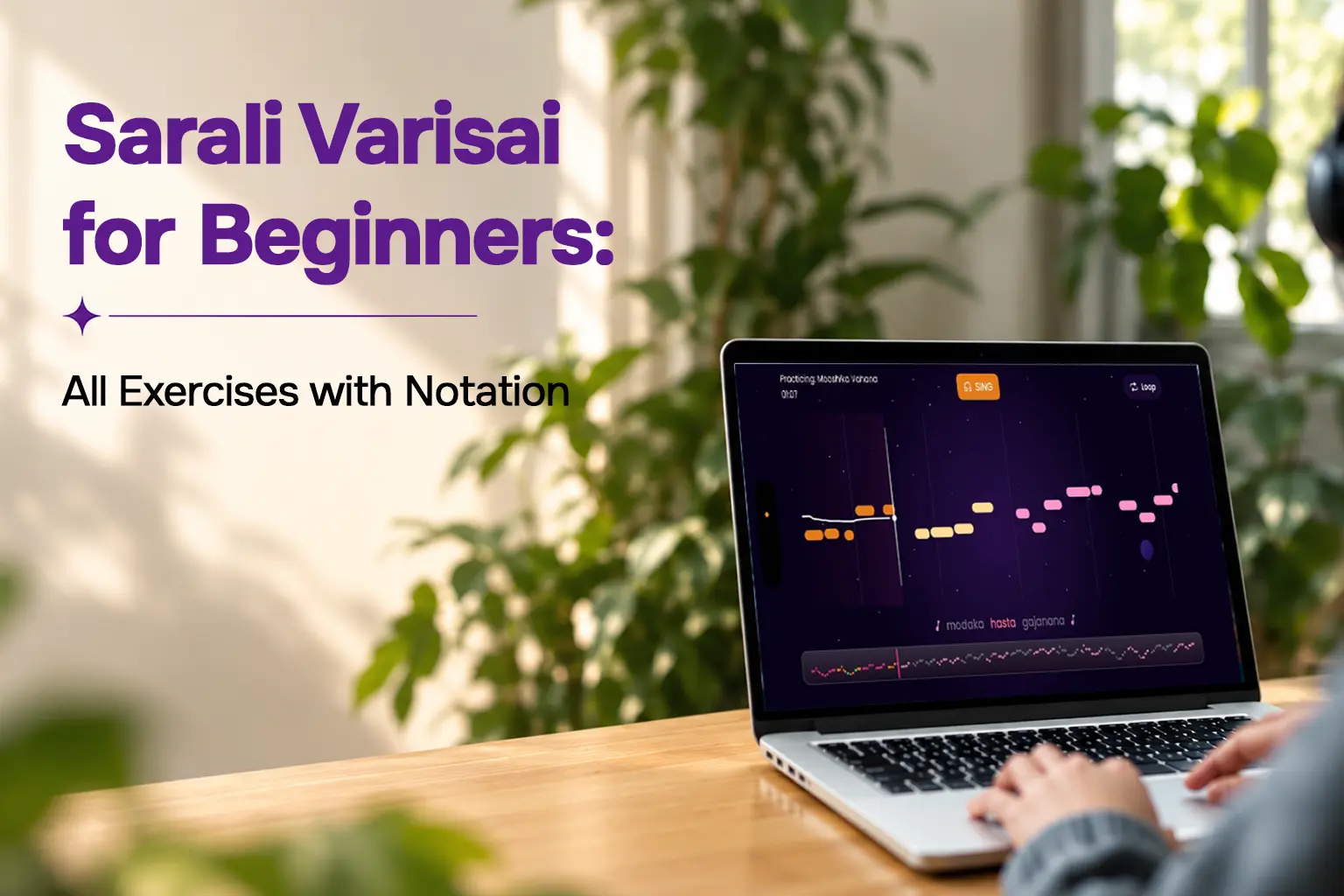
Table of Contents
Quick Summary
| Sarali Varisai is the first 14 exercises of Carnatic music. Mayamalavagowla raga, Adi tala: All notes (Sa, Ri, Ga, Ma, Pa, Da, Ni) are sung in that order in a simple repeated pattern, gradually gaining mastery over sruti, volume and tana control.. Children learn in three speeds, with the slow speed having one note per beat. Sarali Varisai is followed by the janta varisai, dhatu varisai, alankara, geetham and varnams. Practice sarali varisai in free playback in the Practice Studio of the Artium Academy app. |
If you have ever wanted to learn Carnatic music online, you have probably already heard the words “Sarali Varisai”. Almost every teacher begins here, and for good reason. These simple note patterns teach your voice to find the right pitch, hold it steadily and move in time with the beat.
Follow this guide for everything a beginner needs: what the exercises are, what the swaras are, how to read them, how to practise, at each speed, and what to learn next. You will also see how to practise Sarali Varisai free, on your phone, using the new Practice Studio in the Artium Academy app.
What Is Sarali Varisai?
Sarali translates as “easy” or “straight”, varisai means “series” or “order”. Consequently Sarali Varisai is a series of simple note exercises given in a set order starting with the easiest and progressing to a little more difficult.
There are 14 exercises in the set. They are traditionally credited to Purandara Dasa, who is often called the father of Carnatic music teaching. Each exercise is sung in Mayamalavagowla raga and Adi tala (an eight-beat cycle).
Consider Sarali Varisai as the hold-everything-in-place-with-your-fingers-before writing-a-word stage. You’re not trying to sing a song at this point! You are just building the fundamentals so that all you learn afterward becomes easier.
Why Every Carnatic Student Starts with Sarali Varisai
Sarali Varisai in Carnatic music is not just “beginner homework”. It builds three skills you will use for life:
- Sruti alignment: landing exactly on pitch against the tanpura or shruti box.
- Voice control: keeping every note clear, steady and equal in volume.
- Tala sense: keeping time while you sing, without losing the melody.
Even advanced singers return to these exercises to warm up and fix small pitch slips. That is why teachers at Artium Academy and everywhere else start new students here.
Sarali Swaras: The Notes You Will Sing
Carnatic music uses seven main notes, called swaras: Sa, Ri, Ga, Ma, Pa, Da, Ni. After Ni, you reach the higher Sa (written Ṡ), which completes the octave.
In Mayamalavagowla, the sarali swaras are:
| Swara | Name | Note used |
| Sa | Shadjam | Sa (fixed) |
| Ri | Shuddha Rishabham | R1 |
| Ga | Antara Gandharam | G3 |
| Ma | Shuddha Madhyamam | M1 |
| Pa | Panchamam | Pa (fixed) |
| Da | Shuddha Dhaivatham | D1 |
| Ni | Kakali Nishadam | N3 |
| Ṡ | Tara Sthayi Shadjam | Higher Sa |
Sa and Pa are called achala (fixed) swaras. They never change, and they anchor your sruti. That is why beginners practise them first.
Before You Start: Sruti and Tala
Sruti (your base pitch). Your teacher assigns a pitch that suits your voice, such as C, C# or D. Your Sa is that pitch, and every other swara is measured from it. Always sing on the pitch assigned to you.
Tala (the beat cycle). Sarali Varisai uses Adi tala, which has eight beats. In the first speed, you sing one swara on every beat. Tap your hand on your thigh to keep time.
Sarali Varisai Notes: Exercises with Notation
A quick key: capital letters show the swaras, and a dot above (Ṡ) shows the higher octave. In 1st speed, each swara gets one beat.
Sarali Varisai 1: This is the simplest pattern. You travel straight up the octave and straight back down. Do not rush it. Land on each note cleanly.
| Sa Ri Ga Ma | Pa Da Ni ṠṠ Ni Da Pa | Ma Ga Ri Sa |
Sarali Varisai 2: Builds a steady Ri going up and Ni coming down.
| Sa Ri Sa Ri | Sa Ri | Ga MaSa Ri Ga Ma | Pa Da | Ni ṠṠ Ni Ṡ Ni | Ṡ Ni | Da PaṠ Ni Da Pa | Ma Ga | Ri Sa |
Sarali Varisai 3: Focuses on Ga going up and Da coming down.
| Sa Ri Ga Sa | Ri Ga | Sa RiSa Ri Ga Ma | Pa Da | Ni ṠṠ Ni Da Ṡ | Ni Da | Ṡ NiṠ Ni Da Pa | Ma Ga | Ri Sa |
Sarali Varisai 4: Focuses on Ma going up and Pa coming down.
| Sa Ri Ga Ma | Sa Ri | Ga MaSa Ri Ga Ma | Pa Da | Ni ṠṠ Ni Da Pa | Ṡ Ni | Da PaṠ Ni Da Pa | Ma Ga | Ri Sa |
Sarali Varisai 5: Teaches you to hold Pa and Ma for a full extra beat (dheergam).
| Sa Ri Ga Ma | Pa , | Sa RiSa Ri Ga Ma | Pa Da | Ni ṠṠ Ni Da Pa | Ma , | Ṡ NiṠ Ni Da Pa | Ma Ga | Ri Sa |
Sarali Varisai 6: Strengthens Da on the way up and Ga on the way down.
| Sa Ri Ga Ma | Pa Da | Sa RiSa Ri Ga Ma | Pa Da | Ni ṠṠ Ni Da Pa | Ma Ga | Ṡ NiṠ Ni Da Pa | Ma Ga | Ri Sa |
Sarali Varisai 7: Holds Ni going up and Ri coming down.
| Sa Ri Ga Ma | Pa Da | Ni ,Sa Ri Ga Ma | Pa Da | Ni ṠṠ Ni Da Pa | Ma Ga | Ri ,Ṡ Ni Da Pa | Ma Ga | Ri Sa |
Sarali Varisai 8: A zig-zag exercise that trains the Pa–Ma–Ga–Ri and Ma–Pa–Da–Ni turns.
| Sa Ri Ga Ma | Pa Ma | Ga RiSa Ri Ga Ma | Pa Da | Ni ṠṠ Ni Da Pa | Ma Pa | Da NiṠ Ni Da Pa | Ma Ga | Ri Sa |
Sarali Varisai 9: Another zig-zag, this time on Pa–Ma–Da–Pa and Ma–Pa–Ga–Ma.
| Sa Ri Ga Ma | Pa Ma | Da PaSa Ri Ga Ma | Pa Da | Ni ṠṠ Ni Da Pa | Ma Pa | Ga MaṠ Ni Da Pa | Ma Ga | Ri Sa |
Sarali Varisai 10: Focuses on holding Pa and resting on Ga (nyasa) while moving between Ga and Ni.
| Sa Ri Ga Ma | Pa , | Ga MaPa , , , | Pa , | , ,Ga Ma Pa Da | Ni Da | Pa MaGa Ma Pa Ga | Ma Ga | Ri Sa |
Sarali Varisai 11: Builds long, held notes on Ṡ, Ni, Da and Pa.
| Ṡ , Ni Da | Ni , | Da PaDa , Pa Ma | Pa , | Pa ,Ga Ma Pa Da | Ni Da | Pa MaGa Ma Pa Ga | Ma Ga | Ri Sa |
Sarali Varisai 12: A first taste of janta (double-note) patterns like Ṡ Ṡ, Ni Ni, Da Da.
| Ṡ Ṡ Ni Da | Ni Ni | Da PaDa Da Pa Ma | Pa , | Pa ,Ga Ma Pa Da | Ni Da | Pa MaGa Ma Pa Ga | Ma Ga | Ri Sa |
Sarali Varisai 13: A zig-zag exercise with long holds on Ga, Pa and Da.
| Sa Ri Ga Ri | Ga , | Ga MaPa Ma Pa , | Da Pa | Da ,Ma Pa Da Pa | Da Ni | Da PaMa Pa Da Pa | Ma Ga | Ri Sa |
Sarali Varisai 14: Combines held Pa and Ṡ with double notes on Da and Ma, which makes it a good final test.
| Sa Ri Ga Ma | Pa , | Pa ,Da Da Pa , | Ma Ma | Pa ,Da Ni Ṡ , | Ṡ Ni | Da PaṠ Ni Da Pa | Ma Ga | Ri Sa |
How to Practise Sarali Varisai (Step by Step)
Start with Sa – Pa – Sa. Sing Sa, Pa, higher Sa, Pa, Sa. Repeat until your voice sits right on the sruti.
- Listen before you sing. Hear the exercise once or twice so your ear knows what it should sound like.
- Sing slowly at 1st speed. One note per beat. Do not hurry.
- Sing with the sruti playing. It helps your ear catch small mistakes.
- Repeat each exercise a few times before moving to the next.
- Move to faster speeds only when 1st speed feels easy.
The 3 Speeds
| Speed | Notes per beat | How it feels |
| 1st speed | 1 | Slow and steady |
| 2nd speed | 2 | Twice as fast |
| 3rd speed | 4 | Fast; needs clear, clean notes |
4 Rules for 1st Speed
- Sing on the pitch assigned to you by your teacher.
- Keep the volume steady and identical for every swara.
- Give each note equal duration, assigning one beat of the tala to each note.
- Jump directly onto each swara. Avoid sliding or gliding between swaras.
Practise Sarali Varisai Free in Artium’s Practice Studio
Practising between classes is where progress really happens, but practising alone can feel unsure. Are you on pitch? Are you on the beat? To help with this, Artium Academy has launched Practice Studio inside the Artium Academy app. You can also explore our free music tools on the website for practice.
It is free and available on Android and iOS.
How to find it in the app:
- Open the Artium Academy app and go to the Practice tab.
- Scroll down to Your Daily Practice Plan and tap Sarali Varisai 1 – 1st Speed.
- You will see a Guided Practice screen with a short description of the lesson.
- Choose how you would like to practise: Listen or Start Practice.
What Is Inside the Plan
The first plan for beginners is Sarali Varisai 1 – 1st Speed. It has 6 guided lessons:
| Lessons | What you practise |
| 1 and 2 | Sa – Pa – Sa |
| 3 and 4 | Mooshika Vahana, a Ganesha invocation |
| 5 and 6 | Sarali Varisai 1 – 1st Speed |
Every lesson has a short instruction card telling you exactly what to focus on, so you are never guessing.
Listen vs Start Practice
Each lesson gives you two options:
- Listen: Hear the exercise and sing along. This is perfect for your first rounds.
- Start Practice: Listen first, then sing it back on your own. This shows you how much you have absorbed.
Every lesson is marked “Practice only, no submission required”. That means no pressure and no grades. Repeat as many times as you like.
How the Pitch Screen Works
While you practise, the screen shows the notes of the exercise, colour-coded so you always know where you are:
- Pink marks the “Listen” phase, a cue that you listen first and sing afterwards.
- Orange shows notes you have already passed.
- Cream shows the notes coming up next.
- A white line traces your live pitch as you sing, so you can see where your voice is relative to the note.
How to Start
- Download the Artium Academy app from the Play Store or App Store.
- Sign in with Google or Apple.
- Open Practice Studio.
- Choose Sarali Varisai 1 – 1st Speed.
- Tap Listen, then try Start Practice.
Sarali Varisai in Different Ragas
Once you are comfortable in Mayamalavagowla, teachers often introduce the same patterns in other ragas. This helps your ear learn how the same pattern feels when a few swara positions change.
| Raga | What changes |
| Shankarabharanam | Uses R2, G3, D2, N3; close to the Western major scale |
| Kalyani | Uses the sharper Ma (M2) |
| Mohanam | Five notes: Sa Ri Ga Pa Da Ṡ |
| Hamsadhwani | Five notes: Sa Ri Ga Pa Ni Ṡ |
Check with your teacher before moving to a new raga. The right time depends on how steady your pitch and tala are.
What Comes After Sarali Varisai?
Once the 14 exercises feel comfortable, here is the usual path:
- Janta Varisai: double notes, like Sa Sa Ri Ri Ga Ga.
- Dhatu Varisai: zig-zag patterns that jump across notes.
- Hechchu and Mandra Sthayi Varisai: exercises in the upper and lower octave.
- Alankaras: seven patterns, one for each tala.
- Geethams: your first full songs, such as Sri Gananatha.
- Swarajathis, Jathiswarams and Varnams: longer, richer pieces.
Do not skip steps. Each one prepares you for the next. A certified teacher can tell you when you are ready to move on.
Common Mistakes to Avoid
- Sliding between notes. Each swara should land cleanly.
- Uneven volume. Some notes end up louder or softer than others.
- Rushing the speed. Master 1st speed before 2nd.
- Practising without a sruti reference. You cannot tell if you are on pitch without it.
- Breaking a word in two when you breathe. In songs like Mooshika Vahana, take a quick belly breath at the end of a phrase.
Daily Practice Tips
- Practise 15 to 20 minutes daily rather than one long weekend session.
- Warm up with Sa – Pa – Sa before every session.
- Early morning works well because your voice is fresh.
- Sit straight and breathe from your belly.
- Record yourself once a week and listen back. You will hear your own progress.
Ready to Take the Next Step?
Sarali Varisai is where your Carnatic journey begins, and every great singer once sang these same notes. Open the Practice Studio, sing along, and build your foundation one swara at a time.
At Artium Academy, you learn from certified teachers in live 1:1 classes, follow a GRMP-recognised curriculum, and can attend masterclasses by renowned artists.
Ready to start? Book your free 1:1 trial class with Artium Academy and learn from certified teachers at your own pace.
Frequently Asked Questions
Sarali Varisai is a set of 14 beginner exercises in Carnatic music. It trains your pitch, tala and voice control through simple patterns of the seven swaras.
Traditionally in Mayamalavagowla. Later, the patterns can also be practised in other ragas, such as Shankarabharanam or Mohanam.
It depends on your practice routine and guidance. Many beginners spend a few weeks to a few months before moving to the next stage. Steady daily practice matters more than speed.
Janta Varisai, Dhatu Varisai, alankaras, and then geethams.
Yes. With a certified teacher in live 1:1 classes and a guided practice tool, online learning works well. Many students at Artium Academy begin this way.
Yes. Practice Studio is a free music tool in the Artium Academy app, available on Android and iOS.
No, you can practise on your own. But a teacher helps you with pitch selection, correction and knowing when to move ahead.
The sarali swaras are Sa, Ri, Ga, Ma, Pa, Da and Ni, followed by the higher Sa (Ṡ) that completes the octave. In Mayamalavagowla, you sing them as Sa, R1, G3, M1, Pa, D1, N3 and the higher Sa.
Mayamalavagowla has evenly spaced notes and no discordant swaras, so it is easy for a beginner’s ear to follow. That makes it a friendly raga for learning pitch and tala.
Most beginners learn three speeds: one note per beat, two notes per beat and four notes per beat. Some teachers add more speeds later for advanced practice. Start with the first speed and move ahead only when it feels comfortable.