

All Topics
- Alchemizing Music Concepts for Students
- Anuv Jain Songs
- Artist Spotlight
- artium gift card
- Artium Maestros
- Artium News
- Artium Practice Studio
- Artium Tech Blog
- Best Coke Studio Songs
- Best Female Singers
- Birthday songs
- Bollywood Love Songs
- buying guide
- Carnatic Music
- Child Singers
- Devotional Music
- Editorials by Ananth Vaidyanathan
- English Love Songs
- Festival
- Film Music
- Ghazal Music
- Guitar
- Hindustani Classical Music
- Indian Classical Music
- Indian Folk Music
- Insights
- Instagram Reels Viral Songs
- Instruments
- Karaoke
- Karaoke Singing
- Keyboard
- Kids Music
- maestros
- Music Education
- Music for Kids
- Music Games
- Music Industry
- Music Instruments
- Music Legends
- Music Press Release
- Music Technology
- Music Theory
- Music Therapy
- Music Tools
- Piano
- piano guide
- Songs
- South Devotional Music
- Success Stories
- Tamil Film Music
- Telugu Film Music
- Time Theory
- Tools
- Uncategorized
- Uncategorized
- Uncategorized
- Uncategorized
- Vocal Range
- Vocal Singing
- Vocals
- western classical music
- western music
- Western vocal music
Aigiri Nandini: Meaning, Lyrics, and How to Sing It with Practice Studio
Aigiri Nandini: Meaning, Lyrics, and How to Sing It with Practice Studio

Table of Contents
Quick Summary
| Aigiri Nandini is the Mahishasura Mardini Stotram, a 21-verse Sanskrit hymn praising Goddess Durga as the slayer of the demon Mahishasura. It is traditionally attributed to Adi Shankaracharya, though some sources credit Ramakrishna Kavi. Its opening words mean “O daughter of the mountain.” Sung during Navratri, it celebrates good over evil. To sing it, learn the refrain first, practise phrase by phrase, and use Artium Academy’s free Practice Studio, which shows pitch bars, syllable-by-syllable lyrics and your live pitch in real time. |
What Is Aigiri Nandini?
Every Navratri, this song seems to be everywhere: in temples, on stages, in living rooms and in your social media feed. Aigiri Nandini is the popular name for the Mahishasura Mardini Stotram, a Sanskrit hymn of 21 verses dedicated to Goddess Durga.
The name comes from the first line of the hymn. Mahishasura Mardini means “the slayer of Mahishasura”, the buffalo demon in the well-known story of Durga’s victory. The hymn is sung during Navratri, Durga Puja and Vijayadashami, and many people also chant it on regular mornings for strength and calm.
What makes it special for singers? It has a fast, rhythmic flow, a catchy refrain that repeats after every verse, and rich Sanskrit words that are a joy to sing once you know them.
Who Wrote Aigiri Nandini?
The hymn is traditionally attributed to Adi Shankaracharya, the 8th-century philosopher and teacher. Many devotional books and music renditions credit him.
The full picture is a little more nuanced. Some sources name Ramakrishna Kavi as the author, and he is sometimes identified with the poet Tenali Raman, a devotee of Durga. Others point out that there are no firm historical references to settle it.
The simple answer: most people credit Adi Shankaracharya, but the exact authorship is debated. If you are writing about it or sharing it, “traditionally attributed to Adi Shankaracharya” is the safest way to say it.
What Is the Meaning of Aigiri Nandini?
Let’s break the name down in simple words.
- Ayi / Aigiri: an affectionate call, like “O!” or “Hail!”
- Giri Nandini: “daughter of the mountain”, a name for Goddess Parvati/Durga, daughter of the Himalayas.
- Mahishasura Mardini: “slayer of Mahishasura.”
So when you sing the opening words, you are addressing the Goddess warmly as the daughter of the mountain who delights the earth and the whole universe.
The refrain
After each verse, the hymn returns to a repeating line that begins with “Jaya jaya he Mahishasura Mardini.” It means “Victory to you, slayer of Mahishasura, you with the beautiful locks of hair, daughter of the mountain.” This is the part most listeners remember, so it is also the easiest place to start learning.
What the verses are about
Across its 21 verses, the hymn praises the Goddess in many forms. She is a nurturer of the three worlds, someone who pleases Lord Shiva, a fearless warrior who defeats demon armies, and a compassionate mother who protects those who take refuge in her.
The deeper message
The story is a symbol of good winning over evil, and of finding courage within yourself. That is why people connect with it during Navratri, and why it works so well as a practice song: it is energetic, uplifting and full of conviction.
Aigiri Nandini Lyrics (Hindi and English)
Many learners search for the lyrics in the script they read most comfortably, so here are both versions. The hymn is in Sanskrit, and the Hindi lyrics are in Devanagari. The English lyrics are a transliteration, which means the Sanskrit words written in English letters so you can read the sounds.
Aigiri Nandini Lyrics in Hindi (Devanagari)
“अयि गिरिनन्दिनि नन्दितमेदिनि विश्वविनोदिनि नन्दिनुते
गिरिवरविन्ध्यशिरोधिनिवासिनि विष्णुविलासिनि जिष्णुनुते ।
भगवति हे शितिकण्ठकुटुम्बिनि भूरिकुटुम्बिनि भूरिकृते
जय जय हे महिषासुरमर्दिनि रम्यकपर्दिनि शैलसुते ॥ 1 ॥
सुरवरवर्षिणि दुर्धरधर्षिणि दुर्मुखमर्षिणि हर्षरते
त्रिभुवनपोषिणि शङ्करतोषिणि कल्मषमोषिणि घोररते । [किल्बिष-, घोष-]
दनुजनिरोषिणि दितिसुतरोषिणि दुर्मदशोषिणि सिन्धुसुते
जय जय हे महिषासुरमर्दिनि रम्यकपर्दिनि शैलसुते ॥ 2 ॥
अयि जगदम्ब मदम्ब कदम्बवनप्रियवासिनि हासरते
शिखरि शिरोमणि तुङ्गहिमालय शृङ्गनिजालय मध्यगते ।
मधुमधुरे मधुकैटभगञ्जिनि कैटभभञ्जिनि रासरते
जय जय हे महिषासुरमर्दिनि रम्यकपर्दिनि शैलसुते ॥ 3 ॥
अयि शतखण्ड विखण्डितरुण्ड वितुण्डितशुण्ड गजाधिपते
रिपुगजगण्ड विदारणचण्ड पराक्रमशुण्ड मृगाधिपते ।
निजभुजदण्ड निपातितखण्ड विपातितमुण्ड भटाधिपते [-चण्ड]
जय जय हे महिषासुरमर्दिनि रम्यकपर्दिनि शैलसुते ॥ 4 ॥
अयि रणदुर्मद शत्रुवधोदित दुर्धरनिर्जर शक्तिभृते
चतुरविचारधुरीण महाशिव दूतकृत प्रमथाधिपते ।
दुरितदुरीह दुराशय दुर्मति दानवदूत कृतान्तमते
जय जय हे महिषासुरमर्दिनि रम्यकपर्दिनि शैलसुते ॥ 5 ॥
अयि शरणागत वैरिवधूवर वीरवराभयदायकरे
त्रिभुवन मस्तक शूलविरोधि शिरोधिकृतामल शूलकरे ।
दुमिदुमितामर दुन्दुभिनाद महो मुखरीकृत तिग्मकरे
जय जय हे महिषासुरमर्दिनि रम्यकपर्दिनि शैलसुते ॥ 6 ॥
अयि निजहुङ्कृतिमात्र निराकृत धूम्रविलोचन धूम्रशते
समरविशोषित शोणितबीज समुद्भवशोणित बीजलते ।
शिव शिव शुम्भ निशुम्भ महाहव तर्पित भूत पिशाचरते
जय जय हे महिषासुरमर्दिनि रम्यकपर्दिनि शैलसुते ॥ 7 ॥
धनुरनुसङ्ग रणक्षणसङ्ग परिस्फुरदङ्ग नटत्कटके
कनक पिशङ्ग पृषत्कनिषङ्गरसद्भट शृङ्ग हतावटुके ।
कृतचतुरङ्ग बलक्षितिरङ्ग घटद्बहुरङ्ग रटद्बटुके
जय जय हे महिषासुरमर्दिनि रम्यकपर्दिनि शैलसुते ॥ 8 ॥
सुरललना ततथेयि तथेयि कृताभिनयोदर नृत्यरते
कृत कुकुथः कुकुथो गडदादिकताल कुतूहल गानरते ।
धुधुकुट धुक्कुट धिन्धिमित ध्वनि धीर मृदङ्ग निनादरते
जय जय हे महिषासुरमर्दिनि रम्यकपर्दिनि शैलसुते ॥ 9 ॥
जय जय जप्य जये जय शब्दपरस्तुति तत्पर विश्वनुते
भण भण भिञ्जिमि भिङ्कृतनूपुर सिञ्जितमोहित भूतपते । [झ-, झिं-]
नटितनटार्ध नटीनटनायक नाटितनाट्य सुगानरते
जय जय हे महिषासुरमर्दिनि रम्यकपर्दिनि शैलसुते ॥ 10 ॥
अयि सुमनः सुमनः सुमनः सुमनः सुमनोहर कान्तियुते
श्रित रजनी रजनी रजनी रजनी रजनीकर वक्त्रवृते ।
सुनयन विभ्रमर भ्रमर भ्रमर भ्रमर भ्रमराधिपते
जय जय हे महिषासुरमर्दिनि रम्यकपर्दिनि शैलसुते ॥ 11 ॥
सहित महाहव मल्लम तल्लिक मल्लित रल्लक मल्लरते
विरचित वल्लिक पल्लिक मल्लिक भिल्लिक भिल्लिक वर्ग वृते । [झिल्लिक भिल्लिक]
सितकृत फुल्लसमुल्लसितारुण तल्लज पल्लव सल्ललिते
जय जय हे महिषासुरमर्दिनि रम्यकपर्दिनि शैलसुते ॥ 12 ॥
अविरलगण्डगलन्मदमेदुर मत्तमतङ्गज राजपते
त्रिभुवनभूषण भूतकलानिधि रूपपयोनिधि राजसुते ।
अयि सुदतीजन लालसमानस मोहनमन्मथ राजसुते
जय जय हे महिषासुरमर्दिनि रम्यकपर्दिनि शैलसुते ॥ 13 ॥
कमलदलामल कोमलकान्ति कलाकलितामल भाललते
सकलविलास कलानिलय क्रमकेलिचलत्कलहंसकुले ।
अलिकुल सङ्कुल कुवलय मण्डल मौलिमिलद्बकुलालि कुले
जय जय हे महिषासुरमर्दिनि रम्यकपर्दिनि शैलसुते ॥ 14 ॥
करमुरलीरव वीजित कूजित लज्जितकोकिल मञ्जुमते
मिलित पुलिन्द मनोहर गुञ्जित रञ्जितशैल निकुञ्जगते ।
निजगुणभूत महाशबरीगण सद्गुणसम्भृत केलितले
जय जय हे महिषासुरमर्दिनि रम्यकपर्दिनि शैलसुते ॥ 15 ॥
कटितटपीत दुकूलविचित्र मयूखतिरस्कृत चन्द्ररुचे
प्रणतसुरासुर मौलिमणिस्फुर दंशुलसन्नख चन्द्ररुचे ।
जितकनकाचल मौलिपदोर्जित निर्भरकुञ्जर कुम्भकुचे
जय जय हे महिषासुरमर्दिनि रम्यकपर्दिनि शैलसुते ॥ 16 ॥
विजित सहस्रकरैक सहस्रकरैक सहस्रकरैकनुते
कृत सुरतारक सङ्गरतारक सङ्गरतारक सूनुसुते ।
सुरथसमाधि समानसमाधि समाधि समाधि सुजातरते
जय जय हे महिषासुरमर्दिनि रम्यकपर्दिनि शैलसुते ॥ 17 ॥
पदकमलं करुणानिलये वरिवस्यति योऽनुदिनं स शिवे
अयि कमले कमलानिलये कमलानिलयः स कथं न भवेत् ।
तव पदमेव परम्पदमित्यनुशीलयतो मम किं न शिवे
जय जय हे महिषासुरमर्दिनि रम्यकपर्दिनि शैलसुते ॥ 18 ॥
कनकलसत्कल सिन्धुजलैरनुसिञ्चिनुते गुणरङ्गभुवं
भजति स किं न शचीकुचकुम्भ तटीपरिरम्भ सुखानुभवम् ।
तव चरणं शरणं करवाणि नतामरवाणि निवासि शिवं
जय जय हे महिषासुरमर्दिनि रम्यकपर्दिनि शैलसुते ॥ 19 ॥
तव विमलेन्दुकुलं वदनेन्दुमलं सकलं ननु कूलयते
किमु पुरुहूत पुरीन्दुमुखी सुमुखीभिरसौ विमुखीक्रियते ।
मम तु मतं शिवनामधने भवती कृपया किमुत क्रियते
जय जय हे महिषासुरमर्दिनि रम्यकपर्दिनि शैलसुते ॥ 20 ॥
अयि मयि दीनदयालुतया कृपयैव त्वया भवितव्यमुमे
अयि जगतो जननी कृपयासि यथासि तथाऽनुमितासिरते ।
यदुचितमत्र भवत्युररी कुरुतादुरुतापमपाकुरु ते [मे]
जय जय हे महिषासुरमर्दिनि रम्यकपर्दिनि शैलसुते ॥ 21 ॥
इति श्री महिषासुरमर्दिनि स्तोत्रम् ॥”
Aigiri Nandini Lyrics in English (Transliteration)
ayi girinandini nanditamēdini viśvavinōdini nandinutē
girivaravindhyaśirōdhinivāsini viṣṇuvilāsini jiṣṇunutē ।
bhagavati hē śitikaṇṭhakuṭumbini bhūrikuṭumbini bhūrikṛtē
jaya jaya hē mahiṣāsuramardini ramyakapardini śailasutē ॥ 1 ॥
suravaravarṣiṇi durdharadharṣiṇi durmukhamarṣiṇi harṣaratē
tribhuvanapōṣiṇi śaṅkaratōṣiṇi kalmaṣamōṣiṇi ghōraratē । [kilbiṣa-, ghōṣa-]
danujanirōṣiṇi ditisutarōṣiṇi durmadaśōṣiṇi sindhusutē
jaya jaya hē mahiṣāsuramardini ramyakapardini śailasutē ॥ 2 ॥
ayi jagadamba madamba kadambavanapriyavāsini hāsaratē
śikhari śirōmaṇi tuṅgahimālaya śṛṅganijālaya madhyagatē ।
madhumadhurē madhukaiṭabhagañjini kaiṭabhabhañjini rāsaratē
jaya jaya hē mahiṣāsuramardini ramyakapardini śailasutē ॥ 3 ॥
ayi śatakhaṇḍa vikhaṇḍitaruṇḍa vituṇḍitaśuṇḍa gajādhipatē
ripugajagaṇḍa vidāraṇachaṇḍa parākramaśuṇḍa mṛgādhipatē ।
nijabhujadaṇḍa nipātitakhaṇḍa vipātitamuṇḍa bhaṭādhipatē [-chaṇḍa]
jaya jaya hē mahiṣāsuramardini ramyakapardini śailasutē ॥ 4 ॥
ayi raṇadurmada śatruvadhōdita durdharanirjara śaktibhṛtē
chaturavichāradhurīṇa mahāśiva dūtakṛta pramathādhipatē ।
duritadurīha durāśaya durmati dānavadūta kṛtāntamatē
jaya jaya hē mahiṣāsuramardini ramyakapardini śailasutē ॥ 5 ॥
ayi śaraṇāgata vairivadhūvara vīravarābhayadāyakarē
tribhuvana mastaka śūlavirōdhi śirōdhikṛtāmala śūlakarē ।
dumidumitāmara dundubhināda mahō mukharīkṛta tigmakarē
jaya jaya hē mahiṣāsuramardini ramyakapardini śailasutē ॥ 6 ॥
ayi nijahuṅkṛtimātra nirākṛta dhūmravilōchana dhūmraśatē
samaraviśōṣita śōṇitabīja samudbhavaśōṇita bījalatē ।
śiva śiva śumbha niśumbha mahāhava tarpita bhūta piśācharatē
jaya jaya hē mahiṣāsuramardini ramyakapardini śailasutē ॥ 7 ॥
dhanuranusaṅga raṇakṣaṇasaṅga parisphuradaṅga naṭatkaṭakē
kanaka piśaṅga pṛṣatkaniṣaṅgarasadbhaṭa śṛṅga hatāvaṭukē ।
kṛtachaturaṅga balakṣitiraṅga ghaṭadbahuraṅga raṭadbaṭukē
jaya jaya hē mahiṣāsuramardini ramyakapardini śailasutē ॥ 8 ॥
suralalanā tatathēyi tathēyi kṛtābhinayōdara nṛtyaratē
kṛta kukuthaḥ kukuthō gaḍadādikatāla kutūhala gānaratē ।
dhudhukuṭa dhukkuṭa dhindhimita dhvani dhīra mṛdaṅga ninādaratē
jaya jaya hē mahiṣāsuramardini ramyakapardini śailasutē ॥ 9 ॥
jaya jaya japya jayē jaya śabdaparastuti tatpara viśvanutē
bhaṇa bhaṇa bhiñjimi bhiṅkṛtanūpura siñjitamōhita bhūtapatē । [jha-, jhiṃ-]
naṭitanaṭārdha naṭīnaṭanāyaka nāṭitanāṭya sugānaratē
jaya jaya hē mahiṣāsuramardini ramyakapardini śailasutē ॥ 10 ॥
ayi sumanaḥ sumanaḥ sumanaḥ sumanaḥ sumanōhara kāntiyutē
śrita rajanī rajanī rajanī rajanī rajanīkara vaktravṛtē ।
sunayana vibhramara bhramara bhramara bhramara bhramarādhipatē
jaya jaya hē mahiṣāsuramardini ramyakapardini śailasutē ॥ 11 ॥
sahita mahāhava mallama tallika mallita rallaka mallaratē
virachita vallika pallika mallika bhillika bhillika varga vṛtē । [jhillika bhillika]
sitakṛta phullasamullasitāruṇa tallaja pallava sallalitē
jaya jaya hē mahiṣāsuramardini ramyakapardini śailasutē ॥ 12 ॥
aviralagaṇḍagalanmadamēdura mattamataṅgaja rājapatē
tribhuvanabhūṣaṇa bhūtakalānidhi rūpapayōnidhi rājasutē ।
ayi sudatījana lālasamānasa mōhanamanmatha rājasutē
jaya jaya hē mahiṣāsuramardini ramyakapardini śailasutē ॥ 13 ॥
kamaladalāmala kōmalakānti kalākalitāmala bhālalatē
sakalavilāsa kaḻānilaya kramakēlichalatkalahaṃsakulē ।
alikula saṅkula kuvalaya maṇḍala maulimiladbakulāli kulē
jaya jaya hē mahiṣāsuramardini ramyakapardini śailasutē ॥ 14 ॥
karamuraḻīrava vījita kūjita lajjitakōkila mañjumatē
milita pulinda manōhara guñjita rañjitaśaila nikuñjagatē ।
nijaguṇabhūta mahāśabarīgaṇa sadguṇasambhṛta kēḻitalē
jaya jaya hē mahiṣāsuramardini ramyakapardini śailasutē ॥ 15 ॥
kaṭitaṭapīta dukūlavichitra mayūkhatiraskṛta chandraruchē
praṇatasurāsura mauḻimaṇisphura daṃśulasannakha chandraruchē ।
jitakanakāchala mauḻipadōrjita nirbharakuñjara kumbhakuchē
jaya jaya hē mahiṣāsuramardini ramyakapardini śailasutē ॥ 16 ॥
vijita sahasrakaraika sahasrakaraika sahasrakaraikanutē
kṛta suratāraka saṅgaratāraka saṅgaratāraka sūnusutē ।
surathasamādhi samānasamādhi samādhi samādhi sujātaratē
jaya jaya hē mahiṣāsuramardini ramyakapardini śailasutē ॥ 17 ॥
padakamalaṃ karuṇānilayē varivasyati yō’nudinaṃ sa śivē
ayi kamalē kamalānilayē kamalānilayaḥ sa kathaṃ na bhavēt ।
tava padamēva parampadamityanuśīlayatō mama kiṃ na śivē
jaya jaya hē mahiṣāsuramardini ramyakapardini śailasutē ॥ 18 ॥
kanakalasatkala sindhujalairanusiñchinutē guṇaraṅgabhuvaṃ
bhajati sa kiṃ na śachīkuchakumbha taṭīparirambha sukhānubhavam ।
tava charaṇaṃ śaraṇaṃ karavāṇi natāmaravāṇi nivāsi śivaṃ
jaya jaya hē mahiṣāsuramardini ramyakapardini śailasutē ॥ 19 ॥
tava vimalēndukulaṃ vadanēndumalaṃ sakalaṃ nanu kūlayatē
kimu puruhūta purīndumukhī sumukhībhirasau vimukhīkriyatē ।
mama tu mataṃ śivanāmadhanē bhavatī kṛpayā kimuta kriyatē
jaya jaya hē mahiṣāsuramardini ramyakapardini śailasutē ॥ 20 ॥
ayi mayi dīnadayālutayā kṛpayaiva tvayā bhavitavyamumē
ayi jagatō jananī kṛpayāsi yathāsi tathā’numitāsiratē ।
yaduchitamatra bhavatyurarī kurutādurutāpamapākuru tē [mē]
jaya jaya hē mahiṣāsuramardini ramyakapardini śailasutē ॥ 21 ॥
iti śrī mahiṣāsuramardini stōtram ॥”
Pronunciation tips before you start:
- Words like vindhya, shirodhi and jishnunute look long. Sing them in small chunks: vin-dhya, shi-ro-dhi.
- Give the “h” sounds (as in dh, bh) a soft puff of air, but don’t stress them.
- Keep your vowels open and clear. “Ayi” sounds like “uh-yi.”
How to Sing Aigiri Nandini, Step by Step
Aigiri Nandini sounds fast, but it becomes easy once you take it in small steps. Here is a simple plan.
Step 1: Warm up your voice
Don’t jump straight into the song. Spend five minutes on a gentle warm-up:
- Lip rolls to relax your breath and lips.
- Tongue rolls to loosen your tongue for quick Sanskrit words.
- A simple sa – pa – Sa exercise to settle your pitch.
Step 2: Listen first
Play the song through once or twice without singing. Notice where each line rises and falls, and where you naturally take a breath.
Step 3: Learn the refrain first
Since the “Jaya jaya he Mahishasura Mardini” line returns after every verse, it is your anchor. Once you can sing it confidently, you already know a big part of the song.
Step 4: Practise one phrase at a time
Take one short phrase, sing it slowly, then repeat it five or six times before joining it to the next one. Slow practice is what builds clarity at high speed.
Step 5: Keep the beat steady
The song moves at a lively pace, so use a steady beat to stay on track. A common mistake is rushing the easy parts and getting stuck on the hard ones.
Step 6: Speed up gradually
Once a phrase feels comfortable, increase your tempo a little. Avoid pushing too hard, because a clear, relaxed voice sounds much better than a rushed, strained one.
Practise Aigiri Nandini in Artium Academy’s Practice Studio
Learning from a recording alone can be tricky, because you can’t tell whether your pitch matches the original. That’s exactly why we’ve added a Navratri Special, Aigiri Nandini practice to the new Practice Studio in the Artium Academy app.
It is free, available on Android and iOS, and covers the full stotra.
How to start
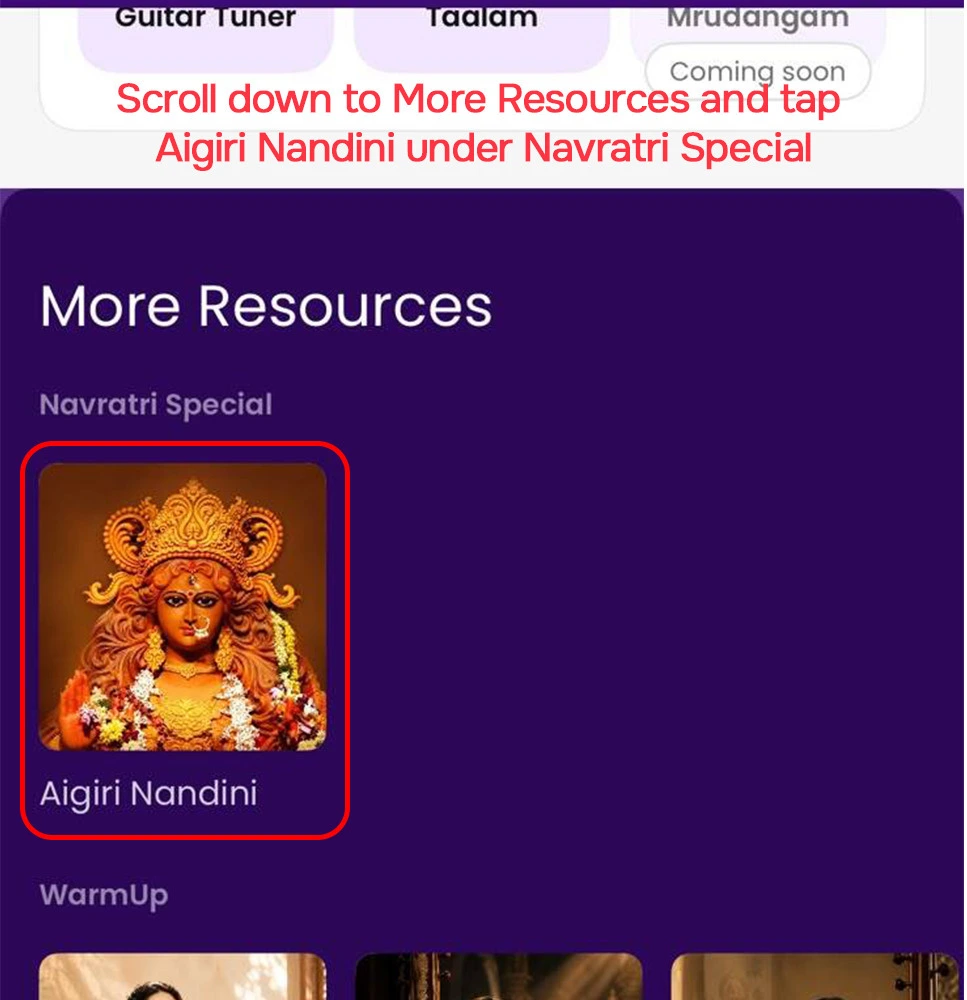
1. Open the Artium Academy app and go to the Practice tab.

2. Scroll down to More Resources and tap Aigiri Nandini under Navratri Special.
3. You’ll see a Guided Practice screen with the song’s key and tempo (B, 170 BPM) and a short description.
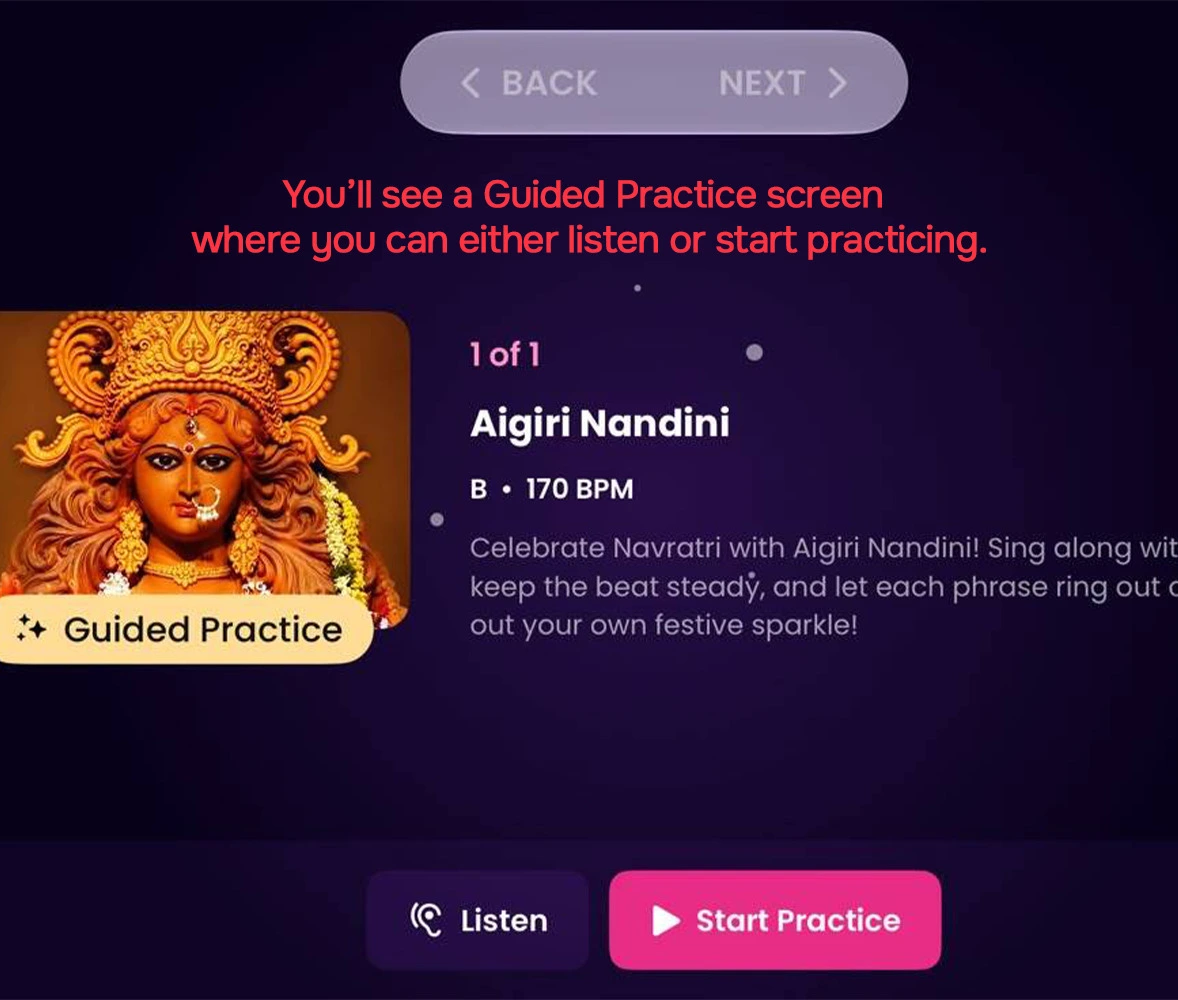
4. Choose how you’d like to practise: Listen or Start Practice.
Option 1: Listen (sing along)
Tap Listen to hear the song and sing along at the same time. This is the best way to get a feel for the melody.
Option 2: Start Practice (listen first, then sing)
Tap Start Practice and the studio first plays the phrase (the Listen phase, shown in pink), then lets you sing it back. This works well when you want to hear a line before attempting it.
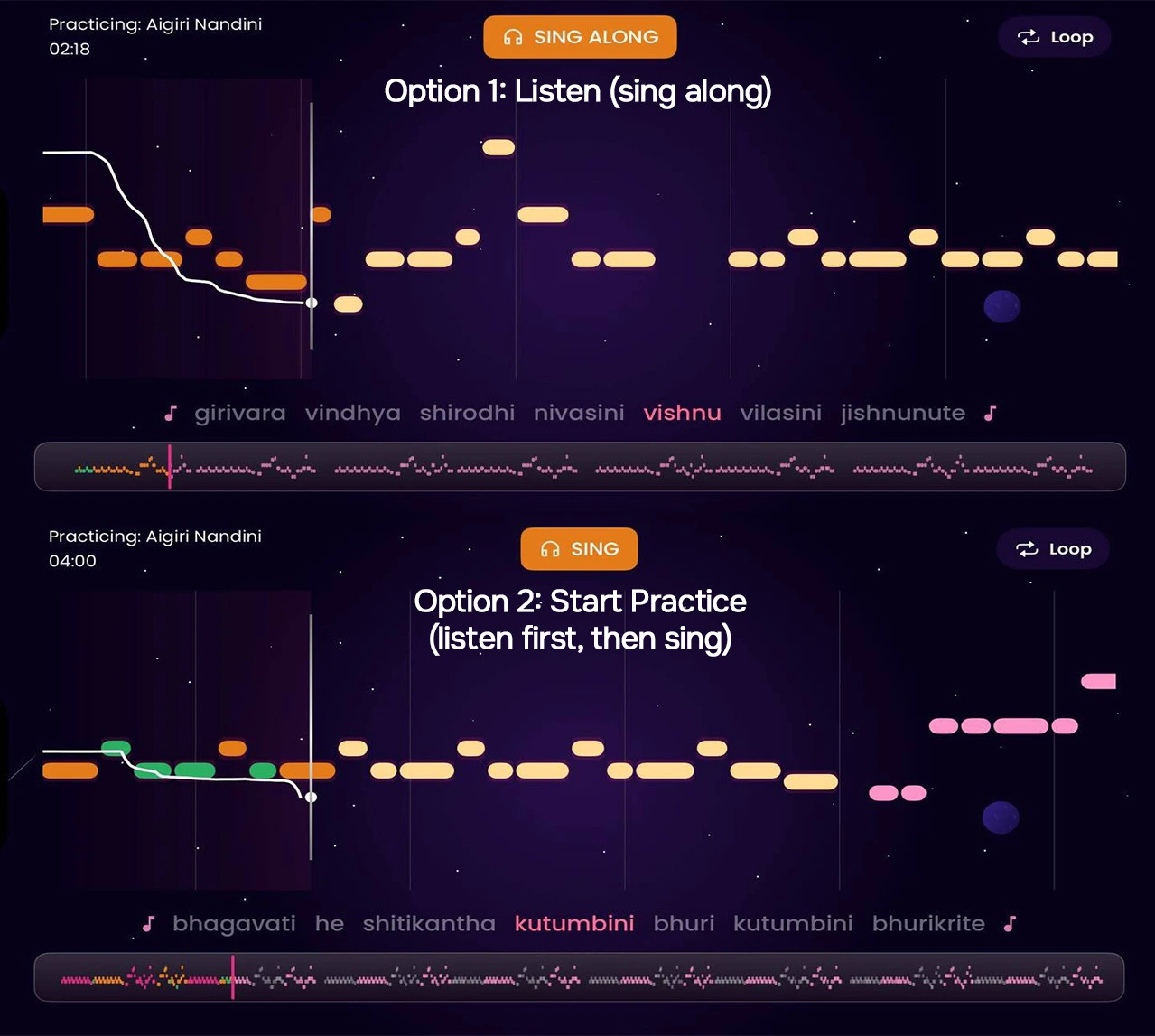
What you’ll see on screen
- Pitch bars: the notes scroll across the screen. Orange bars are notes you’ve already passed, and cream bars are the notes coming up.
- A white line: this traces your live pitch as you sing, so you can see how close you are to each note.
- Lyrics, syllable by syllable: the word you should be singing is highlighted, so you never lose your place.
- Loop: repeat a tricky section until it feels natural.
- Song overview strip: shows the whole song at the bottom so you can jump to the part you want.
Why this helps beginners
You don’t need to read notation or understand music theory. You simply follow the bars, watch the line, and slowly bring your pitch closer to the notes. Over a few practice sessions, you’ll start to feel which phrases need extra work.
You can also tap Set Reminder in the Practice tab to build a daily practice habit. And while you’re there, explore the other free music tools in the app, such as the guitar tuner and the taalam tool.
Beyond Aigiri Nandini: Keep Learning Devotional Music
If this song has made you curious, there is much more to explore. Many learners who start here go on to learn Hindi devotional music online, along with bhajans, stotras and Carnatic compositions.
It also helps to get to know the traditional Indian musical instruments that accompany devotional music, such as the tanpura, mridangam, veena and harmonium. Hearing how they support the voice makes your listening (and singing) much richer.
If you’d like guidance beyond self-practice, Artium Academy’s music courses are taught by certified teachers in 1:1 live classes, built on a GRMP-recognised curriculum, with masterclasses by renowned artists. Our free music tools and Practice Studio are there to support you between classes.
Quick Practice Tips for Navratri
| Tip | Why it helps |
| Practise 10–15 minutes daily | Short, regular sessions beat one long weekly session |
| Warm up first | Protects your voice and makes fast words easier |
| Loop the hardest line | Builds confidence in small steps |
| Record yourself | Helps you hear your own progress |
| Start slow, then speed up | Clarity first, speed second |
Ready to Sing Aigiri Nandini with Confidence?
You don’t need to be a trained singer to enjoy this hymn. With a little warm-up, steady practice and the right tools, you can sing it beautifully this Navratri and beyond.
Ready to start? Book your free 1:1 trial class with Artium Academy and learn from certified teachers at your own pace.
FAQs About Aigiri Nandini
Aigiri Nandini is the popular name for the Mahishasura Mardini Stotram, a 21-verse Sanskrit hymn praising Goddess Durga as the slayer of the demon Mahishasura.
It is traditionally attributed to Adi Shankaracharya. Some sources credit Ramakrishna Kavi, and the exact authorship is debated.
“Aigiri Nandini” means “O daughter of the mountain”, a name for Goddess Durga/Parvati. The hymn celebrates her victory over Mahishasura and the triumph of good over evil.
You can read the lyrics in Hindi (Devanagari) and English (transliteration) in the lyrics section of this post.
It is especially popular during Navratri, Durga Puja and Vijayadashami, but you can sing it any time of year.
Start with a warm-up, learn the refrain first, and practise one phrase at a time. The free Practice Studio in the Artium Academy app shows pitch bars and your live pitch, so you can check your accuracy as you sing.
Yes. The Aigiri Nandini practice is free on both Android and iOS.
Aigiri Nandini is written in Sanskrit. You can read the lyrics in Devanagari (Hindi script) or in English transliteration if that’s easier.
The Mahishasura Mardini Stotram has 21 verses. The refrain comes back after each verse, which makes it easier to learn.
It is dedicated to Goddess Durga, praised here as Mahishasura Mardini, the slayer of the demon Mahishasura.
Yes. “Aigiri Nandini” is the popular name, taken from the hymn’s first line. The full name is Mahishasura Mardini Stotram.
Yes. The Aigiri Nandini practice in the Artium Academy app is free on Android and iOS. Open the Practice tab and tap Aigiri Nandini under Navratri Special.