
All Topics
- Alchemizing Music Concepts for Students
- Anuv Jain Songs
- Artist Spotlight
- artium gift card
- Artium Maestros
- Artium News
- Artium Practice Studio
- Artium Tech Blog
- Best Coke Studio Songs
- Best Female Singers
- Birthday songs
- Bollywood Love Songs
- buying guide
- Carnatic Music
- Child Singers
- Devotional Music
- Editorials by Ananth Vaidyanathan
- English Love Songs
- Festival
- Film Music
- Ghazal Music
- Guitar
- Hindustani Classical Music
- Indian Classical Music
- Indian Folk Music
- Insights
- Instagram Reels Viral Songs
- Instruments
- Karaoke
- Karaoke Singing
- Keyboard
- Kids Music
- maestros
- Music Education
- Music for Kids
- Music Games
- Music Industry
- Music Instruments
- Music Legends
- Music Press Release
- Music Technology
- Music Theory
- Music Therapy
- Music Tools
- Piano
- piano guide
- Songs
- South Devotional Music
- Success Stories
- Tamil Film Music
- Telugu Film Music
- Time Theory
- Tools
- Uncategorized
- Uncategorized
- Uncategorized
- Uncategorized
- Vocal Range
- Vocal Singing
- Vocals
- western classical music
- western music
- Western vocal music
What Is Alankar in Music? Types and How to Practice
What Is Alankar in Music? Types and How to Practice
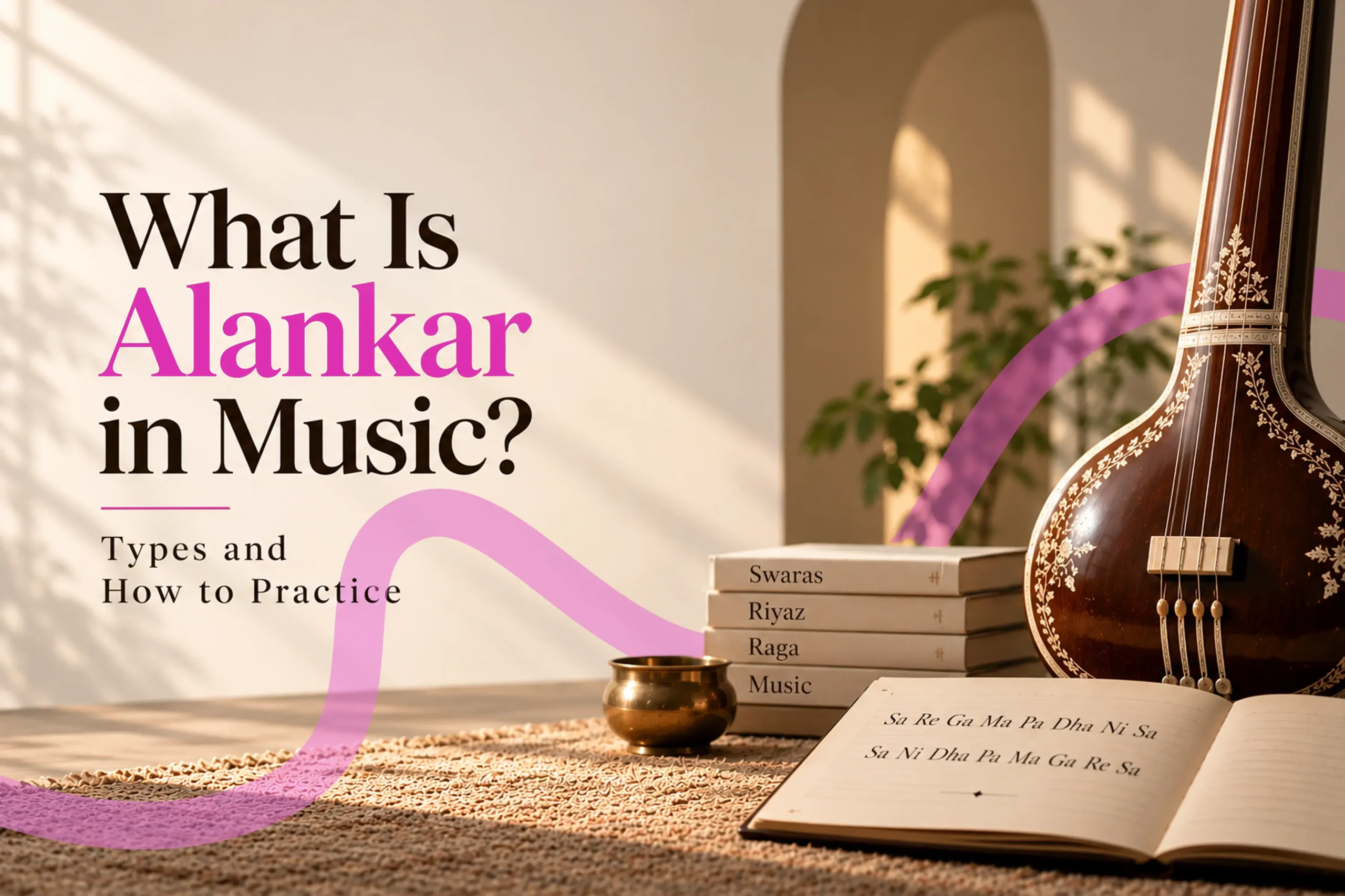
Table of Contents
Quick Summary
| Alankar in music means a set of swara patterns and ornaments that decorate melodies in classical music. Regular practice gives pitch, rhythm, breath, flexibility and confidence. Learners. Play ascending and descending sequences with a tanpura starting slow and then speeding up to build a strong musical base. |
Introduction
Indian classical music feels alive when simple notes are shaped with clarity, movement and emotion. Alankar in music helps this happen. It offers ways for learners to practice swaras and prepares them for more advanced expression. For a beginner alankars are exercises that train voice, ear, breath, fingers and rhythm. At Artium Academy learners build these fundamentals step by step guided by practice rather than rushing into difficult pieces.
Definition of Alankar (What Does It Mean?)
Alankar is an ornament or a structured arrangement of notes that decorate and develop a melody. The word comes from Sanskrit. Literally means ornamentation or decoration. Think of jewelry that enhances an outfit; Alankar adds shape, grace and movement to music. In English Alankar means “ornament” or “decoration.” In music training it also refers to note patterns that singers and instrumentalists repeat in positions of the saptak.
Most basic alankars use the seven swaras:
- Sa
- Re
- Ga
- Ma
- Pa
- Dha
- Ni
These notes are practiced in ascending order called Aaroh and descending order called Avroh. A simple scale exercise may move from Sa to upper Sa. Return to lower Sa.
Importance of Alankar in Indian Classical Music
Alankar in music is important because it gives learners control before tackling ragas, songs, taans or improvisation. It is not a warm‑up; it is the foundation for accurate and expressive music.
Regular alankar practice can help develop:
- Pitch accuracy: You learn to identify and reach each swara correctly.
- Voice flexibility: Repeated movements help the voice shift smoothly between notes.
- Rhythm awareness: Practising in a steady beat improves laya.
- Breath control: Long and even phrases help vocalists manage airflow.
- Finger coordination: Instrumentalists develop speed, reach, and precision.
- Listening skills: A tanpura or drone helps the ear recognise the correct relationship between notes.
For singers alankar practice makes it easier to move from swaras to expressive phrases. For guitar, harmonium, flute, violin or keyboard learners it improves coordination and note placement. At Artium Academy, we encourage learners to treat riyaz as focused practice not just repetition.
Alankars are an essential part of the basic structure of indian classical music lessons because they develop technique before a student takes on more complex compositions and improvisational work.
Types of Alankar
Alankars fall into two groups: structured swara patterns for training and decorative techniques that make a phrase more expressive.
1. Sargam Alankars
Sargam alankars use note combinations in ascending and descending movement. These patterns are especially useful for beginners.
For example:
- Sa Re Ga, Re Ga Ma, Ga Ma Pa
- Sa Re, Re Ga, Ga Ma, Ma Pa
- Sa Re Ga Ma, Re Ga Ma Pa, Ga Ma Pa Dha
A basic three-note pattern can be practised like this:
Sa Re Ga
Re Ga Ma
Ga Ma Pa
Ma Pa Dha
Pa Dha Ni
Dha Ni Sa
Then return in descending order:
Sa Ni Dha
Ni Dha Pa
Dha Pa Ma
Pa Ma Ga
Ma Ga Re
Ga Re Sa
This Alankar in music teaches how notes connect in a pattern. Start slow. Make every swara clear before increasing speed.
2. Arohi and Avarohi Alankars
An Arohi alankar moves upward in pitch, such as Sa Re Ga Ma. An Avarohi alankar moves downward such as upper Sa Ni Dha Pa. Practicing both directions matters because descending phrases can feel different from ascending phrases.
3. Sthayi Alankars
Sthayi patterns return often to a central note. These exercises help learners feel grounded in Sa and improve their awareness of the centre.
4. Sanchari Alankars
Sanchari alankars combine upward repeated movements. They are more challenging because the learner must keep pitch accuracy while changing direction.
5. Meend
Meend is a glide from one note to another. Then singing or playing separate disconnected notes the musician travels gradually between them. For example a phrase moving from Ga to Ma may be connected with a glide instead of two sharply separated notes. Meend is especially important for expression in many ragas.
6. Kan-swar
Kan‑swar means a grace note. A nearby swara briefly touches the note giving the phrase a delicate colour. For instance a singer may lightly touch Re before resting on Ga. The main note remains Ga. The quick touch of Re adds nuance.
7. Andolan
Andolan is a gentle oscillation around a swara. It is not a shake; it is a controlled movement that adds weight and feeling to the note.
8. Khatka
Khatka is a crisp cluster of notes. It adds energy. Is usually introduced after a learner has developed basic note clarity.
9. Murki
Murki is a fast and delicate turn of notes. It often sounds subtle. It needs precise control. Beginners should first master slower sargam patterns before attempting murkis.
Alankaram In Carnatic Music
Alankaram in carnatic music refers to structured swara exercises practiced with tala. They connect melody and rhythm. Are traditionally taught at multiple speed levels. At Artium Academy Carnatic learners can explore exercises such as sarali varisai, janta varisai and alankarams with a focus on both swara accuracy and tala awareness.
Alankar Examples in Songs
An Alankar example in a song may not always appear as a named exercise. Instead it can be heard as a movement, a glide, a grace note or a quick turn that makes a phrase expressive.
For example:
- A smooth slide between two swaras can reflect meend.
- A quick touch of a nearby swara before the main note can reflect kan-swar.
- A gentle oscillation on one note can reflect andolan.
- A light, quick twist of notes can reflect murki.
When listening to a bandish, ghazal, bhajan or raga‑based film song try to notice whether the singer moves smoothly or sharply between notes. That listening habit helps you recognise an Alankar example in a song easily. Remember that ornaments must follow the raga’s character. Adding decorative movements may make a phrase sound less authentic even if the notes themselves are correct.
How to Practice Alankar: Step-by-Step
A consistent music practice schedule is more useful than occasional long sessions. Begin with 15 to 20 focused minutes each day and improve gradually.
Step 1: Set Your Sa: Use a tanpura, electronic tanpura, harmonium, keyboard or trusted pitch app. The drone gives you a reference point helping you keep your swaras in tune.
Step 2: Sing or Play the Basic Scale: Start with the straight scale:
Sa Re Ga Ma Pa Dha Ni Sa
Sa Ni Dha Pa Ma Ga Re Sa
Do not rush. Listen carefully to whether every note feels stable against the drone.
Step 3: Begin With a Simple Pattern: Try a three-note movement:
Sa Re Ga
Re Ga Ma
Ga Ma Pa
Practise the pattern in Aaroh first. Once it feels comfortable, try the matching Avroh.
Step 4: Keep a Slow Tempo: Start in vilambit laya or slow tempo. The aim is accuracy, not speed. Each note should be clear, steady and in tune before you move to the one.
Step 5: Use Swar and Aakar: Vocalists can first sing the notes by name: Sa, Re, Ga. Then repeat the sequence on an open “aa” sound. This helps improve tone continuity and breath management.
Step 6: Add a Steady Beat: Clap a beat, use a metronome or practice with tabla support. This trains your mind to keep the pattern rhythmically even.
Step 7: Increase Speed Gradually: move from slow speed to double speed when the pattern stays clean and accurate. If the notes become unclear, return to the tempo. Structured Carnatic exercises are often practiced at speeds, which develops both rhythmic control and mobility.
Step 8: Record and Review: Record a short practice session. Listen for three things:
- Are the notes in tune?
- Is the rhythm steady?
- Do the phrases sound smooth rather than rushed?
At Artium Academy feedback from a trained teacher can help learners spot pitch or timing issues before they become habits.
Common Mistakes Beginners Make While Practicing Alankar
1. Practising Too Fast
Speed can feel impressive but unclear swaras do not build technique. Begin slowly. Increase tempo only after accurate repetition.
2. Ignoring the Tanpura or Drone
Practicing without a pitch reference can make it difficult to notice tuning errors. A drone trains the ear to hear the relationship between Sa and every other swara.
3. Treating Every Note the Same
Structured exercises need evenness but music should not become mechanical. Once the basic pattern is secure pay attention to breath, smooth connection and the character of each note.
4. Skipping Avroh Practice
Some learners only enjoy climbing up the scale. However descending phrases need attention because they develop different movement and control.
5. Practising Random Patterns
A beginner may try many patterns without mastering any of them. Start with one Alankar, repeat it correctly and then add the next pattern.
6. Forcing the Voice
Do not push for notes or loud volume. A relaxed throat, stable posture and comfortable pitch range are more important than force.
7. Neglecting Daily Riyaz
Short regular practice is more effective than one session once a week. Consistency helps the ear, voice and fingers remember movements.
If you want to learn hindustani music online, choose guided lessons that balance swara practice, listening, raga understanding, and teacher feedback. Artium supports this gradual approach so learners can build musical confidence with clarity.
Final Thoughts
Alankar in music is both an exercise and a path towards expression. It helps a learner understand how swaras move, connect and gain character. From sargam patterns to refined techniques such as meend, murki and andolan every stage builds stronger musical control. The key is to practise. Use a drone to start work in both Aaroh and Avroh and prioritise accurate swaras over speed. With riyaz Alankar in music can strengthen your singing or instrumental performance and make learning ragas and songs feel more natural. Artium Academy can help learners develop these foundations through structured guided classical music learning.
FAQs
Alankar is an ornament or an organised pattern of swaras that beautifies melodies and develops musical skill.
Alankar means ornament or decoration. In music it describes patterns and expressive movements created with swaras.
Common types include sargam patterns, Arohi and Avarohi patterns, Sthayi and Sanchari patterns and expressive techniques such as meend, kan-swar andolan, khatka and murki.
Alankars improve pitch, rhythm, breath control, vocal flexibility, finger dexterity and listening skills. They help prepare learners for ragas, compositions and improvisation.
An example of alankar in a song could be a meend between two notes, a quick kan-swar before a main note or a light murki used to decorate a sung phrase.
Begin with a tanpura or drone, practise the scale slowly and use simple three-note patterns such as Sa Re Ga Re Ga Ma and Ga Ma Pa. Focus on tuning before speed.
Basic patterns may become comfortable within a week of regular practice but mastery develops over time. Progress depends on practice quality, consistency, listening ability and teacher guidance.
Yes. Singers develop control and pitch accuracy while instrumentalists build finger coordination, timing and smoother note transitions.
An alankar is generally a planned practice pattern or ornament based on swaras. A taan is a more flowing melodic passage often used in raga performance and improvisation.
Yes. Regular alankar practice can support breath control, pitch stability, voice agility and smoother transitions, between swaras when practised correctly and consistently.