
All Topics
- Alchemizing Music Concepts for Students
- Anuv Jain Songs
- Artist Spotlight
- artium gift card
- Artium Maestros
- Artium News
- Artium Tech Blog
- Best Coke Studio Songs
- Best Female Singers
- Birthday songs
- Bollywood Love Songs
- buying guide
- Carnatic Music
- Child Singers
- Devotional Music
- Editorials by Ananth Vaidyanathan
- English Love Songs
- Festival
- Film Music
- Ghazal Music
- Guitar
- Hindustani Classical Music
- Indian Classical Music
- Indian Folk Music
- Insights
- Instagram Reels Viral Songs
- Instruments
- Karaoke
- Karaoke Singing
- Keyboard
- Kids Music
- maestros
- Music Education
- Music for Kids
- Music Games
- Music Industry
- Music Instruments
- Music Legends
- Music Press Release
- Music Technology
- Music Theory
- Music Therapy
- Music Tools
- Piano
- piano guide
- Songs
- South Devotional Music
- Success Stories
- Tamil Film Music
- Telugu Film Music
- Time Theory
- Tools
- Uncategorized
- Uncategorized
- Uncategorized
- Uncategorized
- Vocal Singing
- Vocals
- western classical music
- western music
- Western vocal music
Instruments, Music Instruments
Bansuri: The Story and Sound of India’s Bamboo Flute
Bansuri: The Story and Sound of India’s Bamboo Flute
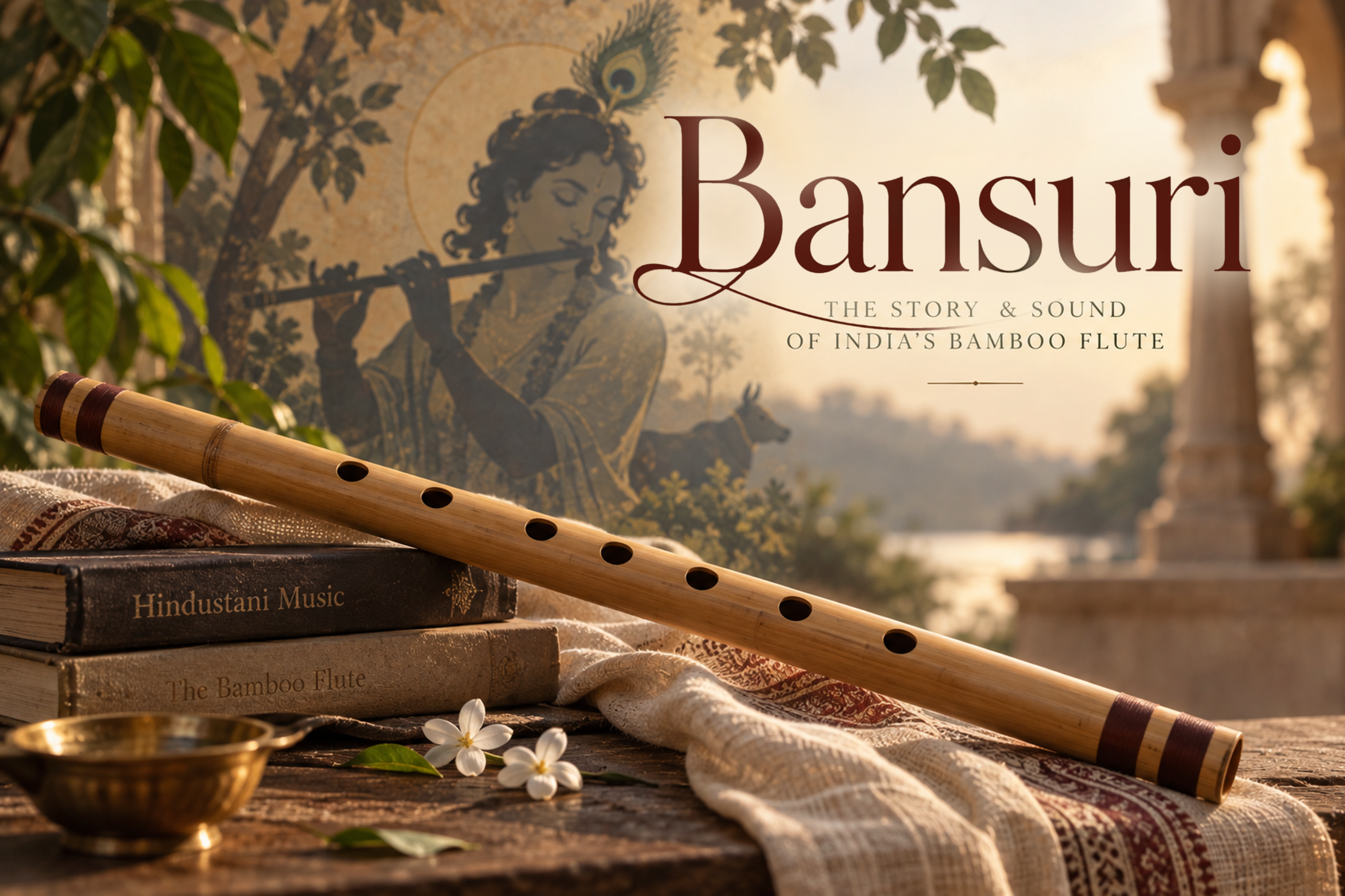
Table of Contents
Quick Summary
| The bansuri is a traditional Indian Bamboo flute. It is commonly associated with Lord Krishna and is central to Hindustani classical, folk and devotional music. Check this guide to understand what the bansuri is, its history, structure, how to hold it and famous bansuri players. |
The sound of bansuri is something you hear once and never quite forget. It is soft, with breathy notes gliding between pitches, sounding more like someone humming than playing an instrument.
If you’re wondering what a bansuri is, or how a hollow piece of bamboo can sound so expressive, you’re in the right place. In this guide, we’ll cover everything you need, from bansuri’s mythological origins to practical tips on how to play bansuri as a beginner. So, whether you’re a fan, an aspiring flutist or someone drawn to the meditative side of Hindustani classical music, there’s a lot to unpack here.
What Is Bansuri (Meaning and Overview)
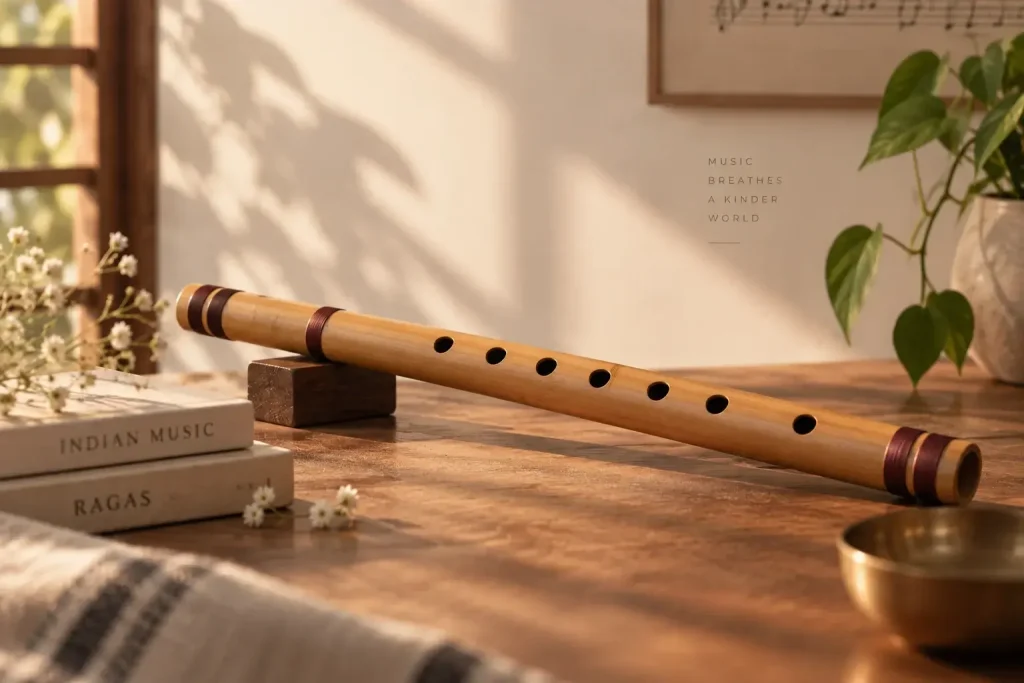
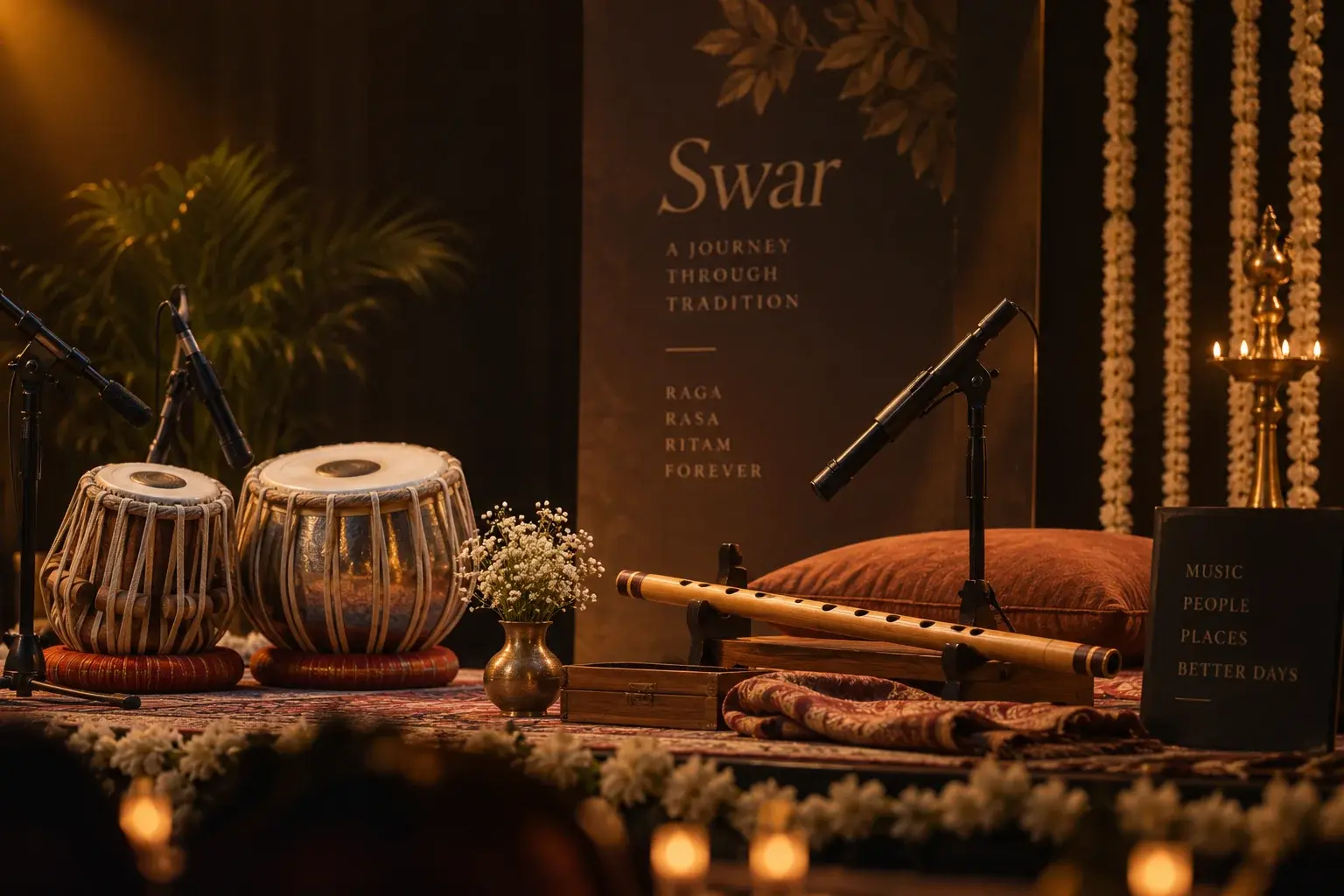
In simple terms, bansuri is a side-blown bamboo flute predominantly used in Hindustani classical, folk and devotional music. The name comes from Hindi words for bamboo, “bans”, and musical note, “Sur”, which together translate to “melody from bamboo”.
Unlike other instruments that rely on mechanical parts, the bansuri is way simpler. It has a single hollow shaft with an embouchure hole for blowing and a series of finger holes for changing pitch. All that is required is breath, bamboo and technique. This simplicity makes it expressive and is part of why it takes real patience to master.
History and Origins of the Bansuri Instrument
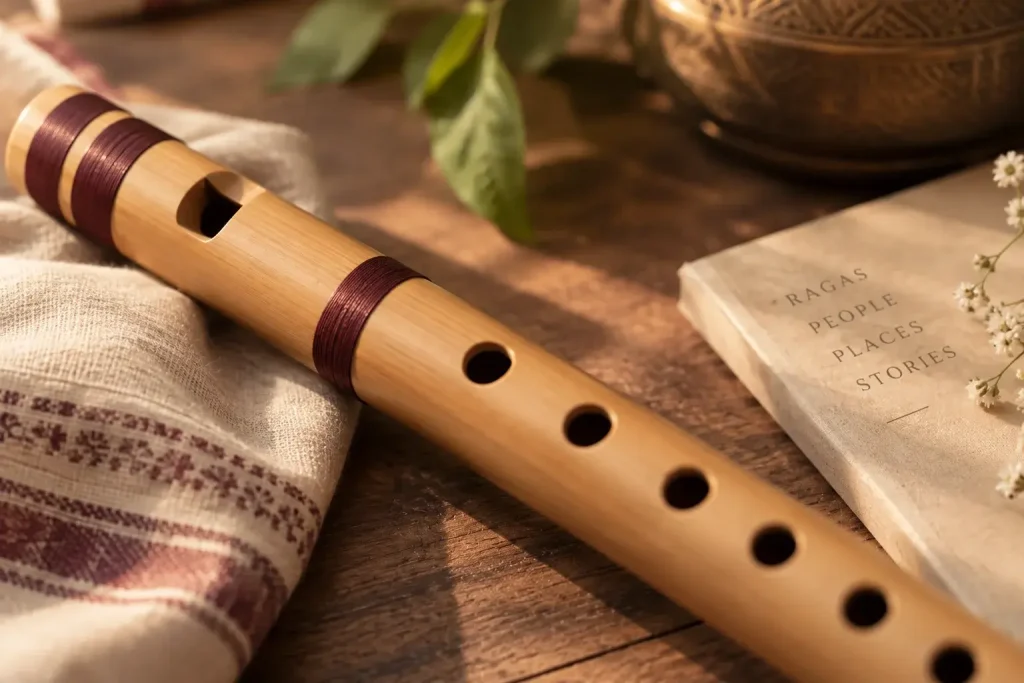
The story of bansuri is deeply rooted in Indian mythology. It is known as Lord Krishna’s instrument and is surrounded by countless folklore. It is said that the Lord’s flute playing in the forest of Vrindavan enchanted gopis and they’d leave their homes at night to follow its sound. Even Radha, Krishna’s beloved, was jealous of the flute’s closeness to the Lord’s lips.
For most of history, bansuri was firmly a folk instrument. Cowherds played it and used it at weddings and religious festivals, not in concerts. This changed in the 1940s, when Pandit Pannalal Ghosh reimagined the humble flute for the classical stage. He introduced a longer version with extra finger holes, allowing far greater precision across octaves. He adapted the vocal-style ornamentation into flute technique for the very first time.
This paved the way for the legendary Pandit Hariprasad Chaurasia. His decades of concert performances brought bansuri to the limelight in India and beyond. It cemented the bansuri’s place as a serious classical voice, not just a pastoral one.

Structure of the Bansuri Instrument
A traditional bansuri is carved from a single length of bamboo. As a result, good-quality bamboo is surprisingly hard to come by. Makers prefer a specific bamboo grown in Assam and Kerala. They look for bamboo that is naturally hollow, with a straight cavity and no internal partitions.
The North Indian bansuri usually has six or seven finger holes and comes in a few standard sizes:
- The bass bansuri is the longest and produces deep, resonant tones favored in concert performances.
- The alto bansuri sits comfortably in the middle range and suits many intermediate players.
- The soprano bansuri is shorter, higher-pitched and often where beginners start.
Beginners usually start on a flute tuned to the key G or G#. It’s easier because these keys sit naturally in the mouth. Professional players, on the other hand, work with more demanding keys like E.
How To Hold A Bansuri Correctly
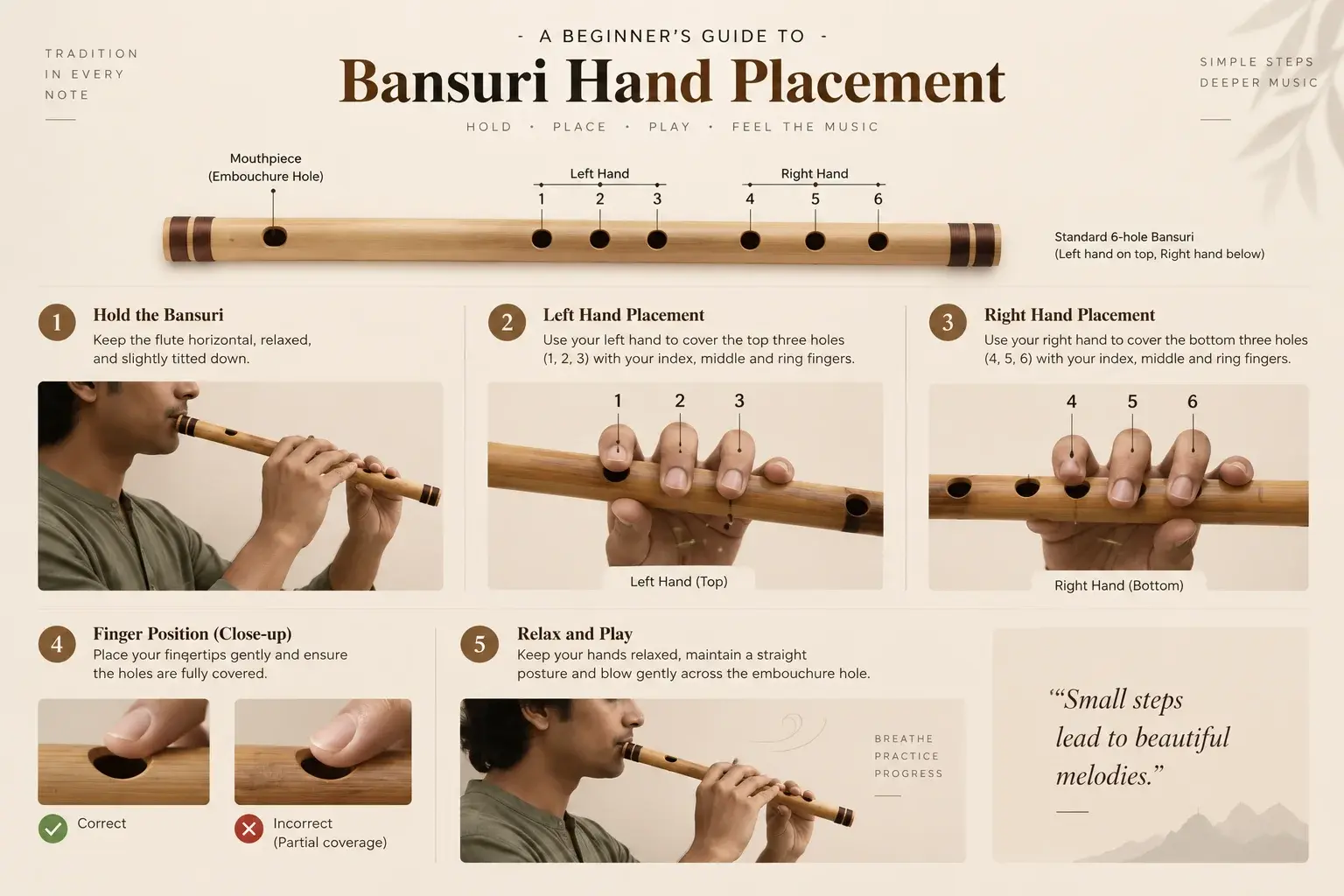
Holding the bansuri is more important than you think. If you don’t hold it properly, poor positioning can make it harder to produce clean notes later. Here’s a basic idea behind how to hold a bansuri:
- Hold the flute horizontally, angled slightly downward from your lips.
- Rest the bansuri across your lower lip. Position the embouchure hole at its centre.
- Support the instrument using four balance points: both thumbs underneath, your index finger and gentle counterbalance from your lips.
- Keep your fingers relaxed and slightly curved over the finger holes, rather than pressing flat or rigid.
These four points give your fingers the room to move quickly and precisely once you start playing actual phrases. So, ensure you spend enough time getting comfortable with these early on.
Playing Bansuri: Basic Beginner Techniques
The first and foremost challenge of playing a bansuri is producing a clear, stable sound. Beginners spend their first few days just working on this one skill, which is absolutely normal.
Let’s get started:
- Firstly, hold the embouchure hole against the centre of your lower lip.
- Blow air steadily, so that half of it enters the flute and the other half passes over it.
- To begin with, start with just one or two holes covered. Get better with this before attempting a full-scale immediately.
- Focus on producing one steady, clear note before worrying about switching between them.
Once you get better with these four techniques, you can begin exploring meend. It is a smooth slide between notes created by partially covering and uncovering a hole. This sliding technique is central to Hindustani music and helps give the bansuri its distinctive, voice-like quality.
The Role of Bansuri in Indian Classical and Folk Music
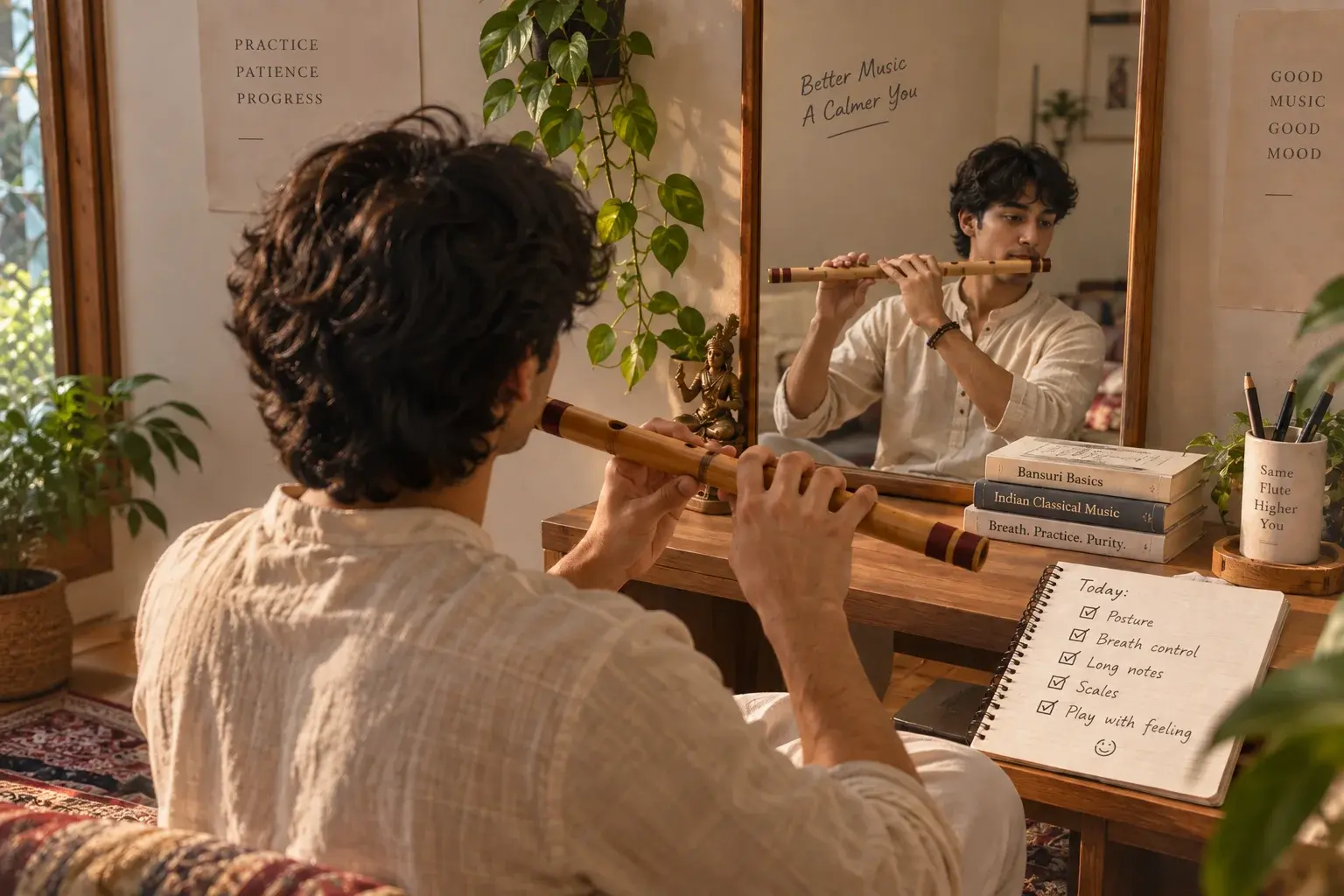
Bansuri holds a special place in Hindustani classical music. It is particularly well-suited to the alaap, the slow, exploratory opening section of a raga. It can sustain long notes and glide between pitches with a warmth that few other instruments can offer.
Beyond the classical stage, it remains deeply embedded in devotional music. It often accompanies bhajans and kirtans thanks to its enduring association with Krishna. It also appears regularly in Hindi film music, with memorable flute lines in songs ranging from classic melodies to more contemporary tracks.
Here’s an important point for all of you to keep in mind. Bansuri is central to Hindustani classical music, but it is not the same instrument used in Carnatic (South Indian classical) music. Carnatic music uses a bamboo flute called Venu. It has eight finger holes compared to the bansuri’s six or seven. While both bansuri and venu share a common ancestry and similar spirit, they are different, each shaped by its own regional classical tradition.
As mentioned before, bansuri is integral to Hindustani music. If you’re curious about the science behind how ragas affect the brain, we’ve explored the neuroscience of Hindustani classical music here. Do give it a read.
Famous Bansuri Players
Here are a few legendary musicians who have shaped how the world hears bansuri today.
- Pandit Pannalal Ghosh
He pioneered the instrument’s move into classical music in the 1940s, redesigning it for greater range and precision.
- Pandit Hariprasad Chaurasia
He is arguably the world’s most well-known bansuri player. He is known for his soulful raga performances and his celebrated Shiv-Hari collaborations with santoor player Pandit Shivkumar Sharma.
- Rakesh Chaurasia
He is the nephew and the student of Hariprasad Chaurasia. He has carried the tradition forward with his own acclaimed performances and recordings.
- Pravin Godkhindi
He is another widely respected contemporary player known for his technical command and expressive playing style.
One of the best ways to understand this bamboo instrument’s capabilities is to listen to recordings of these legendary artists.
Tips to Improve Your Bansuri Playing
Here are a few habits that can meaningfully speed up your progress:
- Practice long, sustained notes daily to build breath control and tone stability.
- Record yourself regularly, since it is often easier to catch pitch or tone issues by listening back.
- Work on meend slowly and deliberately, rather than rushing into fast phrases too early.
- Study basic raga structures, since understanding the framework makes your playing feel far more intentional.
- Learn from an expert teacher rather than relying entirely on trial and error, especially in the early months.
More than practicing for long hours, consistency matters most. A little daily practice will get you further than occasional long ones.
Final Thoughts
The bansuri may be a solo instrument, but it never really exists in isolation. The phrases played by a flutist are rooted in the same ragas, the same alaap structure and the same emotional grammar that defines Hindustani classical music. Understanding that world, even without picking up the flute yourself, changes how you listen to it entirely.
This is where Artium Academy comes in. Although we don’t offer bansuri lessons, we do offer a Hindustani classical music course curated by the legendary Shubha Mudgal. The very ragas, ornamentation and vocal techniques taught in this course are something bansuri players spend years mastering on their instruments. And since the flute is so deeply rooted in devotional music, our devotional music course curated by Sonu Nigam offers another meaningful way into this same musical experience. It is built around bhajans and kirtans where instruments like the bansuri often play alongside the voice.
Learning to sing within this tradition gives you something a method book never quite can. It gives a genuine, internal sense of how a raga breathes, which is exactly what makes a great bansuri performance so moving in the first place. If this guide has left you curious about that world, our Hindustani classical course and devotional singing course are genuinely a rewarding place to start.
Book a free trial class today and deepen your connection to the musical tradition this beautiful instrument comes from.
FAQ
The bansuri is a traditional Indian side-blown flute made from a single hollow shaft of bamboo and is central to Hindustani classical, folk, and devotional music.
Hold it horizontally against your lower lip, supported by both thumbs and your right index finger, with your lips providing gentle counterbalance for stability.
Beginners should first focus on producing a clean, steady tone before attempting scales, starting with just one or two finger holes covered and gradually building up.
Unlike a Western flute, the bansuri has no keys or mechanical parts and relies entirely on finger placement over open holes and specific breath control for pitch and tone.
Pandit Hariprasad Chaurasia, Pandit Pannalal Ghosh, Rakesh Chaurasia and Pravin Godkhindi are among the most celebrated bansuri players in Indian classical music.
Producing a clean, stable tone often takes several days to a few weeks, while genuine fluency in ragas and technique typically develops over a few years of consistent practice.
No, the bansuri instrument is also widely used in folk music, devotional bhajans and kirtans and Bollywood film soundtracks, alongside its classical repertoire.
A soprano bansuri, typically tuned to the key of G or G#, is generally recommended for beginners because of its manageable size and finger spacing.
Position the embouchure hole against the centre of your lower lip and blow steadily so roughly half the air enters the flute, adjusting the angle slowly until the tone stabilizes.
While self-teaching is possible for basic exploration, structured guidance from a teacher significantly speeds up progress, especially for correcting embouchure and posture early on.