
All Topics
- Alchemizing Music Concepts for Students
- Anuv Jain Songs
- Artist Spotlight
- artium gift card
- Artium Maestros
- Artium News
- Artium Practice Studio
- Artium Tech Blog
- Best Coke Studio Songs
- Best Female Singers
- Birthday songs
- Bollywood Love Songs
- buying guide
- Carnatic Music
- Child Singers
- Devotional Music
- Editorials by Ananth Vaidyanathan
- English Love Songs
- Festival
- Film Music
- Ghazal Music
- Guitar
- Hindustani Classical Music
- Indian Classical Music
- Indian Folk Music
- Insights
- Instagram Reels Viral Songs
- Instruments
- Karaoke
- Karaoke Singing
- Keyboard
- Kids Music
- maestros
- Music Education
- Music for Kids
- Music Games
- Music Industry
- Music Instruments
- Music Legends
- Music Press Release
- Music Technology
- Music Theory
- Music Therapy
- Music Tools
- Piano
- piano guide
- Songs
- South Devotional Music
- Success Stories
- Tamil Film Music
- Telugu Film Music
- Time Theory
- Tools
- Uncategorized
- Uncategorized
- Uncategorized
- Uncategorized EN US
- Vocal Range
- Vocal Singing
- Vocals
- western classical music
- western music
- Western vocal music
What Is a Clef in Music? Types and How to Read Them
What Is a Clef in Music? Types and How to Read Them
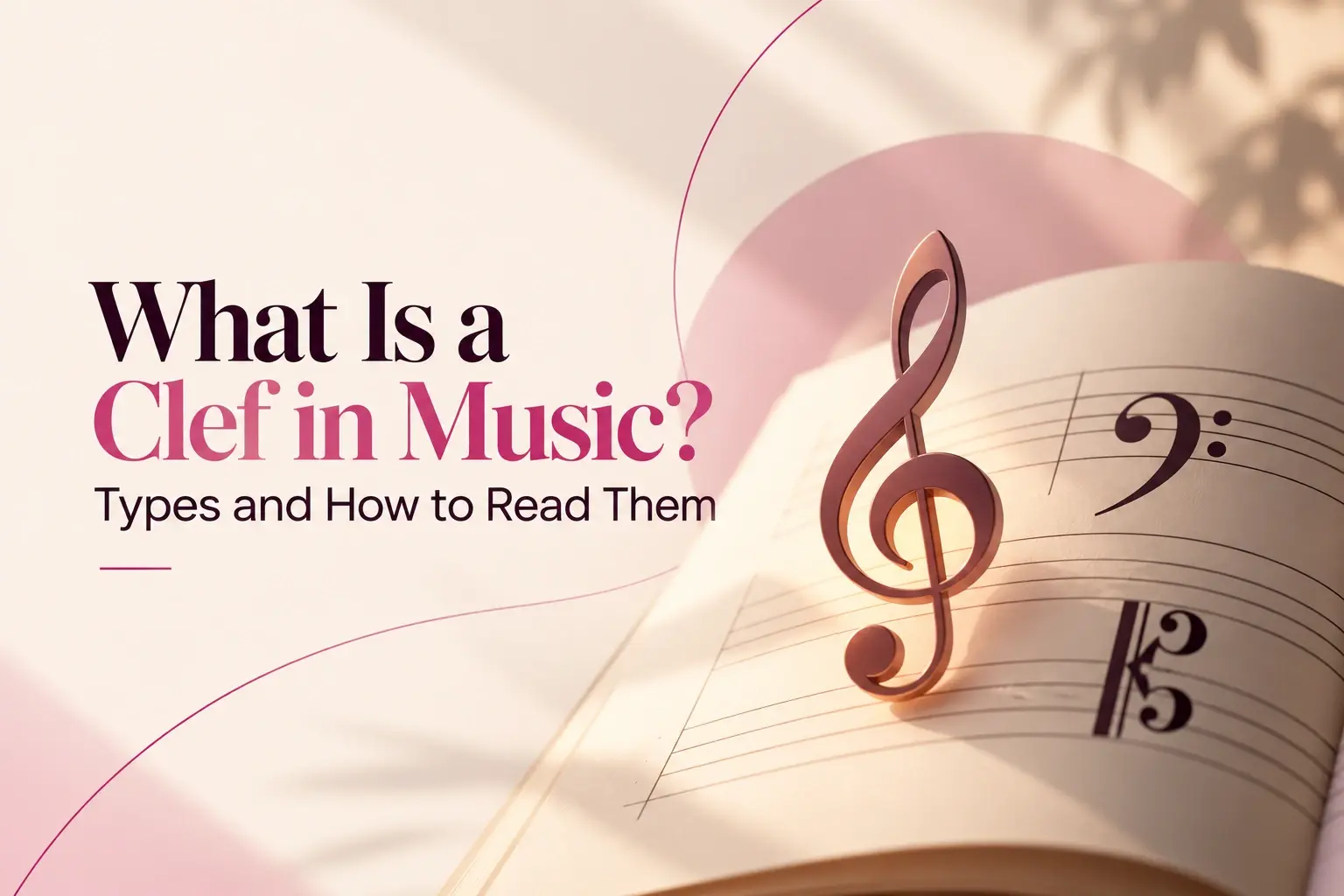
Table of Contents
Quick Summary
| A clef is the symbol at the start of a staff that tells you which note each line and space stands for. This guide explains the clef in music in simple words, covers the main types (treble, bass, alto and tenor), and shows how to read notes with each one. You will also see which instruments use which clefs, why clefs matter and easy tricks to memorise notes quickly. |
The Symbol That Unlocks Sheet Music
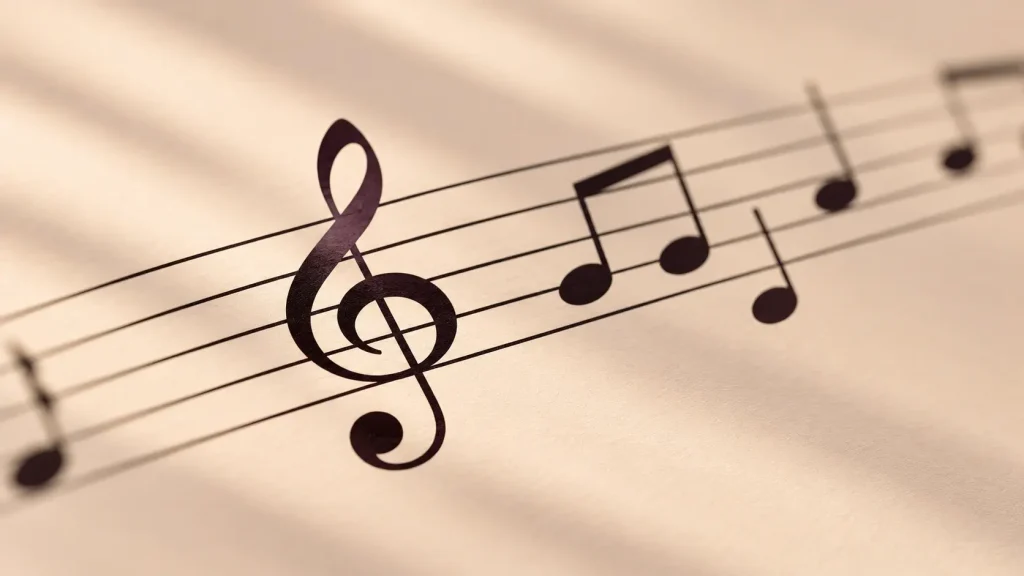
Look at any sheet music, and your eyes will land on the same thing: a curly symbol at the very start of the staff. Most beginners see it, shrug and move on to notes. But that little symbol quietly decides what every single note on the page means.
Here is the thing. The clef in music works like a map key. Without it, five lines and four spaces are just a pattern of dots. With it, those dots turn into real pitches you can sing or play.
In this guide, we will answer the questions beginners ask most. We will cover what clefs are, how many there are, how to read notes on each one and which instruments rely on them. By the end, that curly symbol will feel like an old friend.
Let us get started.
Definition: What Is a Clef in Music?
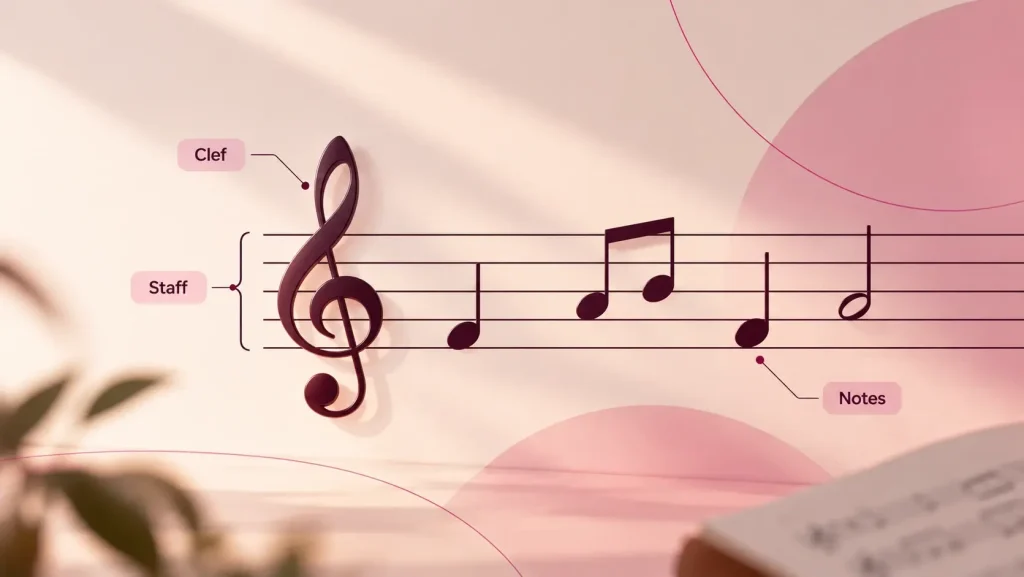
Simply put, a clef is a symbol placed at the beginning of a staff that fixes the pitch of one line. Once that line is anchored, every other line and space can be worked out from it.
The word “clef” comes from the French word for “key,” and that’s a fitting name. It unlocks the staff.
Now, you may wonder, why do we need a clef in music at all?
The answer is that a staff has only five lines, but music spans a huge range of pitches. A tuba and a piccolo cannot share the same notes on the same lines. Clefs solve this by shifting the staff up or down so each instrument or voice can fit its range comfortably on the page. Here is a helpful way to remember it:
- The staff is the ladder.
- The clef tells you which line or space represents which note.
- The notes are the steps you climb.
How Many Clefs Are There in Music?
This is one of the most common questions, and the honest answer depends on how you count. Let us keep it simple. There are three true types of clef in music, named after the notes they point to:
- G clef: the shape we know as the treble clef
- F clef: the shape we know as the bass clef
- C clef: the shape used for the alto and tenor clefs
Each type can be placed on different lines, which creates several clefs. In everyday music, you will meet four of them most often: treble, bass, alto and tenor. There is also a neutral clef, sometimes called the percussion clef, used for unpitched instruments like drums. It does not point to any note, so it is not a true pitch clef.
So, if someone asks how many clefs there are in music, a friendly answer is: three clef types, four in common use, plus a neutral clef for percussion. If you are a beginner, you will spend most of your time with just the first two.
Treble Clef Meaning in Music
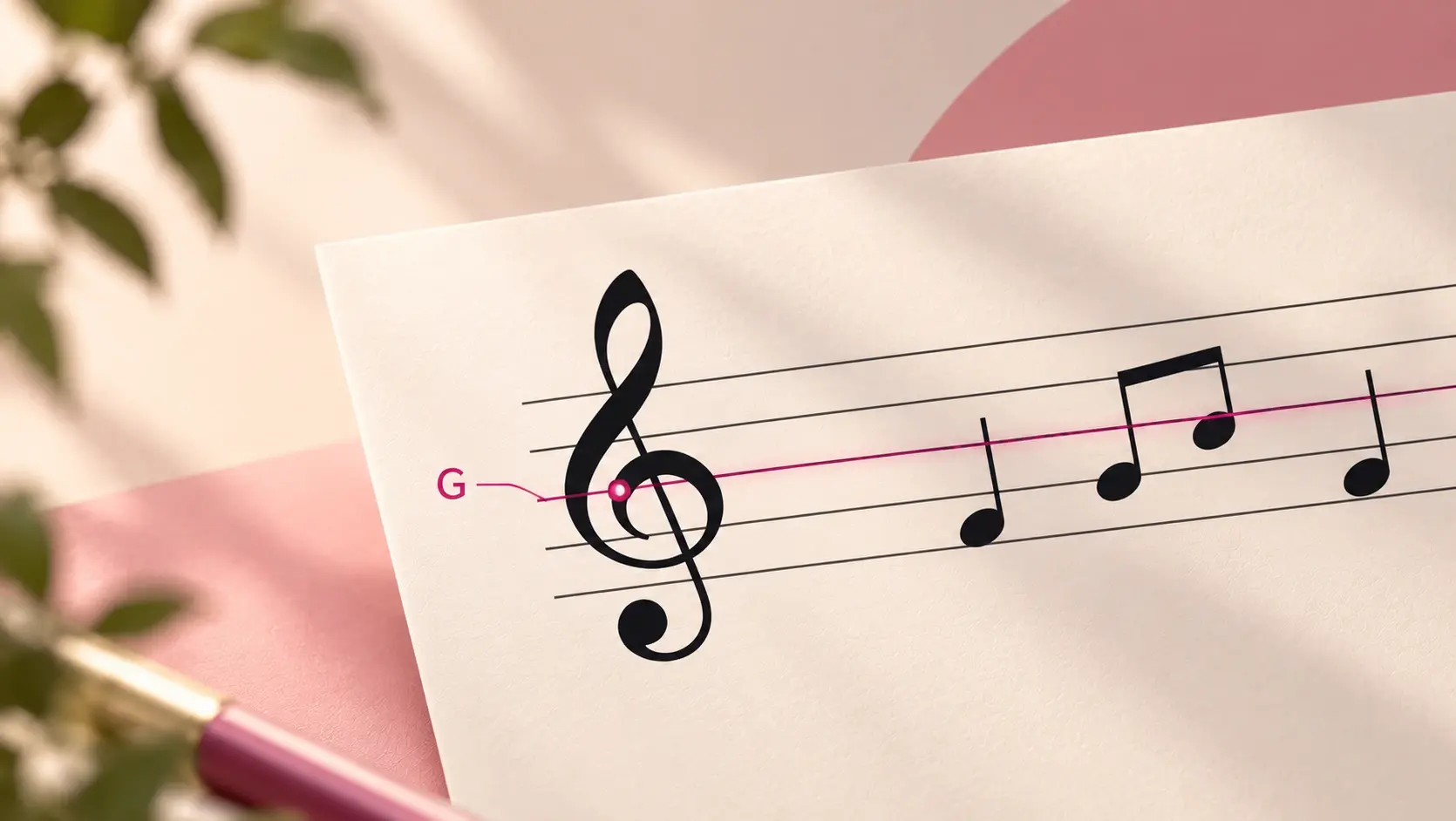
Let us start with the main pointer, the star of the show. The treble clef, also known as the G clef and its swirl wrap around the second line from the bottom of the staff. That line is the note G above middle C. So, what does the treble clef mean in music? It tells you that you are reading the higher range of notes. Think of voices like sopranos and altos and instruments like the violin, flute and trumpet. They all live up here. A few things to remember:
- The symbol curls around the G line, which is how it got its name.
- It is the clef you will meet first, since melody lines on higher instruments usually sit here.
- Pianists use it for the right hand in most pieces.
- Guitar often uses a written treble clef, but it sounds an octave lower than written.
For a deeper walkthrough of the piano, our guide to reading treble clef notes walks you through it step by step.
Bass Clef and Other Common Clefs Explained
If the treble clef is the singer’s high voice, the bass clef is the deep, warm foundation underneath it. Its official name is the F clef and its two dots sit on either side of the fourth line from the bottom. That line is the note F below middle C.
You will see the bass clef on instruments and voices with lower ranges such as the cello, double bass, bassoon, trombone, tuba and bass voices. Pianists use it for the left hand. For a closer look, our post on how to read a bass clef on the piano is a great companion.
Beyond treble and bass, two other clefs deserve a quick introduction.
- Alto Clef
This is a C clef. Its centre points to the middle line of the staff and that line is middle C. It is most closely linked with the viola, which sits between the violin and cello range. The alto clef lets violists keep most notes on the staff without a pile of extra lines.
- Tenor Clef
This is also a C clef, but this time the symbol points to the fourth line from the bottom and that line is middle C. Players of instruments like the cello, bassoon and trombone sometimes see it when their music climbs into a higher register. It saves them from reading many ledger lines.
Don’t worry if every clef in music feels unfamiliar at first. Most beginners meet alto and tenor much later and some musicians never need them.
How to Read Notes Using a Clef
Reading a clef in music comes down to two steps. First, look at the clef to see which line is anchored. Second, count up or down the lines and spaces from there. Notes are named with the first seven letters of the alphabet: A, B, C, D, E, F and G.
Here is a simple way to approach it:
- Check the clef at the start of the line.
- Find the anchor line the clef points to.
- Use the lines and spaces to count your way to the note you need.
- Practise a few notes at a time instead of the whole staff.
Note Names on the Treble Clef
On the treble staff, the notes follow a simple pattern.
Lines (bottom to top): E, G, B, D, F
Spaces (bottom to top): F, A, C, E
Middle C sits on a small extra line just below the staff, called a ledger line. A classic memory trick for the lines is “Every Good Boy Does Fine,” and the spaces spell “FACE.”
Note Names on the Bass Clef
On the bass staff, everything shifts down.
Lines (bottom to top): G, B, D, F, A
Spaces (bottom to top): A, C, E, G
Middle C sits on a ledger line just above the bass staff. A popular trick for the lines is “Good Boys Do Fine Always,” and for the spaces, “All Cows Eat Grass.”
Notice something neat: middle C is the bridge between the two staves. That’s why pianists can follow both clefs at once without getting lost.
| Feature | Treble Clef | Bass Clef |
| Also called | G clef | F clef |
| Anchor line | Second line (G) | Fourth line (F) |
| Typical range | Higher notes | Lower notes |
| Line notes | E, G, B, D, F | G, B, D, F, A |
| Spaces notes | F, A, C, E | A, C, E, G |
Which Instruments Use Which Clefs
Every instrument has a natural home range and its music is written in the clef that fits best. Here’s a quick guide:
| Clefs | Common Instruments and Voices |
| Treble | Violin, flute, oboe, clarinet, saxophone, trumpet, guitar, soprano, alto and tenor voices |
| Bass | Cello, double bass, bassoon, trombone, tuba, bass voices and tenor voices |
| Alto | Viola |
| Tenor | Upper ranges of cello, bassoon and trombone |
| Both (grand staff) | Piano, keyboard and harp |
| Neutral | Drums and unpitched percussions |
The piano is special because it uses two staves joined together, known as the grand staff. The right hand usually reads the treble clef and the left hand reads the bass clef. That’s one reason the piano is such a great instrument for learning clefs.
A small note for Indian music learners: classical Indian music often uses sargam, such as Sa Re Ga Ma, which is relative to the performer’s chosen tonic. Staff notation with clefs, by contrast, names fixed pitches. Understanding both gives you more ways to read, write and share music.
Why Clefs Matter When Reading Sheet Music
It might seem like a small detail but the clef in music changes everything about how you read a page. Here is what it matters:
- Same notes, different meaning: The same spot on the staff can mean a completely different note depending on the clef.
- Fewer ledger lines: The right clef keeps notes on the staff, making music easier to read.
- Instrument fit: It matches each instrument or voice to its comfortable range.
- Clear communication: Musicians worldwide read the same symbols, which helps them play together.
- Confidence: Once you recognise the clef, you instantly know where to start.
If you want to see how clefs fit into the bigger picture, our detailed guide on how to read sheet music brings together rhythm, key signatures and more.
Tips and Tricks to Memorise Clef Notes Quickly
Learning a clef is a bit like learning a new alphabet. Short, regular practice works far better than long, tiring sessions. Try these ideas:
- Use memory phrases: Rhymes like “Every Good Boy Does Fine” and “All Cows Eat Grass” make notes stick.
- Learn landmark notes first: Memorise middle C, the G of the treble clef and the F of the bass clef, then count outward from there.
- Practise a few notes a day: Five minutes daily beats an hour once a week.
- Use flashcards or apps: Quick, repeated quizzes train your eye to recognise notes faster.
- Play what you read: Match each note on the page to a key or string on your instrument.
- Read simple songs: Familiar melodies help you connect notes with sounds.
Be patient with yourself. Everyone feels slow at first and speed comes naturally with practice.
Your Key to Reading Music
The clef in music may be small but it is one of the most important symbols on the page. Once you understand it, sheet music stops looking like a secret code and starts looking like clear instructions you can follow.
If you’d like expert help on that journey, Artium Academy is here for you. With 45,000+ global learners, we offer live, 1:1 online music lessons in vocals and instruments, where trained teachers help you read music with confidence from your very first lesson.
Our online music courses are curated by legendary musicians and offer globally recognised certification, on par with renowned music institutions around the world. Learners can also join quarterly masterclasses with music industry legends and experts. If this blog has you thinking about starting your own journey, book a free trial class today and start reading music with confidence.
Frequently Asked Questions
A clef is a symbol at the start of a staff that fixes the pitch of one line, so you can work out every note. It lets the staff fit the range of each instrument or voice without using too many extra lines.
There are three true clef types: G, F and C which appear in several positions. Four are commonly used: treble, bass, alto and tenor. A neutral clef is also used for unpitched percussion.
The treble clef or G clef marks the second line of the staff as the note G above middle C. It is used for higher-pitched instruments and voices and for the right hand on the piano.
The treble clef covers higher notes and anchors the G line, while the bass clef covers lower notes and anchors the F line. This means the same line or space has a different note name in each clef.
Learn a few landmark notes first, such as middle C, treble G and bass F. Then practice a few notes daily with flashcards, simple songs and your own instrument.
Violin, flute, clarinet, trumpet, guitar and higher voices use the treble clef. Cello, double bass, bassoon, trombone, tuba and lower voices use the bass clef and the piano uses both. Tenor voices are usually written in the treble clef and sometimes in the bass clef.
The same position on the staff means different notes in different clefs and new readers must learn the alphabet of notes from scratch. A little daily practice makes it far easier.