
All Topics
- Alchemizing Music Concepts for Students
- Anuv Jain Songs
- Artist Spotlight
- artium gift card
- Artium Maestros
- Artium News
- Artium Tech Blog
- Best Coke Studio Songs
- Best Female Singers
- Birthday songs
- Bollywood Love Songs
- buying guide
- Carnatic Music
- Child Singers
- Devotional Music
- Editorials by Ananth Vaidyanathan
- English Love Songs
- Festival
- Film Music
- Ghazal Music
- Guitar
- Hindustani Classical Music
- Indian Classical Music
- Indian Folk Music
- Insights
- Instagram Reels Viral Songs
- Instruments
- Karaoke
- Karaoke Singing
- Keyboard
- Kids Music
- maestros
- Music Education
- Music for Kids
- Music Games
- Music Industry
- Music Instruments
- Music Legends
- Music Press Release
- Music Technology
- Music Theory
- Music Therapy
- Music Tools
- Piano
- piano guide
- Songs
- South Devotional Music
- Success Stories
- Tamil Film Music
- Telugu Film Music
- Time Theory
- Tools
- Uncategorized
- Uncategorized
- Uncategorized
- Uncategorized
- Vocal Range
- Vocal Singing
- Vocals
- western classical music
- western music
- Western vocal music
What Is a Sarod Instrument? A Beginner’s Guide
What Is a Sarod Instrument? A Beginner’s Guide
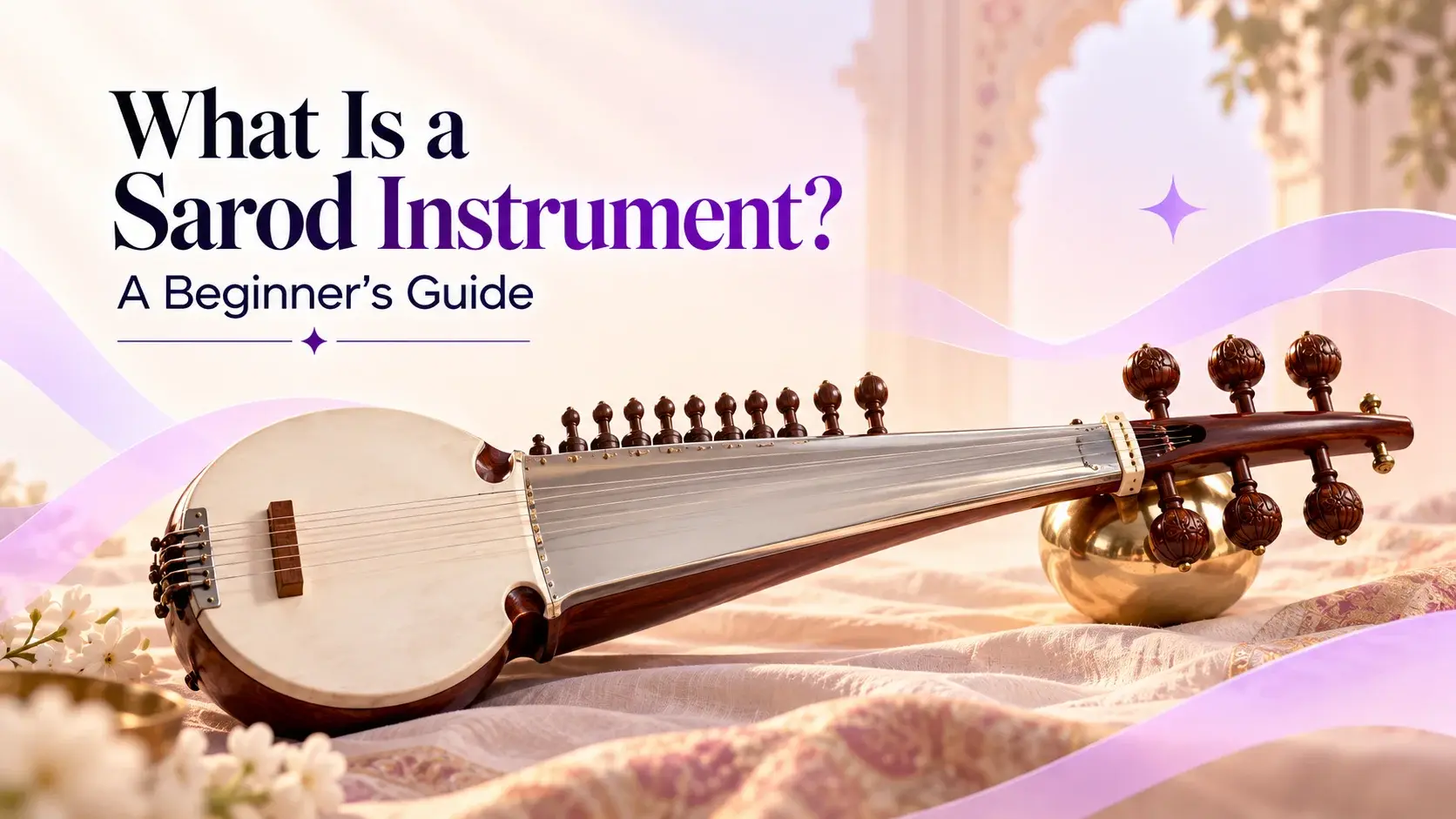
Table of Contents
Quick Summary
| A sarod instrument is a fretless, plucked string instrument traditionally used in Hindustani classical music. It has a deep, resonant tone, a smooth metal fingerboard, and multiple melody, drone, and sympathetic strings. Known for its expressive slides and rich sound, the sarod appeals to beginners, hobbyists, and music lovers interested in India’s classical instrumental heritage. |
Introduction
If you have heard a deep, expressive string instrument in Hindustani classical concerts, you may have wondered, “What is that instrument?” The answer is often the sarod instrument.
The sarod is known for its rich sound, smooth note slides, and close connection with raga-based music. Unlike a guitar or sitar, it has no frets. This gives the player freedom to glide between notes, but it also demands careful listening and accurate finger placement.
In this guide, we will explore the sarod musical instrument, its history, structure, playing technique, famous players, and difficulty level for beginners.
What Is a Sarod Instrument? Definition and Overview
A sarod is a plucked, fretless string instrument associated with North Indian or Hindustani classical music. It belongs broadly to the lute family and has a hollow wooden body, a skin-covered resonator, metal strings, and a smooth metal fingerboard.
The instrument is played with a small plectrum called a jawa. The right hand plucks the strings, while the left hand presses the strings against the metal fingerboard to create different notes.
The sarod has a distinctive sound that can be described as:
- Deep and resonant.
- Clear and slightly percussive.
- Warm in the lower register.
- Capable of long, expressive slides.
A typical sarod includes several kinds of strings:
- Melody strings: Used to play the main raga phrases.
- Drone or chikari strings: Used for rhythmic accents and tonal support.
- Sympathetic or taraf strings: These are tuned to the notes of the raga and vibrate naturally when related notes are played.
The total number of strings varies according to the instrument’s design and playing tradition. Most sarods have between 17 and 25 strings.
In English, the sarod is generally called a fretless Indian string instrument or a North Indian classical lute. The word itself is not usually translated into another instrument name.
Sarod Pronunciation: How to Say “Sarod” Correctly
The commonly used pronunciation is:
Sarod: suh-ROD
The second syllable is usually stressed. Some English speakers may say “suh-rohd” or “sah-rod”, depending on their accent.
In Hindi, it is written as सरोद and pronounced approximately as sə-roːd. The word has Persian associations and is connected with meanings such as song, melody, or music.
When referring to a player, you may hear the word sarodiya, which means a sarod player.
Types of Sarod Instruments
The sarod does not have many completely separate types. Its variations are mainly connected to different gharanas, playing traditions, instrument designs and performance needs.
1. Classic Sarod
The classic sarod is the traditional form used in Hindustani classical music. It has a wooden body, skin-covered resonator, fretless metal fingerboard, melody strings, drone strings and sympathetic strings. A small plectrum called a jawa is used to pluck the strings.
2. Maihar-Style Sarod
Associated with the Maihar tradition, this sarod may have design features that support a fuller tone, wider range and detailed raga performance. Ustad Allauddin Khan and Ustad Ali Akbar Khan are closely connected with this tradition.
3. Senia Bangash-Style Sarod
The Senia Bangash tradition is linked to the Bangash family of sarod players. Instruments from this tradition may differ in body shape, string arrangement and tonal preference. The style is known for expressive slides and strong melodic playing.
4. Lucknow-Shahjahanpur Style Sarod
This tradition contributed to the development of the modern sarod. Its instruments and playing approach may vary in tuning, string arrangement and construction according to the performer’s preference.
5. Student and Concert Sarod
A student sarod is designed for learners and may be simpler or lighter. A concert sarod is built for stronger projection, durability and stage performance.
6. Electric Sarod
An electric sarod uses a pickup or amplification system for concerts, recordings and fusion performances. It retains the basic sarod design but can be connected to speakers or other audio equipment.
These names may refer to a playing tradition or design variation rather than a completely separate instrument. For beginners, understanding the classic sarod is the best place to start.
History and Origin of the Sarod
The exact sarod instrument origin is debated. Most music historians agree that the modern sarod developed through the transformation of older plucked lutes, especially the Afghan rabab or rubab.
The rabab was used across Afghanistan, Central Asia, and neighbouring regions. It was generally smaller, had a different fingerboard, and could be played with a bow or plucked, depending on the regional form.
Evolution from the Afghan Rabab
The Afghan rabab is considered one of the most important ancestors of the sarod. As musicians and instruments travelled into India, the rabab gradually changed to suit Hindustani classical music.
Over time, musicians and instrument makers introduced:
- A polished metal fingerboard.
- Metal strings instead of earlier gut strings.
- Additional sympathetic strings.
- A larger resonating body.
- Design changes that supported longer notes and expressive slides.
The modern sarod began to take recognisable shape during the 19th century. Its development was not the work of one person alone; different musicians, families, and gharanas contributed to its design and playing style.
Who Invented the Sarod?
There is no universally accepted single inventor of the sarod.
Some historical accounts credit musicians from the Bangash lineage, particularly Ghulam Ali Khan Bangash and his family, with transforming the rabab into the modern sarod. Other accounts highlight Niyamatullah Khan and the Lucknow-Shahjahanpur tradition for important innovations, including the metal fingerboard.
The safest answer to “Who invented the sarod?” is that the instrument evolved gradually through the work of several musicians and craftsmen during the 18th and 19th centuries. Ustad Allauddin Khan later made important changes to the instrument and helped establish its place in 20th-century Hindustani music.
Structure and Parts of the Sarod
Understanding the parts of a sarod makes its sound and technique easier to appreciate.
Sarod Musical Instrument Body and Strings
The body is usually carved from seasoned wood such as teak or tun wood. Its lower section contains a resonating chamber covered with a stretched skin membrane, often goatskin. This membrane acts as the soundboard and responds to the vibration of the strings.
The main parts include:
- Resonator: The broad lower section that amplifies the sound.
- Neck: The long section containing the fingerboard.
- Peg box: The upper section holding several tuning pegs.
- Bridge: Supports the strings and transfers their vibration to the soundboard.
- Fingerboard: A smooth, fretless metal plate.
- Jawa: The small plectrum used to pluck the strings.
The number of strings is not exactly the same on every sarod. A common arrangement includes four or five main melody strings, drone strings, chikari strings, and several sympathetic strings. Depending on the style and model, a sarod may have approximately 17–25 strings.
The Fretless Fingerboard Explained
A sitar or guitar has frets that guide the player to fixed note positions. A sarod has no such raised markers. Instead, the player presses the string against the smooth metal surface using the fingernail, fingertip, or a combination of both.
This design allows the player to create meend, or a continuous glide from one note to another. For example, instead of moving in separate steps between two notes, a player can smoothly travel through the pitch between them.
This is one reason the sarod can imitate the expressive quality of the human voice. It is also one reason beginners need patient practice and strong pitch awareness.
How the Sarod Instrument Works
How Sound Is Produced: Plucking and Sliding Technique
The right hand holds the jawa and plucks the melody strings. A controlled downward or upward stroke creates the initial sound.
The left hand then changes the pitch by pressing or sliding along the fretless metal fingerboard. Because there are no frets, the player must locate each note through listening and muscle memory.
The sympathetic strings add resonance. They are not usually plucked directly during a melody. Instead, they vibrate when the played notes match their tuning, creating the sarod’s spacious, ringing quality.
Common techniques include:
- Plucking: Producing individual notes or rhythmic patterns.
- Meend: Sliding smoothly between pitches.
- Gamak: Adding a strong, repeated shake or oscillation.
- Chikari strokes: Using drone strings for rhythmic brightness.
- Alap playing: Exploring a raga slowly without a fixed beat.
Tuning the Sarod
Sarod tuning is usually relative to the tonic note selected by the performer. Unlike many Western instruments, there is no single fixed tuning that applies to every sarod player.
The exact arrangement depends on the player’s gharana, instrument design, raga, and personal preference. The sympathetic strings are often tuned to notes used in the particular raga being performed.
This means tuning can take time, especially when many taraf strings need to be adjusted. Temperature, humidity, string tension, and the skin soundboard can also affect tuning.
A beginner should learn tuning with guidance rather than tightening pegs randomly. Excessive tension can damage strings or the instrument.
Sarod vs Sitar: Key Differences
The sarod and sitar are both important Hindustani classical instruments, but their construction and sound are different.
The Sitar instrument has movable frets, while the sarod is fretless. This means sitar players receive visual guidance from the frets, whereas sarod players find notes by ear and hand position.
| Feature | Sarod | Sitar |
| Fingerboard | Has a smooth, fretless metal fingerboard. | Has movable frets that guide players to different notes. |
| Body | Usually has a wooden body with a skin-covered resonator. | Often has a gourd-based resonator and a longer wooden neck. |
| Tone | Produces a deep, rich and slightly percussive sound. | Produces a brighter, ringing sound with more prominent overtones. |
| Playing technique | Players use the fingernail to press and slide strings across the metal fingerboard. | Players press and pull the strings against the frets to create notes and expressive bends. |
| Slides | Its fretless design allows smooth and continuous slides between notes. | Slides are also possible, but they are created by pulling the string across the frets. |
| String arrangement | Usually includes melody, drone and sympathetic strings, with the exact arrangement varying by tradition. | Also includes melody, drone and sympathetic strings, but the design and arrangement are different. |
| Learning experience | Requires strong listening skills because there are no frets to mark note positions. | Frets provide visual guidance, which may help beginners locate notes more easily. |
| Overall character | Known for its powerful, compact and expressive sound. | Known for its bright, resonant and ornamented sound. |
Sarod vs Veena: Are They the Same?
No, the veena and sarod are not the same instrument.
“Veena” is a broad name used for several Indian plucked string instruments, including the Saraswati veena and rudra veena. Their construction, playing styles and musical traditions vary depending on the type.
| Feature | Sarod | Veena |
| Instrument family | A fretless, plucked string instrument. | A broad family of Indian plucked string instruments. |
| Common examples | Modern sarod used in Hindustani classical music. | Saraswati veena, rudra veena and other regional forms. |
| Fingerboard | Usually has a smooth, metal fretless fingerboard. | Many veenas have frets, although the design differs between types. |
| Resonator | Generally has a wooden body with a skin-covered resonator. | Often has larger wooden resonating structures, with the design varying by veena type. |
| Playing technique | Played with a small plectrum, commonly called a jawa. | Usually played by plucking the strings with the fingers or fingernails. |
| Musical tradition | Strongly associated with Hindustani classical music. | Associated mainly with Carnatic music or older North Indian traditions, depending on the type. |
| Playing posture | Usually held horizontally across the lap while seated. | The posture varies, but the instrument is commonly positioned across the lap. |
| Sound | Produces a deep, resonant and slightly percussive tone. | Usually produces a warm, rounded and resonant tone, depending on the instrument. |
| Note movement | Its fretless design supports smooth and continuous slides. | Frets and the instrument’s design help create different melodic ornaments. |
| History | Developed through the evolution of older lutes, including the rabab. | Represents a wider family of long-established Indian string instruments. |
The sarod and veena may both use plucked strings and melodic ornamentation, but they are separate instruments with different histories, designs and techniques. Both remain important examples of the traditional indian musical instrument tradition, continuing to develop through teachers, performers and instrument makers.
Role of the Sarod in Hindustani Classical Music
The sarod is a major solo instrument in Hindustani classical music. It can present a raga through a gradual performance structure, often beginning with a slow, unmetered exploration and moving towards rhythmic and composed sections.
A performance may include:
- Alap: A slow introduction to the raga without a fixed rhythmic cycle.
- Jor: Development with a steady pulse.
- Jhala: Faster playing with rhythmic drone-string accents.
- Gat: A composed instrumental piece performed with tabla accompaniment.
The sarod can express both meditative and energetic moods. Its long slides, resonant sympathetic strings, and strong plucked attack make it suitable for detailed raga improvisation.
If you enjoy the melodic side of Indian classical music and want to sing Hindustani compositions along with sarod, you can learn hindustani music online with structured guidance.
How to Play Sarod: Basics for Beginners
Sitting Posture and Holding the Instrument
Traditionally, the player sits on the floor with the legs comfortably folded and the sarod resting across the lap. The neck points towards the player’s left side.
The body should be stable without being squeezed tightly. Keep your back reasonably upright, shoulders relaxed, and wrists free to move.
Beginners should focus on:
- Supporting the instrument securely.
- Keeping the right hand relaxed.
- Avoiding excessive pressure from the left hand.
- Maintaining a comfortable sitting position.
- Taking short breaks during practice.
You do not need to force a traditional posture immediately if it causes discomfort. A supportive chair-based position may be used while you gradually build flexibility.
Basic Plucking and Sliding Exercises
Start with open-string plucking. Practise slowly, even strokes using the jawa. Listen for a clean tone rather than trying to play quickly.
Next, practise stopping one melody string with the left-hand nail. Play a note, release it, and repeat. The goal is to produce a clear note without unwanted buzzing.
After that, try very short slides between two nearby notes:
- Pluck the first note slowly.
- Keep the nail in contact with the string.
- Move smoothly towards the second note.
- Listen carefully to the pitch.
- Return slowly to the starting note.
Practise for a few minutes at a time. The fretless fingerboard can feel unfamiliar, so accuracy is more important than speed.
A teacher can help you correct posture, plectrum angle, nail contact, and pitch before small problems become habits.
Famous Sarod Players of India
Several sarod players have shaped the instrument’s history and public recognition.
- Ustad Allauddin Khan: A major 20th-century innovator and teacher associated with the Maihar tradition.
- Ustad Ali Akbar Khan: A globally recognised sarod maestro and influential educator.
- Ustad Amjad Ali Khan: Known for his lyrical playing, concert performances, and contribution to the Bangash lineage.
- Buddhadev Das Gupta: Respected for his refined technique and deep understanding of raga.
- Pandit Rajeev Taranath: Known for expressive sarod performance and teaching.
- Amaan Ali Bangash and Ayaan Ali Bangash: Contemporary performers from the Bangash family tradition.
- Tejendra Majumdar and Abhisek Lahiri: Modern sarod players who continue to expand the instrument’s audience.
When people ask for a famous sarod instrument player of India, Ustad Ali Akbar Khan and Ustad Amjad Ali Khan are two widely recognised names.
Is the Sarod Difficult to Learn for Beginners?
The sarod can be challenging, but it is not impossible to learn.
The main difficulties are:
- Finding accurate notes without frets.
- Building strength and control in the left hand.
- Learning to use the fingernail correctly.
- Coordinating plucking and sliding.
- Keeping multiple strings in tune.
- Developing a reliable sense of pitch.
At the same time, beginners do not need to master advanced ragas immediately. A sensible learning path begins with posture, open strings, simple note patterns, basic rhythm, and short melodic phrases.
Regular practice is more useful than occasional long sessions. Even 15–20 focused minutes can be productive when you practise slowly and listen carefully.
How to Get Started Learning the Sarod
If you are seriously interested in the sarod, begin by listening to different sarod players and noticing how their styles differ. This will help you understand the instrument before you start practising.
Next, find a teacher who can guide you through:
- Instrument posture.
- Plectrum technique.
- Left-hand nail placement.
- Basic note positions.
- Meend and other ornaments.
- Raga and tala fundamentals.
- Instrument care and tuning.
Online music learning can be helpful when classes are live and interactive. At Artium Academy, learners can study music through 1:1 live classes with certified teachers, with structured learning aligned to a GRMP-recognized curriculum. The platform also supports learners from India and the global Indian diaspora who prefer learning from home.
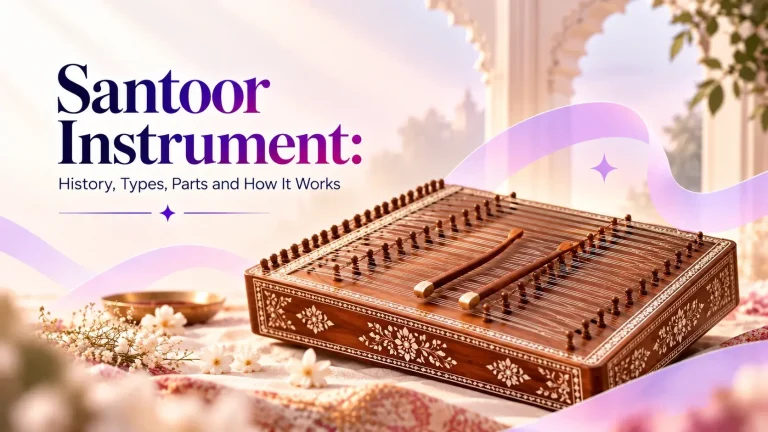
For learners comparing Indian instruments, you may also know about the santoor instrument, its hammered-string sound, and how it differs from plucked instruments such as the sarod.
Conclusion
The sarod is a fretless Indian string instrument with a deep, resonant voice and an important place in Hindustani classical music. Its metal fingerboard allows expressive slides, while its melody, drone, and sympathetic strings create a rich sound.
The instrument evolved through several musical traditions, particularly the Afghan rabab and North Indian courtly music. Although its fretless design makes it demanding, beginners can develop a strong foundation through patient practice and good instruction.
If you are ready to explore Indian music from home, book your free 1:1 trial class with Artium Academy and learn from certified teachers at your own pace.
Frequently Asked Questions
A sarod is a fretless, plucked string instrument used mainly in Hindustani classical music. It has a metal fingerboard, a skin-covered resonator, and usually 17–25 strings.
The sarod has a fretless metal fingerboard, while the sitar has movable frets. The sarod generally produces a deeper, more compact sound, whereas the sitar often has a brighter and more resonant tone.
No single inventor is universally accepted. The modern sarod evolved from older instruments such as the Afghan rabab through the work of several musicians, including members of the Bangash lineage and Niyamatullah Khan.
In English, it is generally described as a fretless Indian string instrument or a North Indian classical lute. The name “sarod” itself is commonly used in English.
The sarod requires accurate pitch control because it has no frets. It can be challenging for beginners, but regular practice and guidance from an experienced teacher can make the learning process manageable.
No. They are different Indian plucked string instruments with different construction, histories, playing techniques, and musical traditions.
The common pronunciation is suh-ROD, with emphasis on the second syllable.
Ustad Ali Akbar Khan and Ustad Amjad Ali Khan are among the most widely recognised sarod players from India.
It can be demanding because the fretless fingerboard requires precise listening and finger placement. However, beginners can start with posture, plucking, open strings, and simple slides.
A sarod usually has between 17 and 25 strings. These include melody strings, drone or chikari strings, and sympathetic strings. The exact number varies by instrument design and gharana.