
All Topics
- Alchemizing Music Concepts for Students
- Anuv Jain Songs
- Artist Spotlight
- artium gift card
- Artium Maestros
- Artium News
- Artium Tech Blog
- Best Coke Studio Songs
- Best Female Singers
- Birthday songs
- Bollywood Love Songs
- buying guide
- Carnatic Music
- Child Singers
- Devotional Music
- Editorials by Ananth Vaidyanathan
- English Love Songs
- Festival
- Film Music
- Ghazal Music
- Guitar
- Hindustani Classical Music
- Indian Classical Music
- Indian Folk Music
- Insights
- Instagram Reels Viral Songs
- Instruments
- Karaoke
- Karaoke Singing
- Keyboard
- Kids Music
- maestros
- Music Education
- Music for Kids
- Music Games
- Music Industry
- Music Instruments
- Music Legends
- Music Press Release
- Music Technology
- Music Theory
- Music Therapy
- Music Tools
- Piano
- piano guide
- Songs
- South Devotional Music
- Success Stories
- Tamil Film Music
- Telugu Film Music
- Time Theory
- Tools
- Uncategorized
- Uncategorized
- Uncategorized
- Uncategorized
- Vocal Range
- Vocal Singing
- Vocals
- western classical music
- western music
- Western vocal music
Types of Drums Explained: A Complete Guide to Percussion
Types of Drums Explained: A Complete Guide to Percussion
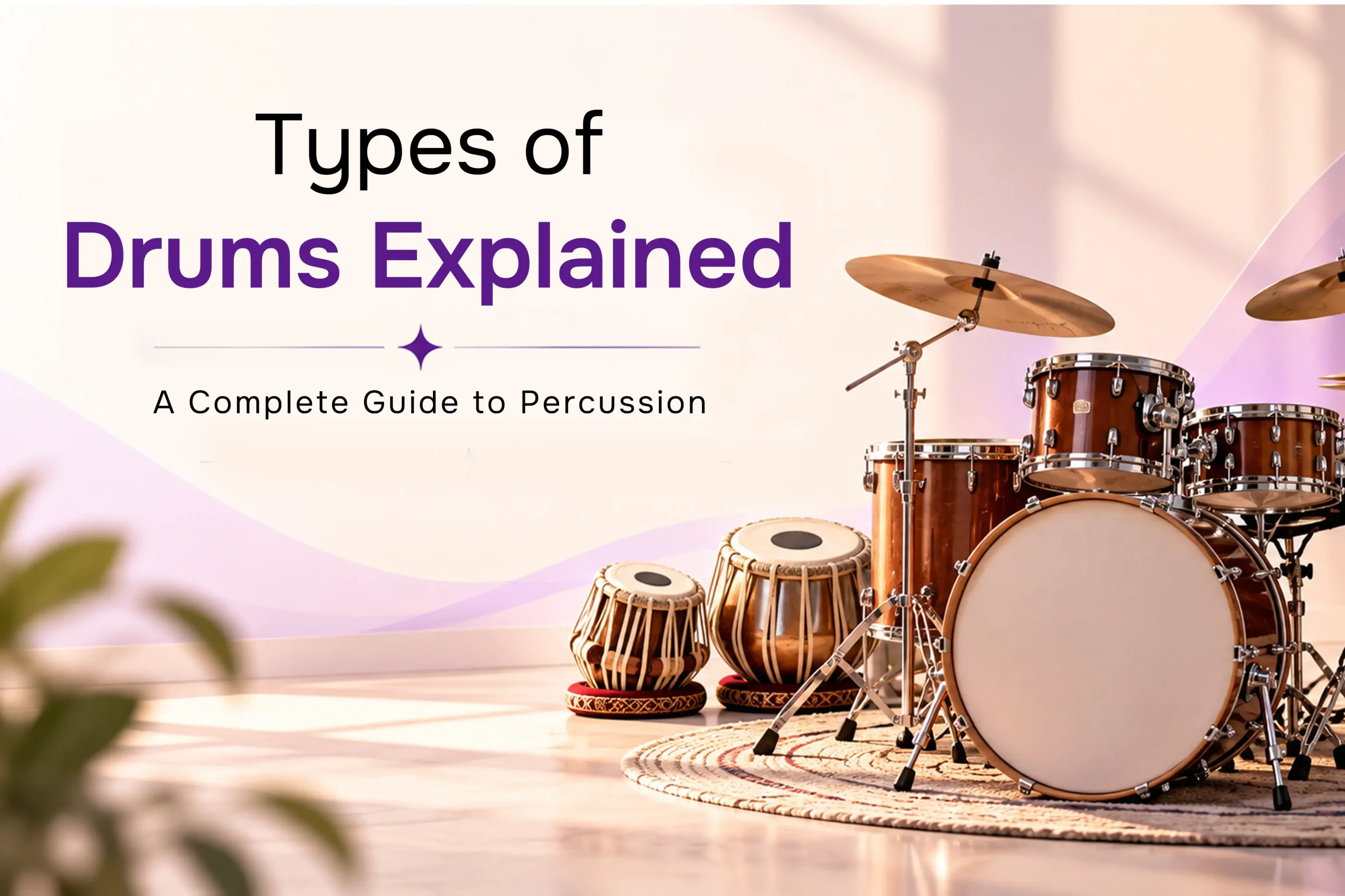
Table of Contents
Quick Summary
| Different kinds of drums range from the Western drum kit (snare, bass, toms, cymbals) to hand drums like the djembe, conga, and bongo to Indian percussion like the tabla, mridangam, dholak, pakhawaj and to frame drums, orchestral, and marching drums. This allows the drums to be used in many different music contexts including rock, pop, folk, Indian classical, and world music. Drums are played with the hands, sticks, and mallets. |
Introduction
Whether you’ve been to a concert or heard your most loved song, you have experienced that cool power of drums.
You probably think of a full Western drum kit when you hear the word drums. But percussion covers a far wider universe, including hand-played percussion, stick percussion, orchestral tuned instruments and traditional drums from India, Africa, Latin America and more.
Knowing the various types of drums can enable you to recognize some of the instruments you’re hearing in songs, select an instrument that works for you and start your learning journey with increased confidence. It doesn’t matter if you want to play pop, rock, Indian classical music, folk music, school bands or simply make music at home, there’s a drum for everyone.
In this beginner’s guide, we’re going to share the different types of drum instruments that are available, how they make their sound, and what you should look for when buying one.
What Are Drums? A Quick Overview
A drum is a percussion instrument that usually produces sound when a stretched membrane, called a drumhead, vibrates after being struck. The head may be played with your hands, sticks, mallets, brushes or pedals. If you are beginning to explore how to play drums, understanding these basic parts can make the learning process easier.
The shell is commonly the exterior casing of a drum The body of the drum is commonly referred to as the shell Certain factors of the size, shape, material and depth of the shell influence the sound:
● Larger drums generally produce deeper, lower sounds.
● Smaller drums usually create higher, sharper sounds.
● The tone of a drum is also affected by the heads. In general, loose drumheads produce a dull tone while tighter ones produce a brighter one.
● A looser drum head is often going to give you a fuller and lower tone.
● The playing method alters the character of the sound.
Most drums are part of the percussion family. In fact, more specifically, drums fall under the membranophone category, as the sound from most drums is produced through a vibrating membrane.
A “drum instrument” can be just one drum, a double or a full set of drums. It is therefore understandable that the various types of drums are not immediately clear.
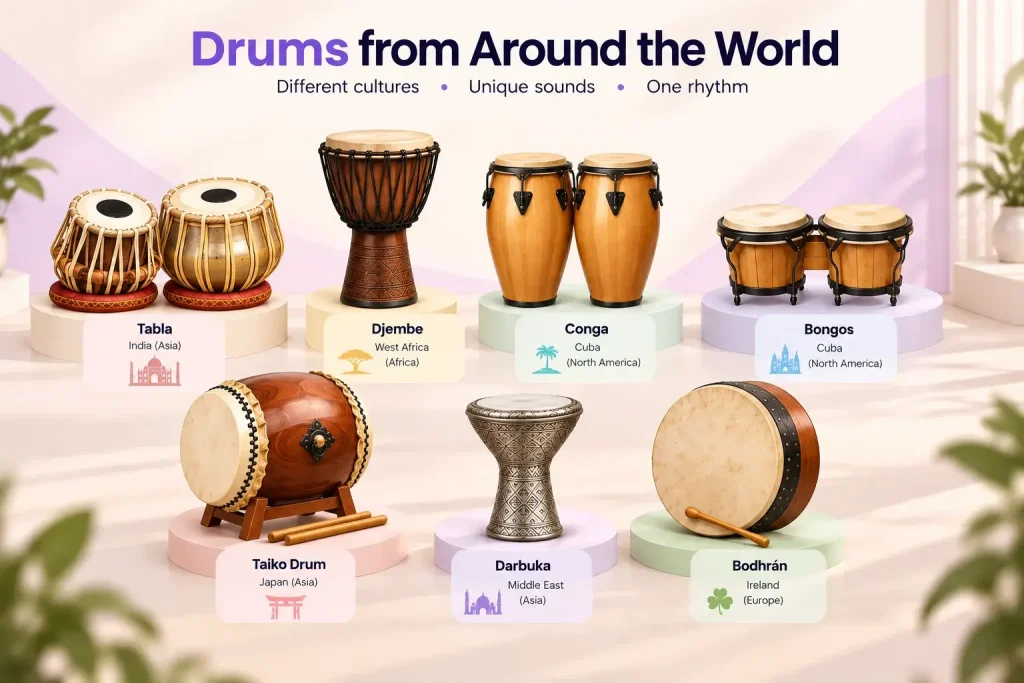
Different Types of Drums Around the World
There are drums in nearly every culture with each one reflecting its local music, instruments, and customs. The punchy sound of a Western drum kit, the enchanting rhythm of a tabla beating in Indian music, and the warm sound of an African hand drum all have individual voices and purposes. Drums from all around the world are made for orchestral music, folk festivals, classical music, and bands, all with their unique sounds and styles, and knowing the families is the key to identifying them, understanding what to play and picking the right one to learn.
Western Drum Kit Components (Snare, Bass, Toms, Cymbals)
Western drum kit A Western drum kit (or drum set) is the traditional modern invention so commonly associated with “drums” in our culture. It’s a grouping of drums and cymbals set out so one player is in charge of all the instruments in a rhythm section with the hands and feet.
| Component | What It Is | Role in the Kit |
| Bass drum (kick drum) | The largest drum, played with a foot pedal. | Provides the low “boom” and anchors the beat. |
| Snare drum | Sits in front of the drummer. Metal wires (snares) under the bottom head create its sharp, cracking sound. | Drives the backbeat (beats 2 and 4 in pop/rock). |
| Toms (rack toms and floor tom) | Medium-pitched drums used for fills and melodic colour. Rack toms mount above the bass drum; the floor tom stands on legs to the drummer’s right. | Used for fills, transitions, and melodic colour. |
| Cymbals | Include hi-hats (two cymbals operated by a foot pedal), ride cymbal (for steady patterns), and crash cymbal (for accents). | Add shine, time-keeping patterns, and dramatic accents. |
A standard drum kit is therefore a combination of drums, cymbals and hardware rather than one single instrument.
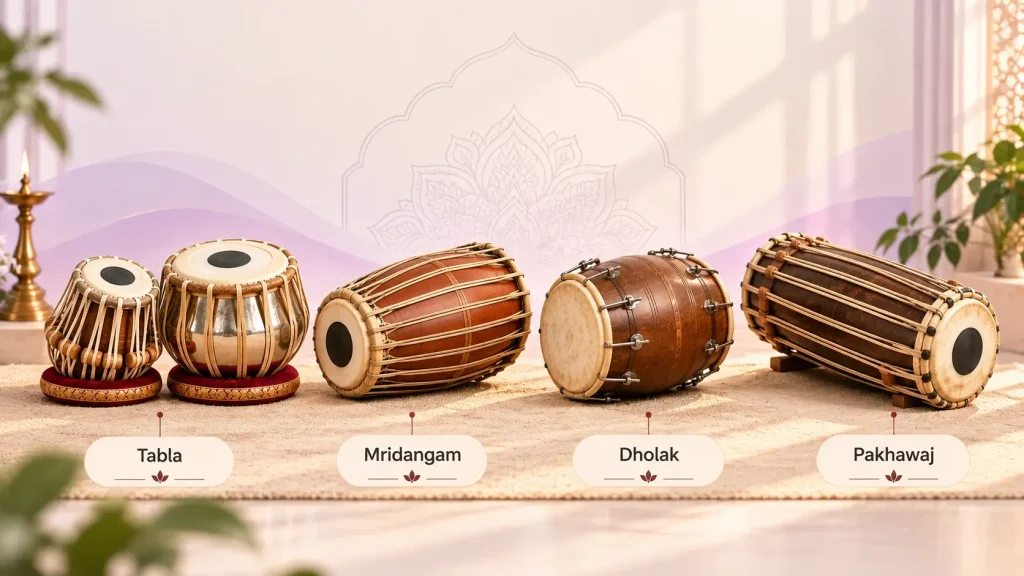
Indian Percussion Drums
India’s best drums, Hindustani and Carnatic music, traditional and folk music, devotional music, dance forms, and regional festivities form a significant part of Indian culture. The next come the drums named tabla, mridangam, pakhawaj, dholak, chenda, thavil, and khanjira. Together, they represent the diverse rhythmic traditions found across the drums of India.
1. Tabla
The tabla consists of two hand-played drums:
- Dayan: The smaller, higher-pitched drum, generally played with the right hand.
- Bayan: The larger bass drum, generally played with the left hand.
While the tabla is primarily associated with Hindustani classical music, it can also be found in ghazal, devotional, film, folk and fusion styles of music. The instrument creates a variety of sounds using various finger and palm strokes.
If you are interested in learning this instrument, Artium Academy offers structured learn tabla online classes with teacher guidance.
2. Mridangam
The mridangam is a double-headed, barrel-shaped drum that forms the backbone of Carnatic music. As each side of the drum is tuned to a different pitch, the musician can produce a rich bass on one head with the sharper strokes on the other.
It is also associated with vocals and instruments, and is responsible for keeping the composition in tempo, or tala.
3. Dholak
The dholak is a two headed hand drum usually played in Indian devotional, folk and popular music. It is found in bhajans, qawwalis, folk songs, parties and film music.
One head has a deeper tone, the other produces a sharper one. It is one of the most distinguishable variations of drums in South Asian music because of its straightforward, lively nature.
4. Pakhawaj
Double-headed drum from the north Indian traditions. Pakhawaj is a large, barrel-shaped, two-headed drum, commonly used in the Dhrupad and other north Indian music traditions.
It has a deep, round tone and is played with both hands. It is learned using rhythm syllables, hand technique and most importantly a knowledge of tala.
5. Other Indian drums
Other Indian percussion instruments include:
- Chenda: A loud cylindrical drum associated with Kerala temple music, Kathakali and related performance traditions.
- Thavil: A powerful barrel-shaped drum often paired with the nadaswaram in South Indian performances.
- Khol: A two-sided drum used particularly in devotional and folk traditions of eastern India.
- Kanjira: A small South Indian frame drum.
- Nagara: A large kettle-shaped drum played with sticks during ceremonial and festive occasions.
- Damru: A small hourglass-shaped drum associated with religious traditions.
The variety of Indian drums reflects the many musical cultures found across the country.
Hand Drums and Frame Drums
Hand drums are most frequently played with the fingers, palms, or the heel of the hand. They are often portable and frequently played in folk, world, popular and devotional music.
| Drum type | Description | Sound and playing style | Common uses |
| Djembe | A goblet-shaped drum from West Africa, played with bare hands. | Produces a low bass tone in the centre, a medium open tone and a sharp slap near the edge. Its shape makes it comfortable to hold between the knees. | Group rhythm activities, world music and cultural performances. |
| Bongos | A pair of small drums joined together. One drum is larger and lower in pitch, while the other is smaller and higher. | Played with the hands to create contrasting high and low rhythmic patterns. | Afro-Cuban music, pop, jazz, fusion and informal rhythm sessions. |
| Congas | Tall, single-headed hand drums available in different sizes. | Each drum produces a different pitch, creating warm and expressive rhythmic patterns. | Latin music, acoustic music, pop and world-music arrangements. |
| Frame drums | Drums with a shallow wooden or synthetic frame and a stretched head across one side. Examples include the daf, tambourine and kanjira. | Usually played with the hands, fingers or sometimes a beater. They help develop hand control, accents and rhythmic consistency. | Folk music, devotional music, world music and beginner rhythm practice. |
Orchestral and Marching Drums
Some drums are designed for large ensembles, outdoor performance or formal musical settings.
| Drum type | Description | Sound and playing style | Common uses |
| Timpani | Large, bowl-shaped orchestral drums with a pedal or tuning mechanism. | Can be tuned to specific notes and produce deep, resonant sounds. | Orchestras, dramatic accents, rising musical tension and deep support. |
| Concert bass drum | A large orchestral bass drum usually played with a soft mallet. | Produces a broad, powerful sound that is longer and more resonant than the shorter sound of a drum-kit bass drum. | Orchestras, concert bands and large musical ensembles. |
| Marching snare drum | A snare drum designed to be carried and played outdoors. It usually has a deeper shell and durable hardware. | Produces a sharp, projecting sound that can be heard clearly during energetic performances. | Marching bands, parades and outdoor performances. |
| Tenor drums | A group of drums carried and played together during marching performances. | Create moving melodic and rhythmic patterns across several drums. | Marching bands, drumlines and parade ensembles. |
| Field or marching bass drum | A large bass drum carried with a harness and played using mallets. | Produces a deep, steady pulse that supports the entire marching ensemble. | Marching bands, parades and outdoor ceremonial performances. |
Types of Drums Names You Should Know
Here are 10 different types of drums that beginners commonly encounter:
- Bass drum or kick drum.
- Snare drum.
- Tom-tom.
- Floor tom.
- Tabla.
- Mridangam.
- Dholak.
- Pakhawaj.
- Djembe.
- Conga.
More types of drum that are useful include bongo, cajn, frame drum, marching snare, timpani, chenda, thavil, khol, kanjira and nagara.
When someone asks about the “ “type of drums in a drum set”, it’s that which you’re referring to. Typically someone will want to know about the bass drum, snare, mounted toms, and floor tom. Cymbals like the hi-hat, crash and ride are all percussion instruments and will be considered as such.
Types of Percussion Instruments Beyond Drums
Drums are only one part of the percussion family. Percussion instruments create sound when struck, shaken, scraped or otherwise activated.
| Percussion category | How it produces sound | Examples | Key point |
| Idiophones | The instrument’s own material vibrates to create sound instead of a stretched membrane. | Cymbals, triangle, glockenspiel, xylophone, wood block, claves, bells, manjira and ghatam. | A ghatam is a clay pot played with the hands. It is a percussion instrument, but not a drum because it has no stretched drumhead. |
| Shaken instruments | Small objects move inside or against a container when it is shaken. | Shakers, maracas and seed-pod instruments. | They create rhythmic textures and are often used to maintain or decorate a beat. |
| Scraped instruments | One surface is scraped against another to produce sound. | Guiro and some types of reco-reco. | The speed and pressure of scraping can change the rhythmic effect. |
| Tuned percussion | The instrument is designed to produce specific musical notes or pitches. | Xylophone, marimba, vibraphone and timpani. | These instruments can play melodies, musical phrases or clearly pitched rhythmic parts. |
This explains the difference between drums and other percussion: drums usually use a vibrating membrane, while many other percussion instruments rely on vibrating metal, wood, clay or other materials.
How Different Drums Produce Sound
Most drummers know the concept of following simple:
● Head stretched out over a shell or frame.
● Hit the head with a hand, stick, brush or mallet.
● The head vibrates.
● The shell and air around it help to project and add colour.
This is why drums are called membranophones.
Several factors affect the result:
- Diameter: A wider head tends to create a lower tone.
- Depth: A deeper shell can add resonance and body.
- Tension: Tight heads usually sound brighter; loose heads sound deeper.
- Material: Wood, metal, clay and synthetic materials each have different tonal qualities.
- Playing area: The centre and edge of a drum can produce noticeably different sounds.
- Touch: A soft stroke and a powerful stroke may sound like two different instruments.
Often there are specific head designs and tuning pastes to create various tonal areas on Indian drums. Separate batter and resonant heads are sometimes used on Western drums. Snare wires provide a buzzing response below the snare drum.
How to Choose the Right Drum to Learn
The right drum depends less on a universal ranking and more on your musical purpose.
1. Choose by musical interest
- Choose tabla if you enjoy Hindustani classical, ghazal, devotional or film music.
- Choose mridangam if you are drawn to Carnatic music.
- Choose dholak for folk, bhajan, qawwali and celebratory music.
- Choose a drum kit for pop, rock, jazz, worship, indie or band performance.
- Choose djembe, bongo or conga if you enjoy hand percussion and group grooves.
2. Consider your space
Acoustic drum kits are loud, and tend to need more space. In an apartment, a practice pad, electronic kit or hand drum might be better options.
Never forget neighbours and relatives. Hearing protection makes sense when rehearsing with loud acoustic drums.
3. Consider your age and comfort
Kids need to be able to sit comfortably, reach the surfaces and pedals without stretching. Adults should also care about their posture and a safe playing position.
Having a smaller hand drum is easier to grasp and with a complete drum kit you will need to operate two hands and both feet.
4. Consider teacher support
A qualified teacher can help you develop correct posture, hand technique, rhythm and practice habits. This is particularly helpful for instruments with detailed traditions, such as tabla and mridangam.
Artium Academy currently does not provide drum or tabla courses. However, learners can explore the available free online music tools for rhythm practice, including the free virtual tabla tool.
Tips for Beginners Starting Drum Lessons
1. Begin with posture and relaxed movement
Sit or stand comfortably, keep your shoulders relaxed and avoid gripping sticks or tightening your fingers unnecessarily. Good technique should make playing easier, not more tiring.
2. Practise a steady pulse
Start with a simple count such as “1, 2, 3, 4”. Play one sound on every count before adding more complicated patterns.
A metronome can help you develop consistent timing. Artium’s free online music tools are useful for guided practice, but they do not replace feedback from a teacher.
3. Separate the movements
If you are learning a drum kit groove, practise the bass drum alone first. Then add the hi-hat, followed by the snare. Combining one new movement at a time makes coordination less overwhelming.
4. Use slow practice
Practise slowly enough to play accurately. Speed should come after control. If a rhythm falls apart at a faster tempo, return to a slower speed and build it gradually.
5. Listen actively
Notice the difference between a deep bass sound, a sharp snare sound and a ringing cymbal. Listening helps you understand how each part supports the music.
6. Practise short sessions regularly
Ten to fifteen focused minutes each day is often more useful than one long, tiring session once a week. Create a simple routine:
- Warm up with single strokes or basic hand patterns.
- Practise one rhythm slowly.
- Play with a metronome or backing track.
- End by playing something enjoyable.
7. Track your progress
Record a short practice clip once a week. You may notice improvements in timing, volume control and coordination that are difficult to hear from day to day.
8. Learn with guidance
Online videos can introduce you to different instruments, but a live teacher can correct your posture, hand position and rhythm in real time. This can be especially valuable for children, returning learners and adults who are restarting after a long break.
Conclusion
Within the scope of the drums world are the Western sets of drums, Indian classical and traditional drums, hand drums, frame drums, orchestral drums, marching equipment. Each type of drum has its sound, usage and playing style.
Begin with the drum that most appeals to your musical curiosity and is comfortable and accessible. You don’t have to know all the drums to begin playing. Explore rhythms and rhythms and rhythms and then just keep practising!
Artium Academy currently does not provide drum courses. However, if you are interested in learning tabla through a structured online programme, you can explore its online tabla classes. For students who want to learn singing while developing a better understanding of rhythm, a personalised free 1:1 trial class with a certified teacher can provide supportive guidance.
Frequently Asked Questions
Primary classifications consist of Western drum-kit drums, Indian percussion drums, hand drums, body drums, orchestral and marching percussion. The typical drumming classifications are timbales, conga, bass drum, snare drum, tom-drum, dholak, djembe and tabla.
Some drum names are bass drum, kick drum, snare drum, tom-tom, floor tom, tabla, mridangam, dholak, pakhawaj, djembe, bongo, conga, cajn, timpani and marching snare.
The sound of most drums is made by a stretched membrane which vibrates. Many other percussion instruments vibrate in their own solid material.
No one answer fits all. A simple hand drum can be a good way to learn about rhythm. A drum kit may be right if your child or teen wants to rock pop and/or roll. Tabla and mridangam are also possible starting instruments for newbies when learned in easy steps from a good teacher.
Hindustani traditions typically focus on the tabla and pakhawaj (used as a solo instrument for Indian classical dance and for accompanying bards and courts), while mridangam (as a solo instrument for Indian classical dance), dholak, and regional instruments are most common in the Carnatic system of music. Chenda, thavil, khol, kanjira, nagara, and others are used in regional traditions.
A standard five-piece set generally consists of a bass drum, snare drum, two mounted tom-toms and a floor tom. It will also usually come with a hi-hat, crash and ride cymbals and a hardware pack including all stands, a bass-drum pedal and a seat, which is called a throne.
Hand drums may seem easier at first because you have less limbs and gear to work with. But hands and sticks can involve a lot of technique, timing and dynamic work, just like a kit. A kit may take longer to get comfortable but can do more!
Begin with a child-sized drum, practice pad, electronic kit, or hand drum that can be reached. The instrument must be comfortable, safe, and of interest to the child. The teacher can be a valuable resource for families in choosing the right beginning steps.
Not specified! Percussion consists of a large family of instruments from all over the world, including drums, cymbals, bells, shakers, scrapers, tuned bars, gongs, pots and electronic percussion.
Most pop and rock drums use the Western drum kit configuration. With its bass, snare, toms and cymbals it enables one drummer to provide the tempo, backbeat, fills and accents of a song.